The Story
Plant Bio
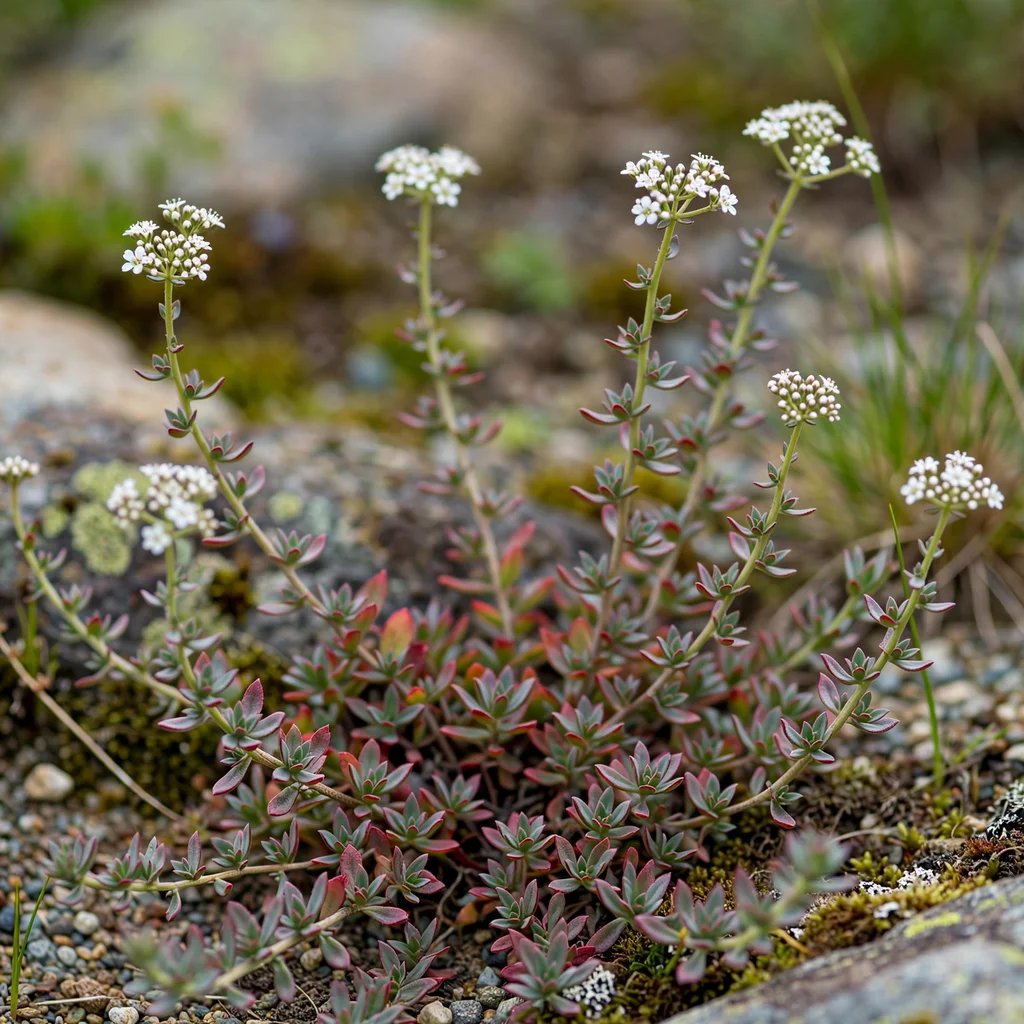
Rosularia muratdaghensis is a mat-forming evergreen succulent from high igneous rock on Murat Dag in Turkiye, building many tight offsets into a low textural carpet. It holds fleshy hairy rosettes year-round and sends up short upright stems topped with paniculate clusters of small tubular flowers in summer.
Rosettes stay about three centimetres across and flush red at the tips and margins in sun or cold, giving a glaucous green to grey-green mat that colors in winter. Individual rosettes die after they flower, with the surrounding unflowered offsets closing the gap to keep the carpet intact.
Uses & Benefits:
Essentials
At a Glance
Plant Type
Cactus Succulent
Height
4"
Width
8"
Light
Full Sun, Partial Sun
Zones
4, 5, 6, 7, 8, 9, 10
Water
Low
Humidity
Unknown
Lifespan
Perennial
Native To
Turkiye
Toxicity
Unknown
Bloom period
Summer
In flower about 3 months of the year
Planting
How to Grow
- Plant in full sun to bright partial shade in sharply drained, lean gritty soil.
- Set rosettes at the surface with the crown above the soil line and top-dress with grit.
- Water in once, then water sparingly and keep almost dry in winter.
- Remove only the rosettes that have finished flowering, leaving offsets undisturbed.
- Protect troughs and containers from prolonged winter wet.
Pro Tip
Keep it lean, gritty and dry in winter; pull out flowered rosettes and leave the offsets to re-carpet.
Keep It Thriving
Care Guide
Do
- Do grow in gritty, sharply drained soil with winter wet protection.
- Do remove spent flowered rosettes to let offsets fill in.
- Do give full sun for tight rosettes and red edge color.
Don't
- Do not plant in rich, moisture-holding soil or low wet spots.
- Do not shear the mat annually or cut unflowered rosettes.
- Do not overwater, especially in fall and winter.
Seasonal Care Calendar
| Task | Jan | Feb | Mar | Apr | May | Jun | Jul | Aug | Sep | Oct | Nov | Dec |
|---|---|---|---|---|---|---|---|---|---|---|---|---|
| Pest Check | ||||||||||||
| Plant | ||||||||||||
| Propagate | ||||||||||||
| Prune | ||||||||||||
| Winter Prep |
Watch Out For
Pests & Diseases
Common Pests
Common Diseases
In the Garden
Landscape Uses & Companions
Landscape Uses
Multiply
Propagation Methods
Good to Know
Common Questions
Turkish Stonecrop questions
What zones can Turkish Stonecrop grow in?
Turkish Stonecrop is hardy in USDA Zones 4–10: in that range it survives winter in the ground.
When does Turkish Stonecrop bloom?
Turkish Stonecrop typically blooms in summer. Exact timing shifts a week or two with your zone — Sow's bloom calendar maps it to your garden.
Does Turkish Stonecrop need full sun?
Turkish Stonecrop does best in full sun to part shade. In hot climates, afternoon shade keeps blooms fresher longer.
Is Turkish Stonecrop drought tolerant?
Yes — once established (usually after the first full season), Turkish Stonecrop handles dry spells with minimal watering. Water deeply its first year to build the root system that makes that possible.
Keep exploring
Explore the genus
Grow Turkish Stonecrop with confidence
See it in a design of your actual yard, get zone-matched care reminders, and track it season by season in your garden journal.