The Story
Plant Bio
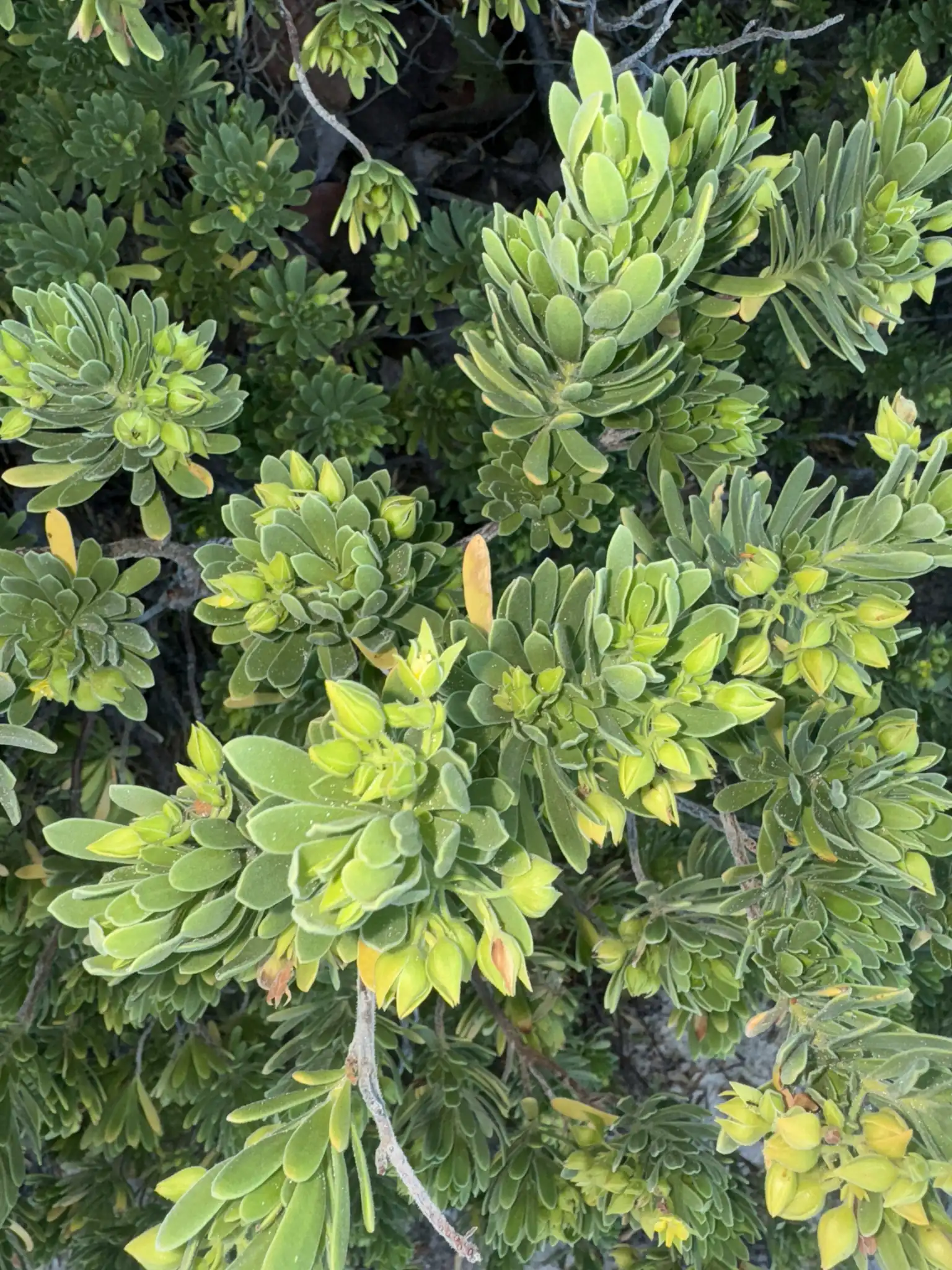
Suriana maritima, known as bay cedar, is an evergreen clump-forming shrub to small tree that reaches 5 to 20 feet tall with arching multi-stemmed branches and a dense oval crown of fine texture. The leaves are alternate, fleshy, gray-green and minutely hairy, spatulate and under 2 inches long, crowded upright on short twigs to limit water loss in sun and wind.
It is the sole species in the genus Suriana, a pantropical coastal specialist whose small yellow cup-shaped flowers appear through the year and mature into dry brown fruits of three to five buoyant nutlets that float for months. That buoyancy explains its wide natural range on sands just above the high-tide line, not any tendency to spread in the garden, and in Florida it is a state-listed threatened plant that must come from nursery-propagated stock.
Uses & Benefits:
Essentials
At a Glance
Plant Type
Shrub
Height
240"
Width
96"
Light
Full Sun
Zones
10
Water
Low
Humidity
Tolerant
Lifespan
Long-lived
Native To
South Florida, Caribbean and pantropical coasts
Toxicity
Unknown - no toxicity reported
Bloom period
Year round
In flower about 12 months of the year
Planting
How to Grow
- Plant container stock in full sun in deep sand after cold weather has passed, digging the hole no deeper than the root ball.
- Space plants 36 to 60 inches apart, 5 to 6 feet on center for a hedge, to allow arching multi-stemmed growth.
- Water deeply at planting, then taper to no supplemental irrigation once roots are established.
- Clip lightly to shape for hedge or screen and train young plants to a single trunk if a small tree form is wanted.
Pro Tip
Plant it in full sun in deep well-drained sand with no irrigation once established; it fails in frost, inland cold, or wet heavy soil.
Keep It Thriving
Care Guide
Do
- Plant in full sun in well-drained sand or calcareous loam.
- Buy nursery-propagated plants and protect wild Florida populations.
- Allow room for 5 to 8 foot spread and clipping as a hedge.
Don't
- Do not plant in clay, wet soil, or where frost occurs.
- Do not overwater or irrigate once established.
- Do not wild-collect from dunes and beaches.
Seasonal Care Calendar
| Task | Jan | Feb | Mar | Apr | May | Jun | Jul | Aug | Sep | Oct | Nov | Dec |
|---|---|---|---|---|---|---|---|---|---|---|---|---|
| Mulch | ||||||||||||
| Pest Check | ||||||||||||
| Plant | ||||||||||||
| Prune |
Watch Out For
Pests & Diseases
Common Pests
Common Diseases
In the Garden
Landscape Uses & Companions
Landscape Uses
Multiply
Propagation Methods
Good to Know
Common Questions
Bay Cedar questions
What zones can Bay Cedar grow in?
Bay Cedar is hardy in USDA Zone 10: in that range it survives winter in the ground. Colder than Zone 10, grow it in a container you can move to shelter for the winter.
When does Bay Cedar bloom?
Bay Cedar typically blooms year-round. Exact timing shifts a week or two with your zone — Sow's bloom calendar maps it to your garden.
Does Bay Cedar need full sun?
Bay Cedar does best in full sun (6+ hours).
Is Bay Cedar drought tolerant?
Yes — once established (usually after the first full season), Bay Cedar handles dry spells with minimal watering. Water deeply its first year to build the root system that makes that possible.
Keep exploring
Explore the genus
Hardy in your zone?
Grow Bay Cedar with confidence
See it in a design of your actual yard, get zone-matched care reminders, and track it season by season in your garden journal.