The Story
Plant Bio
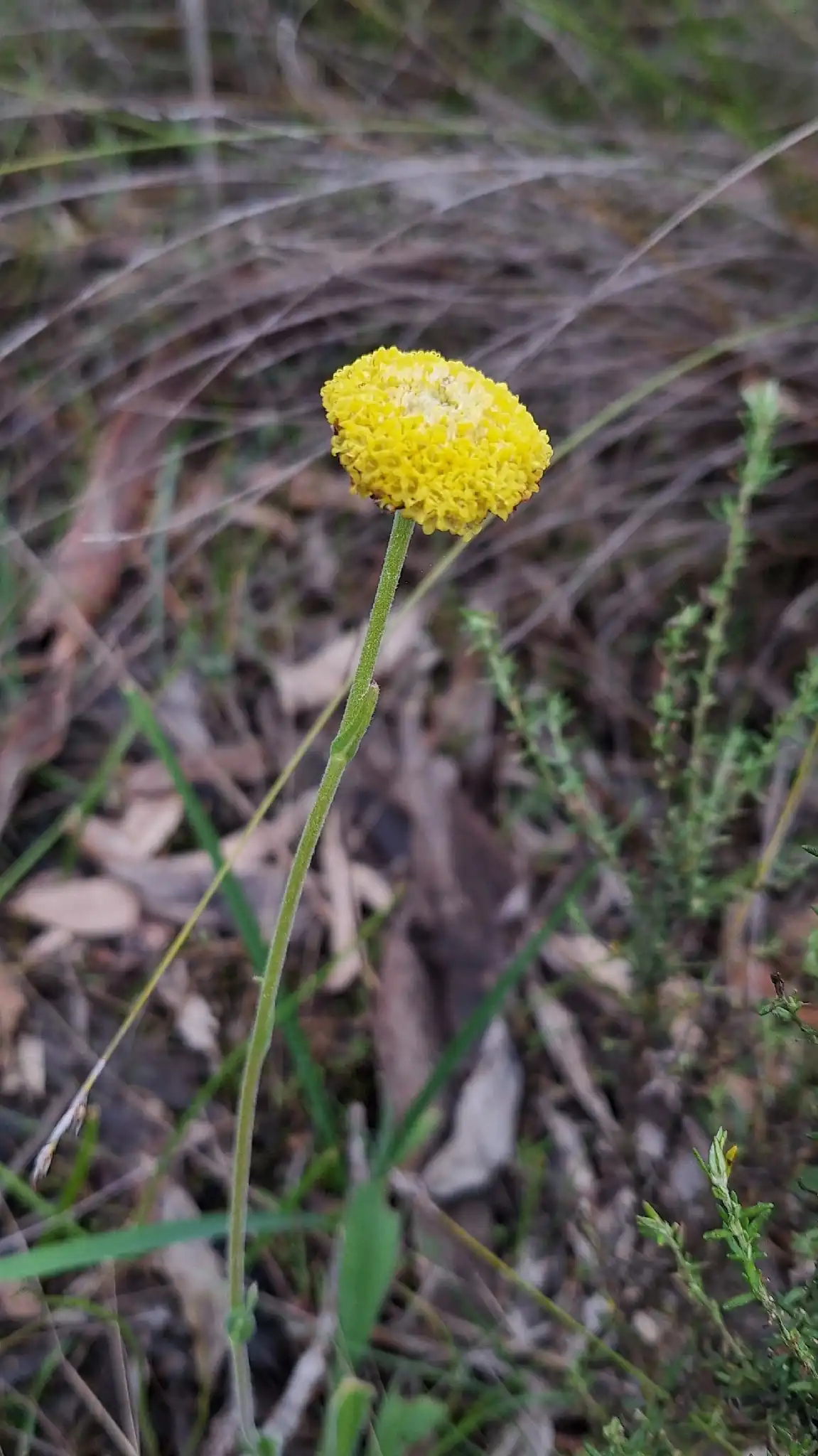
Craspedia variabilis is a tufted herbaceous perennial native to mainland Australia that forms a low basal rosette of sticky, pale to olive-green leaves. Slender, erect reddish-stemmed scapes rise above the foliage to bear dense, perfectly spherical golden-yellow flower heads.
This species features prominent overlapping reddish leaf bases retained at the rosette core and sticky glandular hairs across the foliage. Each globose flower head measures up to an inch across and comprises dozens of tiny florets that retain their color and shape when dried.
Uses & Benefits:
Essentials
At a Glance
Plant Type
Perennial
Height
20"
Width
16"
Light
Full Sun, Partial Sun
Zones
8, 9, 10
Water
Low to Moderate
Humidity
Low to Moderate
Lifespan
Perennial
Native To
Australia
Toxicity
Non-toxic
Bloom period
Late spring – Mid summer
In flower about 3 months of the year
Planting
How to Grow
- Select a planting site in full sun or light shade with gritty, well-draining soil.
- Dig a hole slightly wider than the root ball and set the crown level with the surrounding soil line.
- Water thoroughly at planting, allowing the top inch of soil to dry out between subsequent waterings.
- Mulch lightly with fine gravel, keeping the material clear of the central rosette foliage.
Pro Tip
Provide exceptionally sharp soil drainage during cool or wet periods to prevent crown and root rot, as wet soils rapidly degrade the thick woolly rootstocks.
Keep It Thriving
Care Guide
Do
- Allow the top layer of soil to dry out between waterings.
- Cut spent flower stems down to the basal foliage to encourage new blooms.
- Ensure free-draining soil profiles around the root zone.
Don't
- Do not plant in heavy clay soils that retain moisture during winter.
- Do not bury the central foliage rosette under mulch or soil.
- Do not apply heavy doses of high-phosphorus commercial fertilizers.
Seasonal Care Calendar
| Task | Jan | Feb | Mar | Apr | May | Jun | Jul | Aug | Sep | Oct | Nov | Dec |
|---|---|---|---|---|---|---|---|---|---|---|---|---|
| Deadhead | ||||||||||||
| Divide | ||||||||||||
| Fertilize | ||||||||||||
| Spring Cleanup | ||||||||||||
| Winter Prep |
Watch Out For
Pests & Diseases
Common Pests
Common Diseases
In the Garden
Landscape Uses & Companions
Landscape Uses
Multiply
Propagation Methods
Good to Know
Common Questions
Common Billy Buttons questions
What zones can Common Billy Buttons grow in?
Common Billy Buttons is hardy in USDA Zones 8–10: in that range it survives winter in the ground. Colder than Zone 8, grow it in a container you can move to shelter for the winter, or as an annual.
Is Common Billy Buttons deer resistant?
Not reliably. Deer may browse Common Billy Buttons, especially tender spring growth — plan on repellents or fencing where pressure is high.
When does Common Billy Buttons bloom?
Common Billy Buttons typically blooms from late spring to mid-summer. Exact timing shifts a week or two with your zone — Sow's bloom calendar maps it to your garden.
Does Common Billy Buttons need full sun?
Common Billy Buttons does best in full sun to part shade. In hot climates, afternoon shade keeps blooms fresher longer.
Is Common Billy Buttons drought tolerant?
Yes — once established (usually after the first full season), Common Billy Buttons handles dry spells with minimal watering. Water deeply its first year to build the root system that makes that possible.
More Craspedia to compare
Keep exploring
Explore the genus
Hardy in your zone?
Grow Common Billy Buttons with confidence
See it in a design of your actual yard, get zone-matched care reminders, and track it season by season in your garden journal.