The Story
Plant Bio
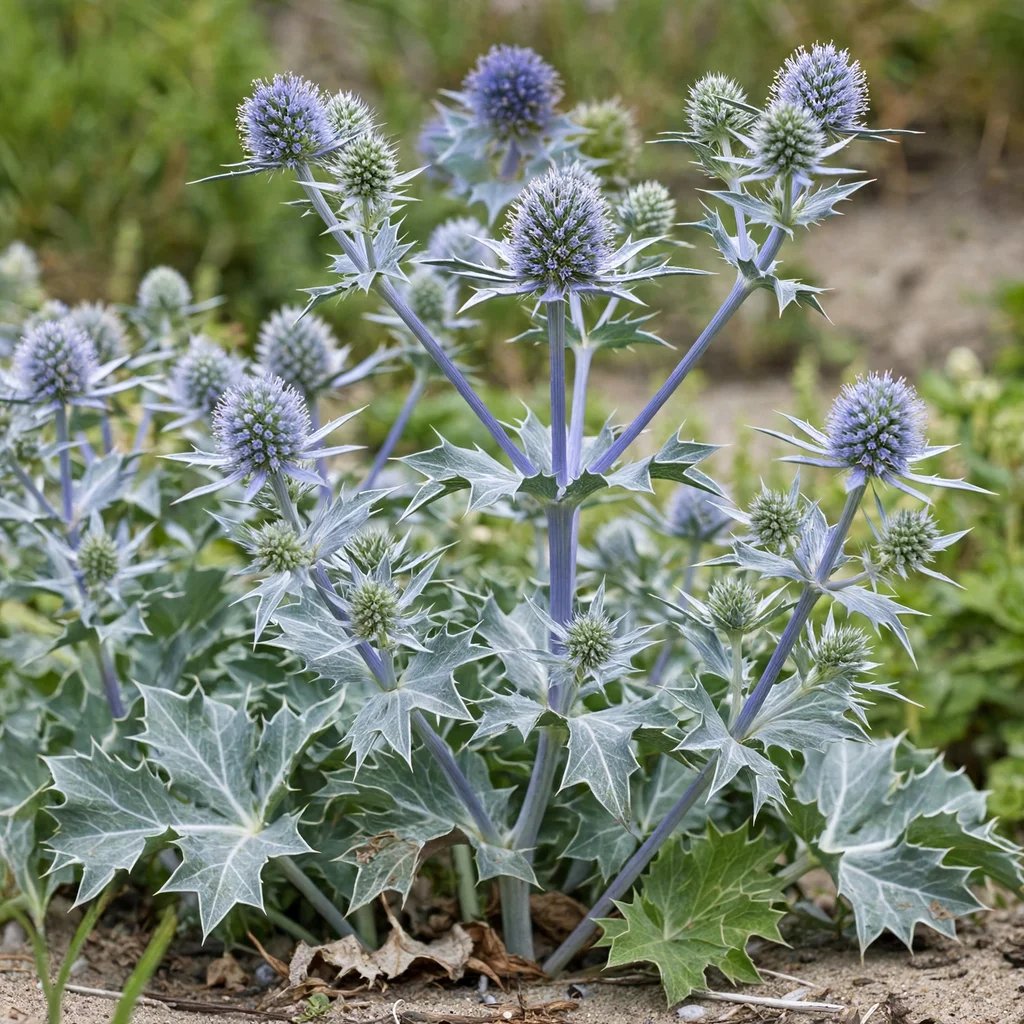
Eryngium maritimum, the sea holly, is a semi-evergreen rosette perennial from coastal sand and shingle, reaching about 20 inches tall and 16 inches wide with a deep taproot that anchors it in shifting dunes. The foliage is waxy, leathery and blue-gray with white veins, forming a basal rosette and stiff branching stems where every leaf is edged with sharp spiny teeth.
What sets this species apart is its condensed thistle-like heads of pale blue to blue-white, each a tight umbel ringed by a collar of broad spiny bracts that hold color through summer into fall. It demands poor, very free-draining sand or gravel that is neutral to alkaline, and it fails in rich, moist or shaded soil where growth softens and roots rot.
Uses & Benefits:
Essentials
At a Glance
Plant Type
Perennial
Height
20"
Width
16"
Light
Full Sun
Zones
4, 5, 6, 7, 8, 9
Water
Low
Humidity
Low
Lifespan
Perennial
Native To
Europe, North Africa, Western Asia
Toxicity
Non-toxic
Bloom period
Summer – Fall
In flower about 6 months of the year
Planting
How to Grow
- Set plants in spring in full sun with 6 or more hours in deep, poor sand or gravel that drains instantly.
- Space 16 inches apart, plant at the same depth as in the pot, and water in once to settle the sand.
- Water rarely once established; mature plants take drought and salt wind and rot in wet soil.
- Do not fertilize with rich fertilizer and do not divide or transplant once the taproot is down.
- Cut spent flower stems back to the basal rosette in fall, leaving a few heads if you want seed.
Pro Tip
Plant once in deep poor sand in full sun and leave it alone; the long taproot resents moving or dividing, and rich fertilizer or frequent water kills more plants than neglect.
Keep It Thriving
Care Guide
Do
- Give full sun, sharp drainage, and open air flow
- Grow in poor sandy or gravelly soil that is neutral to alkaline
- Water sparingly once established and tolerate coastal salt and wind
Don't
- Do not plant in rich, fertile, clay, or waterlogged soil
- Do not divide, move, or break the deep taproot
- Do not shade, crowd, or overhead-water; wet shade brings mildew and rot
Seasonal Care Calendar
| Task | Jan | Feb | Mar | Apr | May | Jun | Jul | Aug | Sep | Oct | Nov | Dec |
|---|---|---|---|---|---|---|---|---|---|---|---|---|
| Deadhead | ||||||||||||
| Pest Check | ||||||||||||
| Plant | ||||||||||||
| Propagate | ||||||||||||
| Prune |
Watch Out For
Pests & Diseases
Common Pests
Common Diseases
In the Garden
Landscape Uses & Companions
Landscape Uses
Multiply
Propagation Methods
Good to Know
Common Questions
Sea Holly questions
What zones can Sea Holly grow in?
Sea Holly is hardy in USDA Zones 4–9: in that range it survives winter in the ground. Warmer than Zone 9, winter isn't the problem: it prefers colder winters, and summer heat can shorten its life.
When does Sea Holly bloom?
Sea Holly typically blooms from summer to fall. Exact timing shifts a week or two with your zone — Sow's bloom calendar maps it to your garden.
Does Sea Holly need full sun?
Sea Holly does best in full sun (6+ hours).
Is Sea Holly drought tolerant?
Yes — once established (usually after the first full season), Sea Holly handles dry spells with minimal watering. Water deeply its first year to build the root system that makes that possible.
More Eryngium to compare
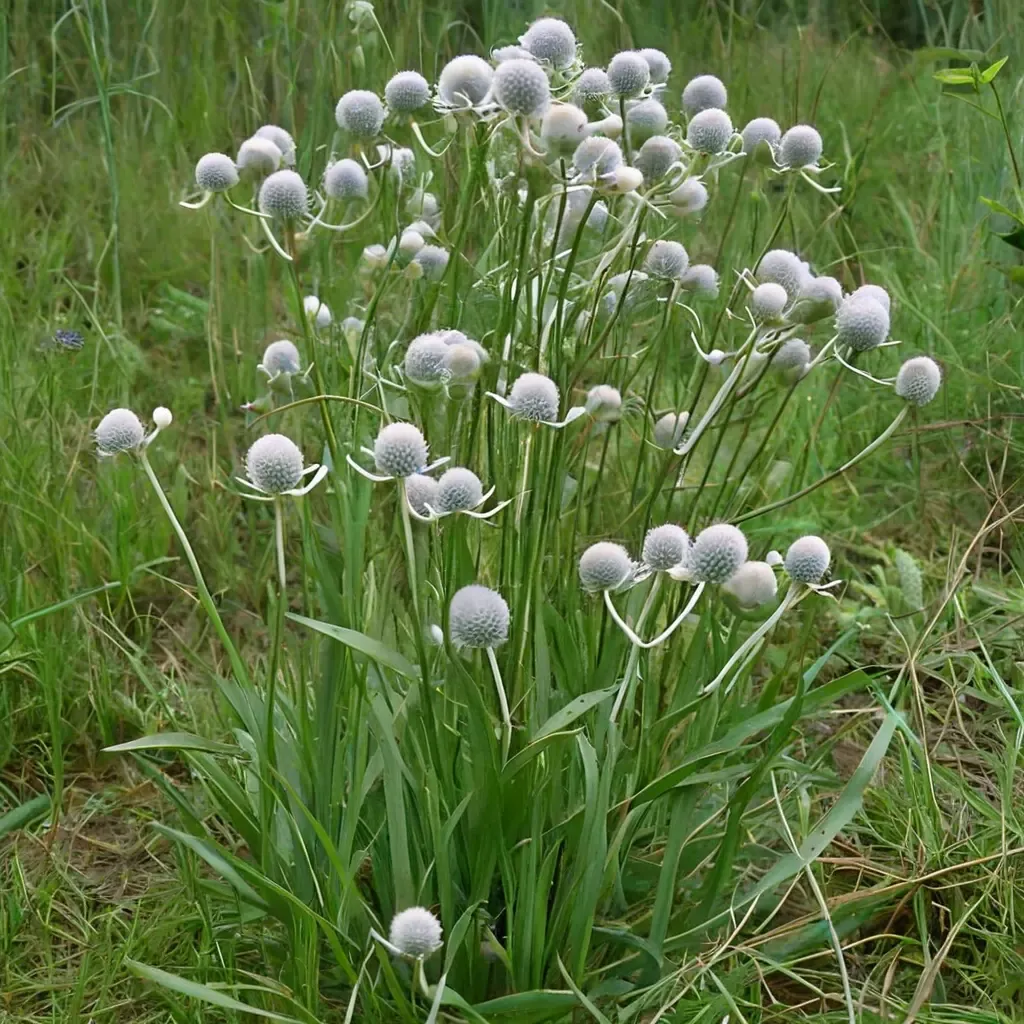
Rattlesnake master
Eryngium yuccifolium
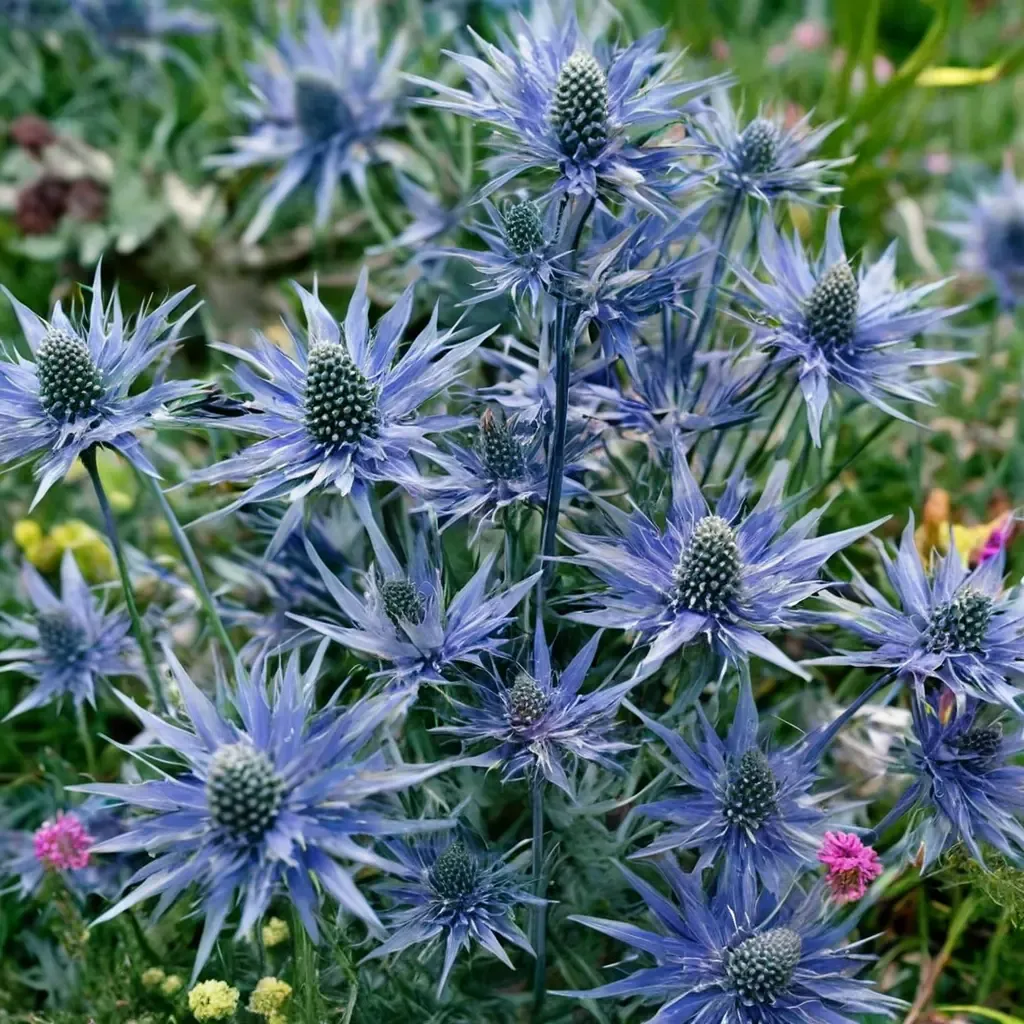
Big Blue Sea Holly
Eryngium x hybrida 'Big Blue'
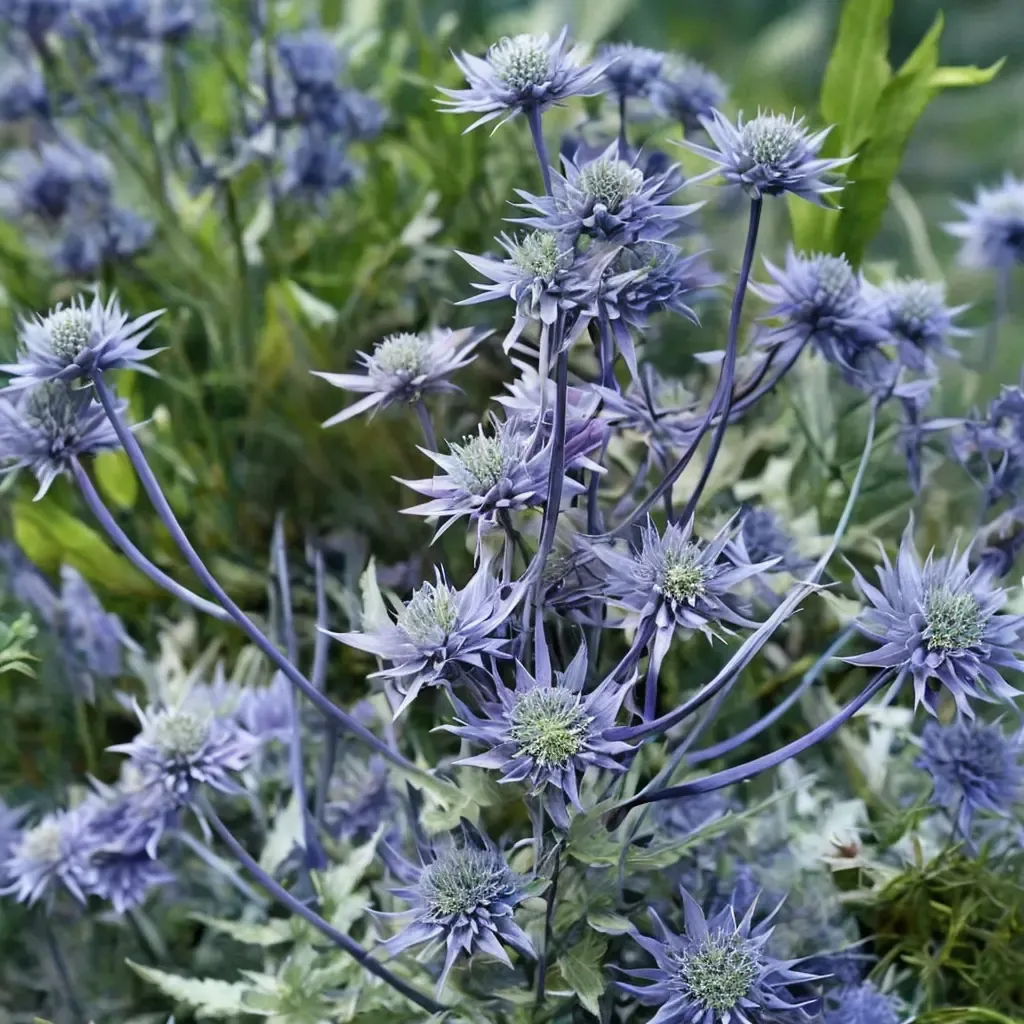
Blue Glitter Sea Holly
Eryngium planum 'Blue Glitter'
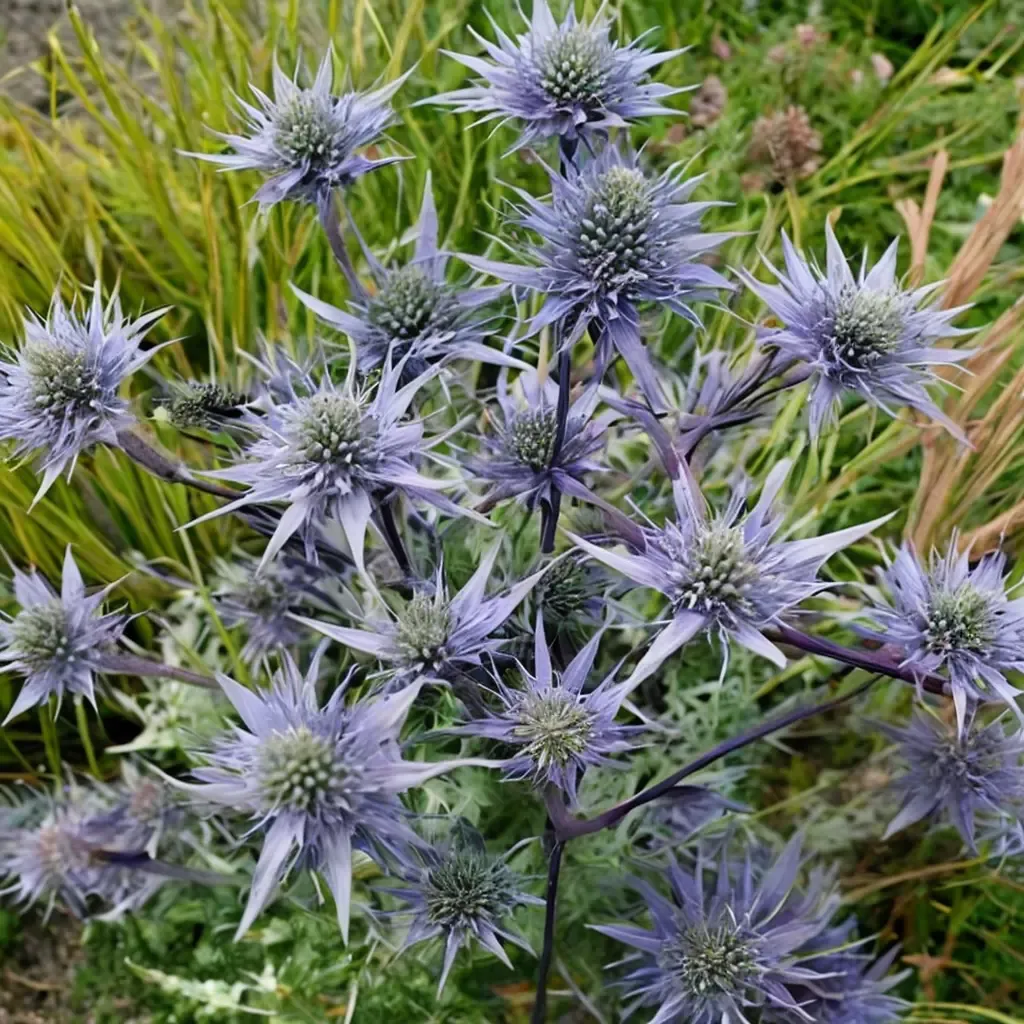
Picos Blue Sea Holly
Eryngium bourgatii 'Picos Blue'
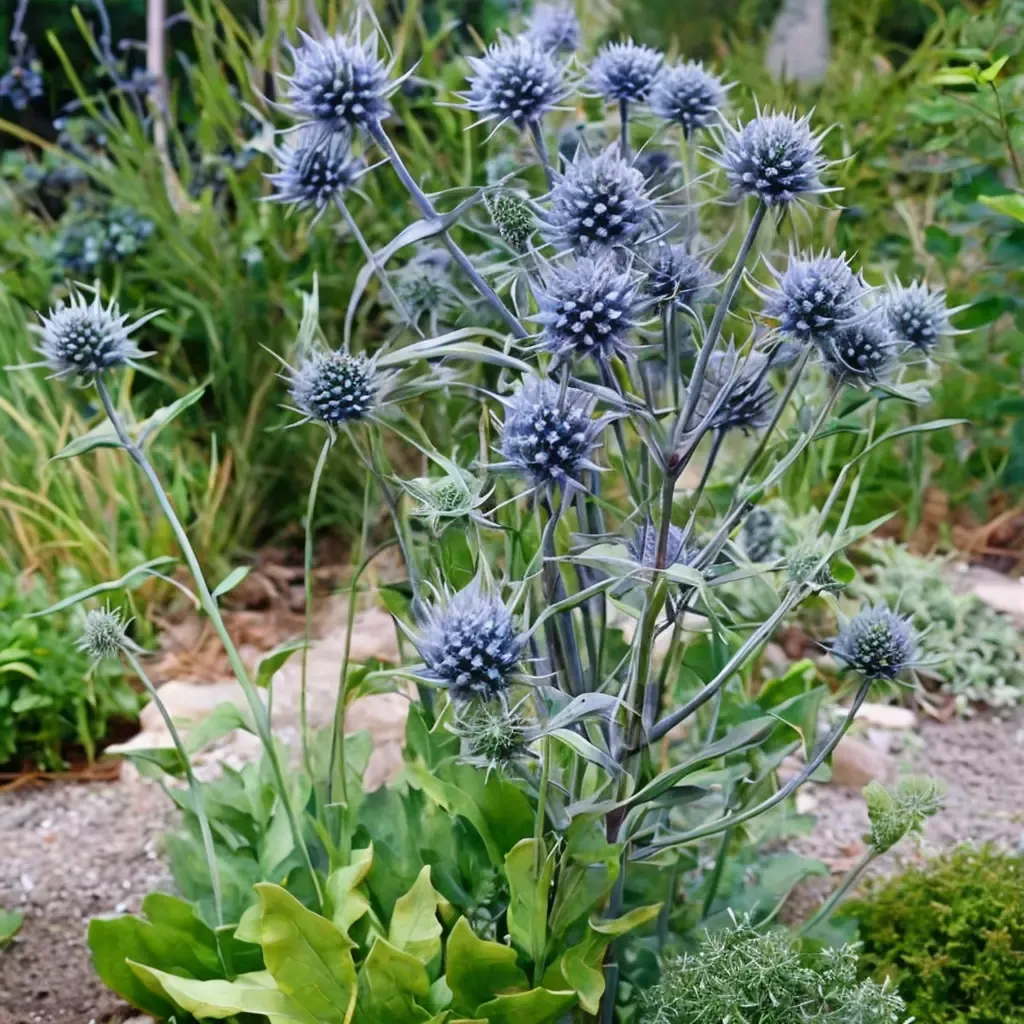
Flat Sea Holly
Eryngium planum
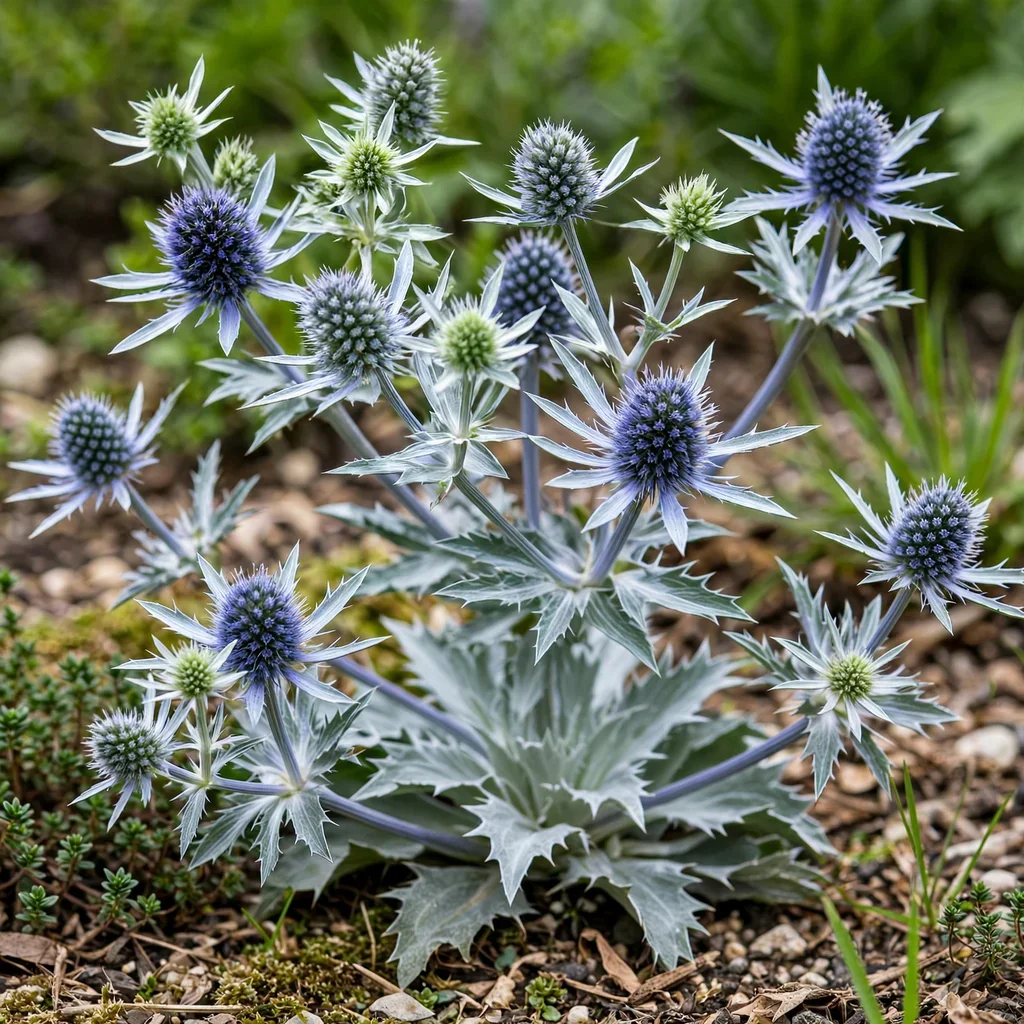
Blue Hobbit Eryngium
Eryngium x zabelii 'Blue Hobbit'
Keep exploring
Explore the genus
Grow Sea Holly with confidence
See it in a design of your actual yard, get zone-matched care reminders, and track it season by season in your garden journal.