The Story
Plant Bio
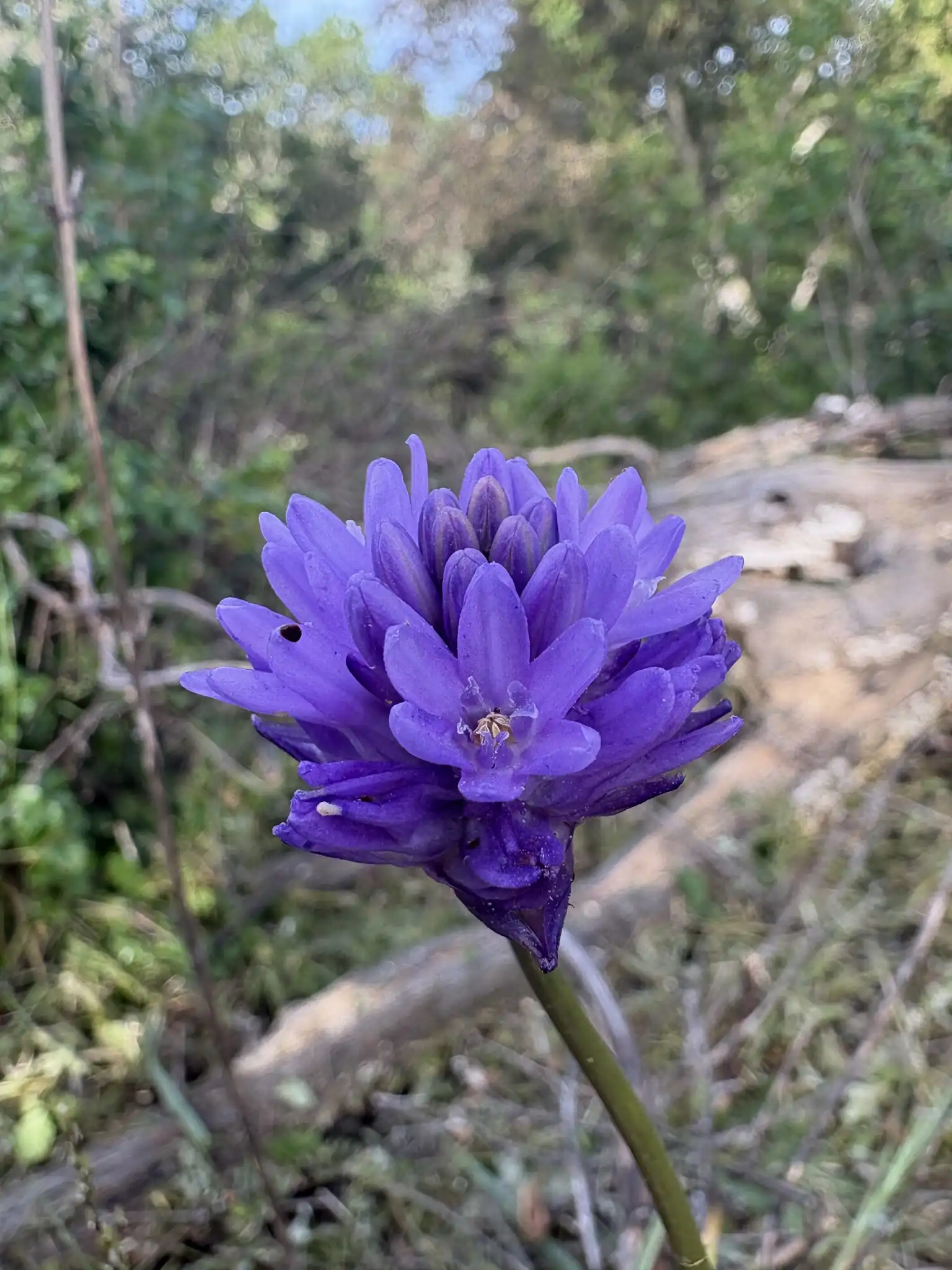
Dichelostemma congestum is a western North American corm-rooted perennial producing narrow, channelled basal leaves and tall, leafless flowering scapes reaching up to 28 inches. In late spring, each scape culminates in a dense, head-like cluster of up to 25 tubular purple flowers distinguished by fork-toothed internal stamen structures.
The species naturally adapts to summer-dry climates by entering complete dormancy once flowering finishes, allowing its foliage to wither without weakening the subterranean corm. Dense flower heads hold up exceptionally well on slender stems, providing valuable nectar for native pollinators and hummingbirds.
Uses & Benefits:
Essentials
At a Glance
Plant Type
Bulb Corm Tuber
Height
28"
Width
6"
Light
Full Sun, Partial Sun
Zones
6, 7, 8, 9
Water
Low
Humidity
Low to Moderate
Lifespan
Perennial
Native To
Western North America
Toxicity
Non-toxic
Bloom period
Late spring – Early summer
In flower about 2 months of the year
Planting
How to Grow
- Select a full-sun site with sharply draining sandy, loamy, or clay soil.
- Plant corms 3 to 4 inches deep and 3 to 4 inches apart in fall with pointed ends facing upward.
- Water thoroughly once after planting to stimulate early root growth, then rely on natural rainfall.
- Allow the foliage to dry and turn brown naturally after flowering before removing dead scapes.
Pro Tip
Withhold summer irrigation entirely once the leaves begin to turn yellow; standing moisture during high temperatures causes dormant corms to rot.
Keep It Thriving
Care Guide
Do
- Ensure full sun exposure to keep flowering scapes upright and sturdy.
- Maintain high soil drainage during the summer dormancy period.
- Let green foliage die back completely on the plant to replenish energy in the corm.
Don't
- Do not water the plant during its summer dormant period.
- Do not trim foliage back prematurely while leaves remain green.
- Do not over-fertilize, as rich soil amendments promote fungal corm rots.
Seasonal Care Calendar
| Task | Jan | Feb | Mar | Apr | May | Jun | Jul | Aug | Sep | Oct | Nov | Dec |
|---|---|---|---|---|---|---|---|---|---|---|---|---|
| Deadhead | ||||||||||||
| Divide | ||||||||||||
| Pest Check | ||||||||||||
| Plant |
Watch Out For
Pests & Diseases
Common Pests
Common Diseases
In the Garden
Landscape Uses & Companions
Landscape Uses
Multiply
Propagation Methods
Good to Know
Common Questions
Ookow questions
What zones can Ookow grow in?
Ookow is hardy in USDA Zones 6–9: in that range it survives winter in the ground. Colder than Zone 6, grow it in a container you can move to shelter for the winter, or as an annual. Warmer than Zone 9, winter isn't the problem: it prefers colder winters, and summer heat can shorten its life.
Is Ookow deer resistant?
Not reliably. Deer may browse Ookow, especially tender spring growth — plan on repellents or fencing where pressure is high.
When does Ookow bloom?
Ookow typically blooms from late spring to early summer. Exact timing shifts a week or two with your zone — Sow's bloom calendar maps it to your garden.
Does Ookow need full sun?
Ookow does best in full sun to part shade. In hot climates, afternoon shade keeps blooms fresher longer.
Is Ookow drought tolerant?
Yes — once established (usually after the first full season), Ookow handles dry spells with minimal watering. Water deeply its first year to build the root system that makes that possible.
More Dichelostemma to compare
Keep exploring
Explore the genus
Hardy in your zone?
Grow Ookow with confidence
See it in a design of your actual yard, get zone-matched care reminders, and track it season by season in your garden journal.