The Story
Plant Bio
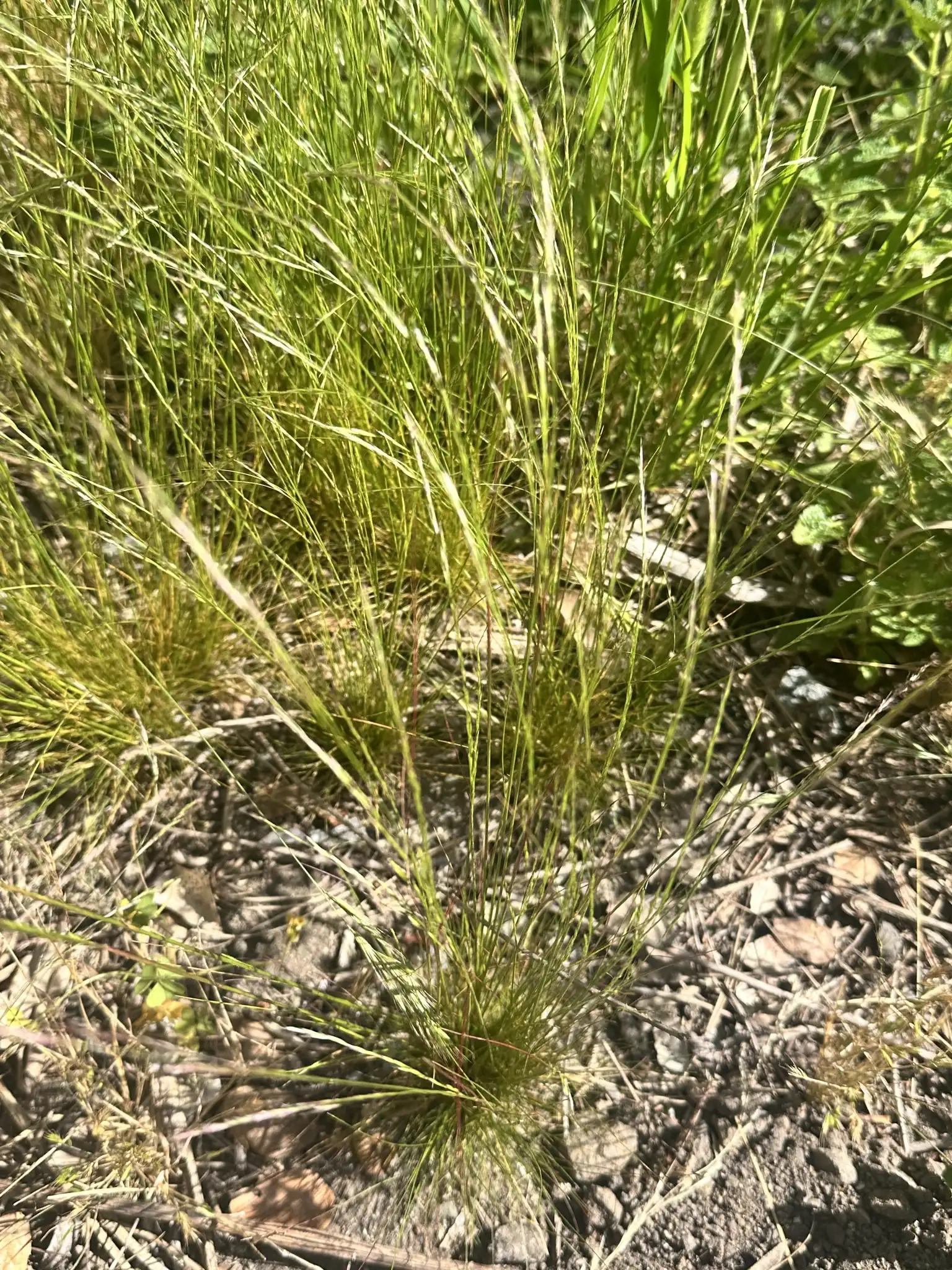
Deschampsia elongata, the slender hairgrass, is a cool-season bunchgrass that forms a densely clumped tuft of fine slender leaves sixteen to thirty-two inches tall in flower. The display is a narrow elongate panicle two to ten inches long, green with purple-tipped glumes, wind-pollinated and without showy petals.
Unlike tufted hairgrass it lives only two to a few seasons, seeding readily on moist disturbed ground yet competing poorly once weeds close in. Wild plants are native from Alaska to Mexico west of the Rockies and in southern Chile and Argentina, while eastern records are sporadic wool-mill waifs rather than native remnants.
Uses & Benefits:
Essentials
At a Glance
Plant Type
Grass
Height
32"
Width
12"
Light
Full Sun, Partial Sun
Zones
4, 5, 6, 7, 8, 9
Water
High
Humidity
Medium
Lifespan
Biennial to short-lived perennial
Native To
Western North America
Toxicity
Non-toxic
Bloom period
Spring
In flower about 3 months of the year
Planting
How to Grow
- Choose an open clearing, meadow edge, or open forest gap with moist to mesic soil that stays damp through spring.
- Set plugs in early spring or fall, firming the fibrous roots into soil at the same depth they grew in the container.
- Water to settle in and keep soil consistently moist through the first season; do not let new plantings dry out.
- Allow seed heads to ripen and shatter where self-sowing is wanted, and weed lightly to reduce competition for seedlings.
Pro Tip
Sow fresh seed on the surface of moist disturbed soil and keep it evenly damp until established; plants allowed to dry out fade fast and do not recover by feeding or cutting.
Keep It Thriving
Care Guide
Do
- Keep soil consistently moist, especially during establishment.
- Allow plants to self-sow where cover is wanted.
- Weed lightly around seedlings to reduce competition.
Don't
- Do not let plantings dry out expecting drought tolerance.
- Do not cut back hard or fertilize heavily to prolong life; plants are short-lived.
- Do not collect seed from eastern waif plants as if native remnants.
Seasonal Care Calendar
| Task | Jan | Feb | Mar | Apr | May | Jun | Jul | Aug | Sep | Oct | Nov | Dec |
|---|---|---|---|---|---|---|---|---|---|---|---|---|
| Mulch | ||||||||||||
| Pest Check | ||||||||||||
| Plant | ||||||||||||
| Propagate | ||||||||||||
| Spring Cleanup |
Watch Out For
Pests & Diseases
Common Pests
Common Diseases
In the Garden
Landscape Uses & Companions
Landscape Uses
Multiply
Propagation Methods
Good to Know
Common Questions
Slender Hairgrass questions
What zones can Slender Hairgrass grow in?
Slender Hairgrass is hardy in USDA Zones 4–9: in that range it survives winter in the ground. Warmer than Zone 9, winter isn't the problem: it prefers colder winters, and summer heat can shorten its life.
Is Slender Hairgrass deer resistant?
Yes — Slender Hairgrass is rated deer-resistant. Deer typically pass it over, though extreme hunger can override any plant's defenses.
When does Slender Hairgrass bloom?
Slender Hairgrass typically blooms in spring. Exact timing shifts a week or two with your zone — Sow's bloom calendar maps it to your garden.
Does Slender Hairgrass need full sun?
Slender Hairgrass does best in full sun to part shade. In hot climates, afternoon shade keeps blooms fresher longer.
More Deschampsia to compare
Keep exploring
Explore the genus
Grow Slender Hairgrass with confidence
See it in a design of your actual yard, get zone-matched care reminders, and track it season by season in your garden journal.