The Story
Plant Bio
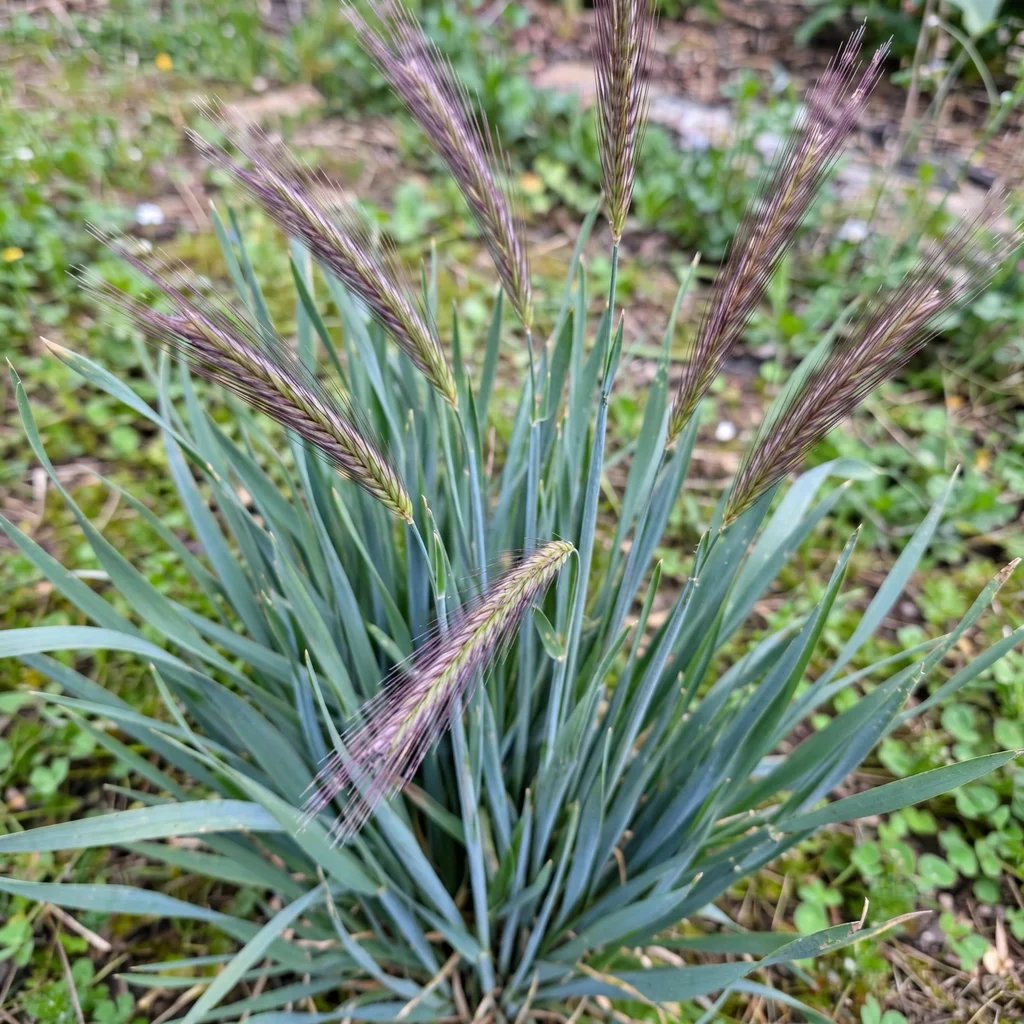
Hordeum brachyantherum, the meadow barley, is a cool-season perennial bunchgrass forming an open tuft of green to bluish-green leaves with erect smooth stalks. Leafy clumps stand six to ten inches tall, with flowering stems rising two to three feet, and crowns stay green through summer where soil stays moist.
It blooms on narrow flattened bristly spikes two to four inches long that open green and ripen purplish-tan, wind-pollinated and without showy petals. Plants are short to medium-lived and hold ground by self-seeding, often pushing a second flush of stems later in summer when moisture persists.
Uses & Benefits:
Essentials
At a Glance
Plant Type
Grass
Height
36"
Width
18"
Light
Full Sun
Zones
4, 5, 6, 7, 8, 9
Water
Medium-moist
Humidity
Low to medium
Lifespan
Short-lived perennial, self-seeds
Native To
Western North America
Toxicity
Unknown - no toxicity reported
Bloom period
Late spring – Summer
In flower about 4 months of the year
Planting
How to Grow
- Plant in full sun in spring or fall in soil that holds moisture but drains.
- Sow seed shallowly onto firm soil and water to keep evenly moist until established.
- Water through dry spells in the first summer to keep foliage green and encourage tillering.
- Leave flower spikes to ripen and drop seed, then cut spent stems back to the leafy base.
- Allow seedlings to fill in around aging crowns to maintain the planting.
Pro Tip
Let seed ripen and drop to replace short-lived crowns; do not shear plants hard expecting dense regrowth from old stubble.
Keep It Thriving
Care Guide
Do
- Do provide consistent moisture during establishment and summer dry spells.
- Do allow self-seeding to renew this short-lived grass.
- Do use it for quick cover on moist, saline, or seasonally flooded ground.
Don't
- Do not mow tight or cut into old stubble expecting Lomandra-like regrowth.
- Do not let plants dry hard in summer and expect them to stay green.
- Do not treat it as an ornamental annual and remove seedlings.
Seasonal Care Calendar
| Task | Jan | Feb | Mar | Apr | May | Jun | Jul | Aug | Sep | Oct | Nov | Dec |
|---|---|---|---|---|---|---|---|---|---|---|---|---|
| Mulch | ||||||||||||
| Pest Check | ||||||||||||
| Plant | ||||||||||||
| Propagate | ||||||||||||
| Spring Cleanup |
Watch Out For
Pests & Diseases
Common Pests
Common Diseases
In the Garden
Landscape Uses & Companions
Landscape Uses
Multiply
Propagation Methods
Good to Know
Common Questions
Meadow Barley questions
What zones can Meadow Barley grow in?
Meadow Barley is hardy in USDA Zones 4–9: in that range it survives winter in the ground. Warmer than Zone 9, winter isn't the problem: it prefers colder winters, and summer heat can shorten its life.
Is Meadow Barley deer resistant?
Yes — Meadow Barley is rated deer-resistant. Deer typically pass it over, though extreme hunger can override any plant's defenses.
When does Meadow Barley bloom?
Meadow Barley typically blooms from late spring to late summer. Exact timing shifts a week or two with your zone — Sow's bloom calendar maps it to your garden.
Does Meadow Barley need full sun?
Meadow Barley does best in full sun (6+ hours).
Is Meadow Barley drought tolerant?
Yes — once established (usually after the first full season), Meadow Barley handles dry spells with minimal watering. Water deeply its first year to build the root system that makes that possible.
Keep exploring
Explore the genus
Grow Meadow Barley with confidence
See it in a design of your actual yard, get zone-matched care reminders, and track it season by season in your garden journal.