The Story
Plant Bio
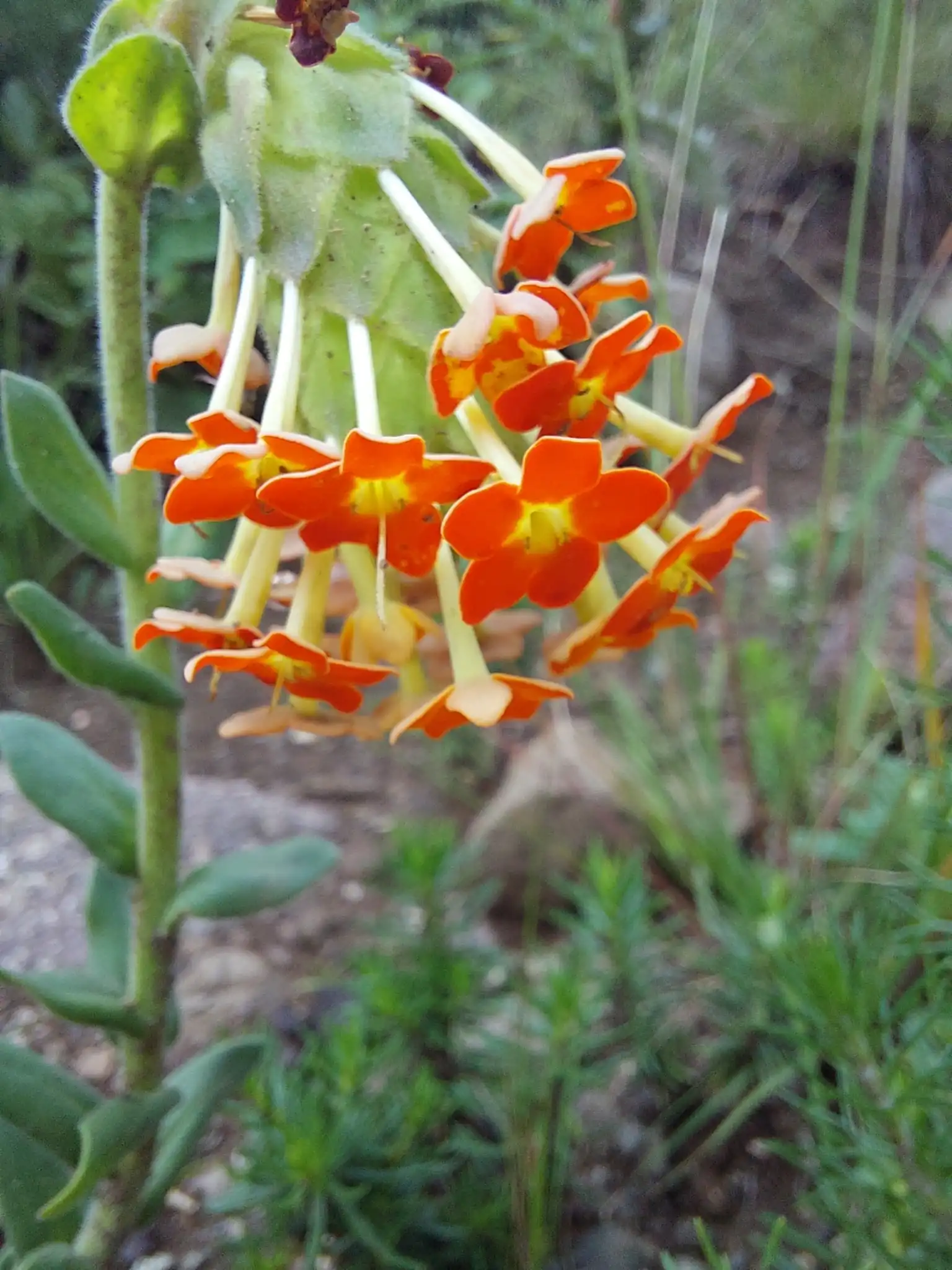
Glumicalyx goseloides is an evergreen subshrub from high rocky ground in the Drakensberg, forming a dense mound 10 to 15 inches tall with narrow pointed green leaves held close along upright stems. The nodding tubular flowers are borne in terminal clusters, creamy-white outside and opening to bright orange-red lobes.
It blooms in summer with flowers that release a milk-chocolate scent detectable only at close range on the nodding heads. Bruised leaves give off a separate pungent musky odor, and stems root where they touch moist soil instead of holding a tight mound.
Uses & Benefits:
Essentials
At a Glance
Plant Type
Perennial
Height
12"
Width
24"
Light
Full Sun, Partial Sun
Zones
6, 7, 8, 9
Water
Medium
Humidity
Unknown
Lifespan
Perennial
Native To
South Africa, Lesotho
Toxicity
Unknown
Bloom period
Early summer – Fall
In flower about 6 months of the year
Planting
How to Grow
- Plant in full sun after last frost with the crown at soil level in gritty well-drained soil.
- Water to settle in, then keep at medium moisture and never leave standing wet.
- Deadhead spent clusters through summer to carry bloom to fall frost.
- Top-dress with gravel to keep the crown dry over winter in Zone 6.
Pro Tip
Site it in full sun in gritty, sharply drained soil or a rock crevice; winter wet kills it faster than cold, so avoid clay and low pockets.
Keep It Thriving
Care Guide
Do
- Plant in full sun with sharp drainage in a rock garden, wall or container.
- Deadhead spent clusters regularly in summer to extend bloom.
- Use a gravel top layer to keep stems and crown dry in winter.
Don't
- Do not plant in clay or low spots that stay wet.
- Do not overwater or keep stems moist enough to root outward.
- Do not cut hard back into old woody leafless stems.
Seasonal Care Calendar
| Task | Jan | Feb | Mar | Apr | May | Jun | Jul | Aug | Sep | Oct | Nov | Dec |
|---|---|---|---|---|---|---|---|---|---|---|---|---|
| Deadhead | ||||||||||||
| Mulch | ||||||||||||
| Pest Check | ||||||||||||
| Plant | ||||||||||||
| Propagate |
Watch Out For
Pests & Diseases
Common Pests
Common Diseases
In the Garden
Landscape Uses & Companions
Landscape Uses
Companion Plants
Multiply
Propagation Methods
Good to Know
Common Questions
Nodding Chocolate Flower questions
What zones can Nodding Chocolate Flower grow in?
Nodding Chocolate Flower is hardy in USDA Zones 6–9: in that range it survives winter in the ground. Colder than Zone 6, grow it in a container you can move to shelter for the winter, or as an annual. Warmer than Zone 9, winter isn't the problem: it prefers colder winters, and summer heat can shorten its life.
When does Nodding Chocolate Flower bloom?
Nodding Chocolate Flower typically blooms from summer to fall. Exact timing shifts a week or two with your zone — Sow's bloom calendar maps it to your garden.
Does Nodding Chocolate Flower need full sun?
Nodding Chocolate Flower does best in full sun to part shade. In hot climates, afternoon shade keeps blooms fresher longer.
Is Nodding Chocolate Flower drought tolerant?
Yes — once established (usually after the first full season), Nodding Chocolate Flower handles dry spells with minimal watering. Water deeply its first year to build the root system that makes that possible.
Keep exploring
Explore the genus
Hardy in your zone?
Grow Nodding Chocolate Flower with confidence
See it in a design of your actual yard, get zone-matched care reminders, and track it season by season in your garden journal.