The Story
Plant Bio
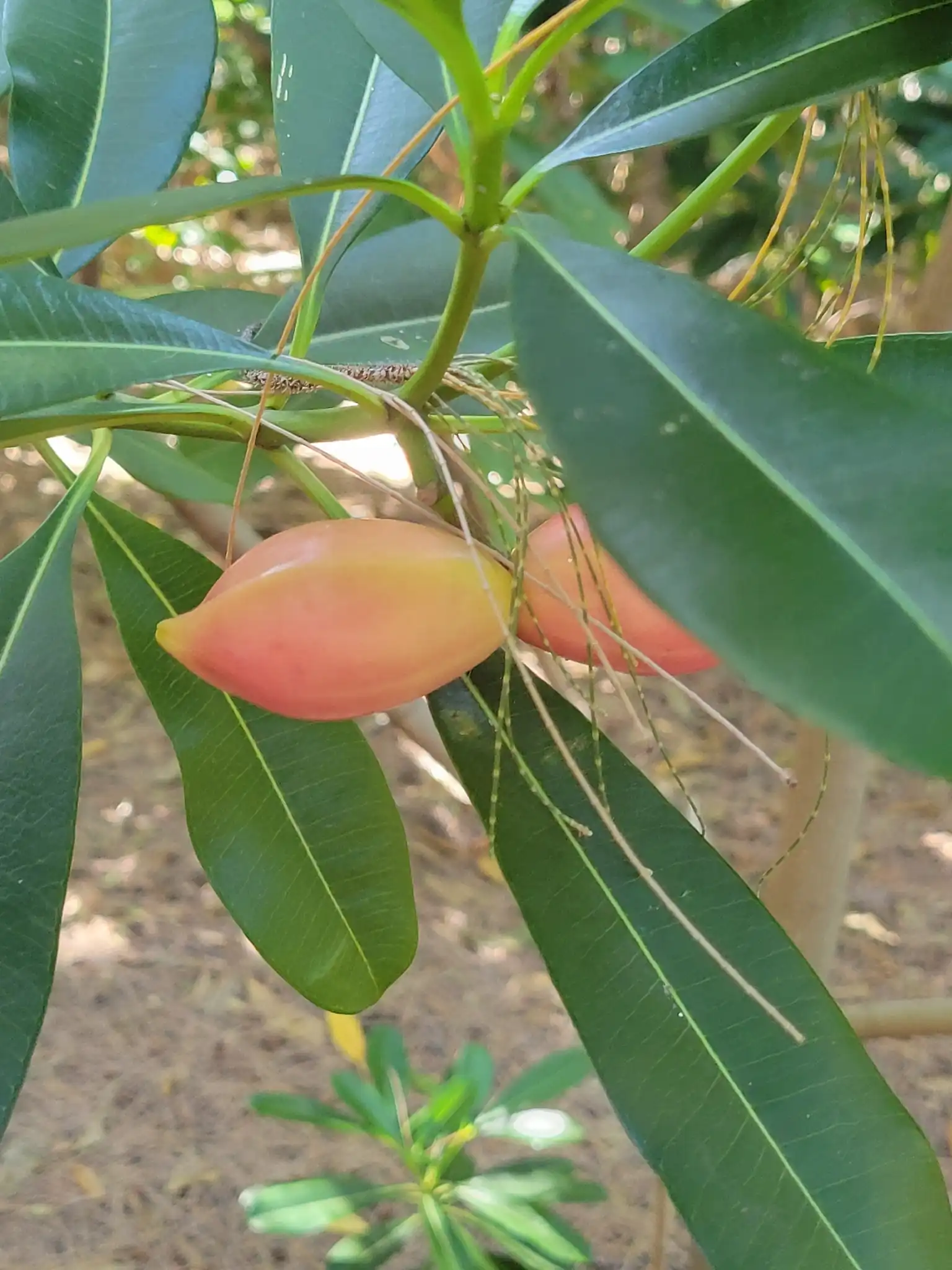
Ochrosia elliptica is a dense evergreen tree or spreading shrub native to coastal tropical regions of Australasia and the Pacific. It features thick, leathery, glossy dark green leaves arranged in whorls along the branches and produces a copious milky sap when tissue is cut or damaged.
Fragrant, pale white to yellow tubular flowers open in dense clusters, followed by distinct, bright scarlet horn-like double fruits. The plant tolerates direct coastal salt spray, ocean winds, and extended dry spells in frost-free climates.
Uses & Benefits:
Essentials
At a Glance
Plant Type
Tree
Height
240"
Width
216"
Light
Full Sun, Partial Sun
Zones
10
Water
Low
Humidity
High
Lifespan
Perennial
Native To
Australasia, Pacific Islands
Toxicity
Toxic if ingested; sap causes skin irritation
Bloom period
Late summer – Winter
In flower about 7 months of the year
Planting
How to Grow
- Choose a planting location in full sun to partial shade with light, free-draining sandy or loamy soil.
- Dig a planting hole twice the width of the container root ball and set the tree at its original container depth.
- Backfill with native soil, firm gently to eliminate air pockets, and water deeply to settle the roots.
- Maintain moderate moisture for the first several months until the root system establishes fully.
Pro Tip
Prune lightly only to shape main structural branches or lift lower foliage into a clear trunk, as cutting back severely into old bare wood causes slow, patchy regrowth and excessive sap leakage.
Keep It Thriving
Care Guide
Do
- Wear protective gloves when pruning to avoid contact with the toxic milky sap.
- Plant in light, well-draining coastal soil to prevent root issues.
- Allow soil to dry out between waterings once the root system is established.
Don't
- Do not plant in poorly drained, waterlogged, or heavy clay soils.
- Do not prune aggressively into old leafless wood.
- Do not plant in areas exposed to sub-freezing winter temperatures.
Seasonal Care Calendar
| Task | Jan | Feb | Mar | Apr | May | Jun | Jul | Aug | Sep | Oct | Nov | Dec |
|---|---|---|---|---|---|---|---|---|---|---|---|---|
| Fertilize | ||||||||||||
| Pest Check | ||||||||||||
| Prune | ||||||||||||
| Spring Cleanup |
Watch Out For
Pests & Diseases
Common Pests
Common Diseases
In the Garden
Landscape Uses & Companions
Landscape Uses
Multiply
Propagation Methods
Good to Know
Common Questions
Northern Ochrosia questions
What zones can Northern Ochrosia grow in?
Northern Ochrosia is hardy in USDA Zone 10: in that range it survives winter in the ground. Colder than Zone 10, winters are too cold for it to survive outdoors.
Is Northern Ochrosia deer resistant?
Yes — Northern Ochrosia is rated deer-resistant. Deer typically pass it over, though extreme hunger can override any plant's defenses.
When does Northern Ochrosia bloom?
Northern Ochrosia typically blooms from late summer to late winter. Exact timing shifts a week or two with your zone — Sow's bloom calendar maps it to your garden.
Does Northern Ochrosia need full sun?
Northern Ochrosia does best in full sun to part shade. In hot climates, afternoon shade keeps blooms fresher longer.
Is Northern Ochrosia drought tolerant?
Yes — once established (usually after the first full season), Northern Ochrosia handles dry spells with minimal watering. Water deeply its first year to build the root system that makes that possible.
Keep exploring
Explore the genus
Hardy in your zone?
Grow Northern Ochrosia with confidence
See it in a design of your actual yard, get zone-matched care reminders, and track it season by season in your garden journal.