The Story
Plant Bio
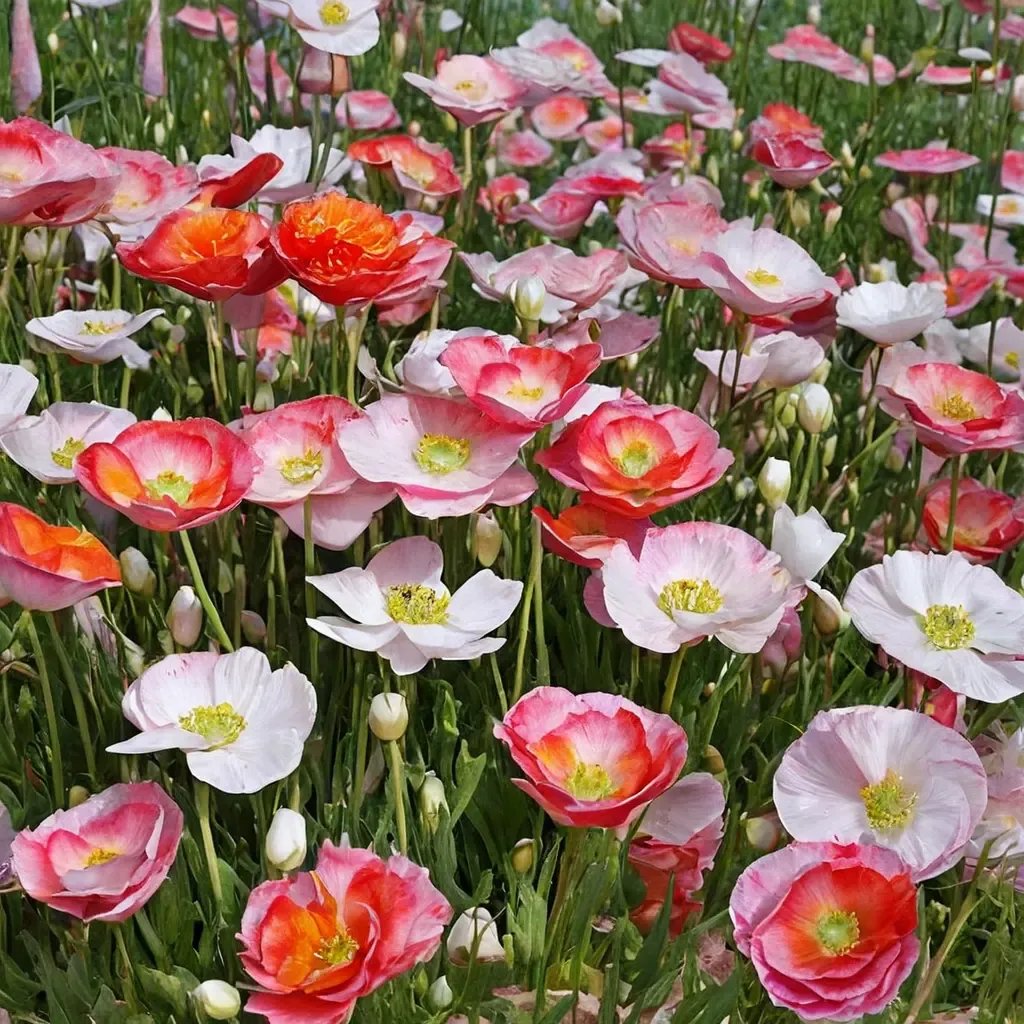
An annual poppy mix with delicate, tissue-paper-like semi-double and double flowers in a romantic blend of pinks, salmons, and picotees.
This mix features a range of soft, romantic colors on long stems, perfect for cottage gardens and cut flower arrangements.
Uses & Benefits:
Provides vibrant, cheerful flowers that brighten garden borders and wildflower meadows.
Attracts pollinators like bees and butterflies, supporting local ecology.
Supports beneficial insects and promotes biodiversity in naturalized settings.
Essentials
At a Glance
Plant Type
Annual
Height
24"
Width
12"
Light
Full Sun
Zones
4, 5, 6, 7, 8, 9, 10
Water
Moderate
Humidity
Average
Lifespan
Annual
Native To
Europe and Asia
Toxicity
Mildly toxic if ingested
Bloom period
Late spring to early summer – Early summer
J
F
M
A
M
J
J
A
S
O
N
D
In flower about 2 months of the year
Planting
How to Grow
- Tuck seeds into well-drained soil in early spring for best germination.
- Mist cuttings lightly and keep moist until roots develop, about 4-6 weeks.
- Transplant seedlings carefully to avoid root disturbance, ideally in fall or early spring.
- Fertilize with a balanced, low-nitrogen fertilizer during active growth periods.
- Mulch around plants to retain moisture and suppress weeds, especially in dry seasons.
- Prune dead or faded flowers to encourage continuous blooming.
Pro Tip
Sow seeds directly in the garden for naturalized, carefree flowering displays.
Keep It Thriving
Care Guide
Do
- Water regularly, especially during dry spells 🌱
- Ensure full sun exposure for vibrant blooms
- Deadhead spent flowers to prolong flowering period
- Apply a light mulch to conserve moisture and regulate soil temperature
Don't
- Avoid overwatering to prevent root rot ❌
- Don’t disturb roots during flowering
- Skip fertilizing with high nitrogen fertilizers, which can promote foliage over flowers
- Don’t plant in shady areas where blooms may be sparse
Seasonal Care Calendar
| Task | Jan | Feb | Mar | Apr | May | Jun | Jul | Aug | Sep | Oct | Nov | Dec |
|---|---|---|---|---|---|---|---|---|---|---|---|---|
| Deadhead | ||||||||||||
| Harvest | ||||||||||||
| Plant |
Watch Out For
Pests & Diseases
Common Pests
Common Diseases
In the Garden
Landscape Uses & Companions
Landscape Uses
Wildflower meadow with vibrant, airy bloomsSunny border with soft, pastel-colored flowersNaturalized garden bed for a carefree look
Multiply
Propagation Methods
Good to Know