The Story
Plant Bio
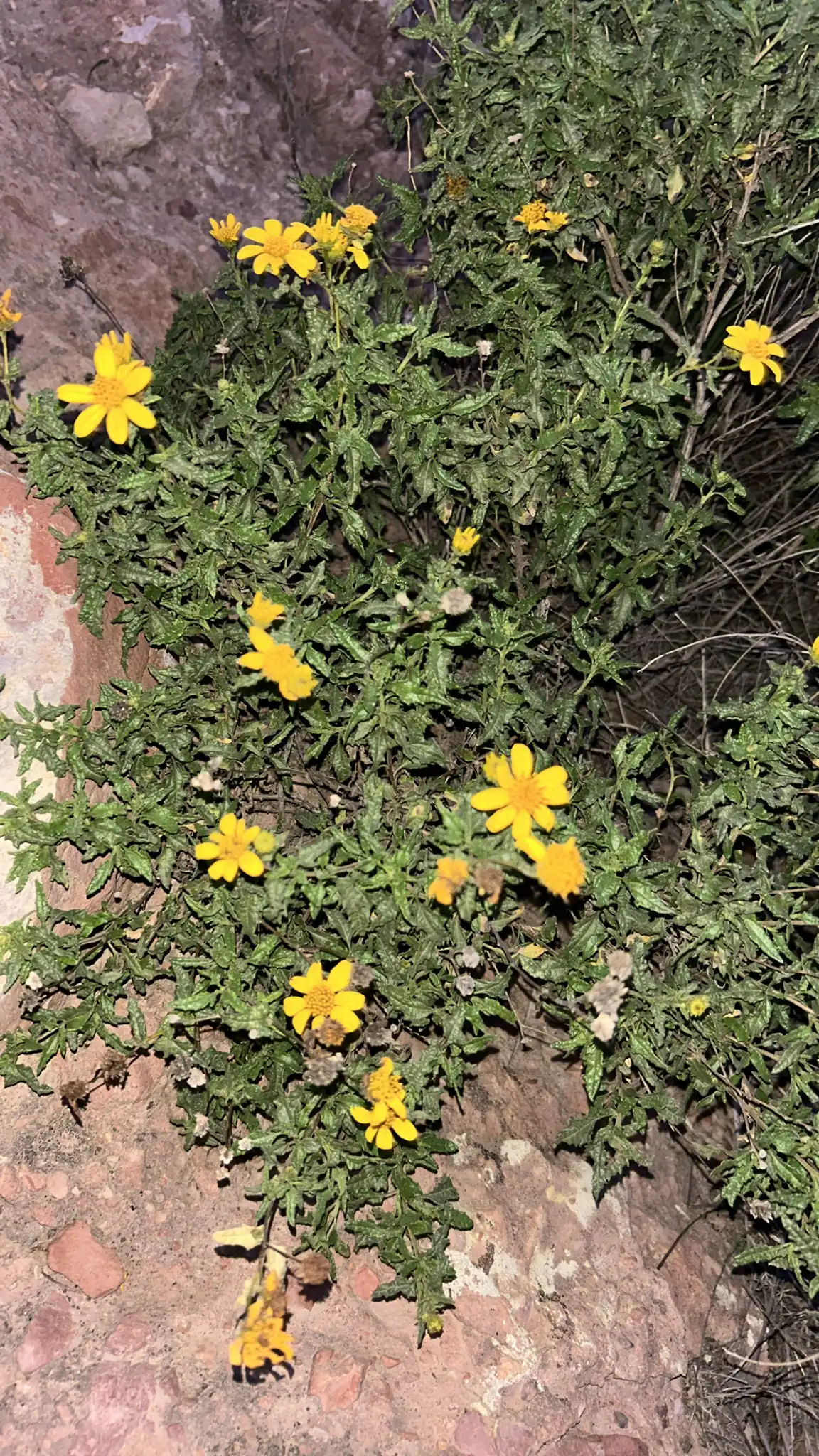
Bahiopsis laciniata is an evergreen shrub native to coastal sage scrub and chaparral regions across Southern California and northwestern Mexico. It forms a dense, mounding structure of heavily branched stems clad in small, dark green leaves.
The resinous, deeply lobed foliage produces a shiny coating that helps conserve water during warm, dry spells. Daisy-like bright yellow flower heads emerge continuously from late winter through summer, attracting a wide array of native pollinators.
Uses & Benefits:
Essentials
At a Glance
Plant Type
Shrub
Height
48"
Width
60"
Light
Full Sun, Partial Sun
Zones
9, 10
Water
Low
Humidity
Low
Lifespan
Perennial
Native To
California, Baja California, Sonora
Toxicity
Non-toxic
Bloom period
Winter – Summer
In flower about 9 months of the year
Planting
How to Grow
- Select a site in full sun with gritty, fast-draining soil such as coarse sand, gravelly loam, or sloped clay.
- Dig a hole twice as wide as the root ball but equal in depth, ensuring the root crown stays slightly above the surrounding soil level.
- Backfill with native soil without organic amendments to keep the root environment lean and permeable.
- Water thoroughly at planting to settle the soil, then allow the top few inches to dry completely between light soakings while establishing.
Pro Tip
Plant in sharply draining soil with full sun exposure, as stagnant summer moisture around the root zone rapidly triggers fatal root rot.
Keep It Thriving
Care Guide
Do
- Plant in gritty, well-draining soil with full sun exposure.
- Deadhead spent flowers after primary bloom flushes to encourage neat habit.
- Allow the soil to dry out between occasional light waterings.
Don't
- Do not overwater during hot summer months.
- Do not cut back into old, leafless woody bases when pruning.
- Do not apply heavy doses of high-nitrogen fertilizer.
Seasonal Care Calendar
| Task | Jan | Feb | Mar | Apr | May | Jun | Jul | Aug | Sep | Oct | Nov | Dec |
|---|---|---|---|---|---|---|---|---|---|---|---|---|
| Deadhead | ||||||||||||
| Pest Check | ||||||||||||
| Plant | ||||||||||||
| Prune |
Watch Out For
Pests & Diseases
Common Pests
Common Diseases
In the Garden
Landscape Uses & Companions
Landscape Uses
Multiply
Propagation Methods
Good to Know
Common Questions
San Diego Sunflower questions
What zones can San Diego Sunflower grow in?
San Diego Sunflower is hardy in USDA Zones 9–10: in that range it survives winter in the ground. Colder than Zone 9, grow it in a container you can move to shelter for the winter.
When does San Diego Sunflower bloom?
San Diego Sunflower typically blooms from winter to summer. Exact timing shifts a week or two with your zone — Sow's bloom calendar maps it to your garden.
Does San Diego Sunflower need full sun?
San Diego Sunflower does best in full sun to part shade. In hot climates, afternoon shade keeps blooms fresher longer.
Is San Diego Sunflower drought tolerant?
Yes — once established (usually after the first full season), San Diego Sunflower handles dry spells with minimal watering. Water deeply its first year to build the root system that makes that possible.
Keep exploring
Explore the genus
Hardy in your zone?
Grow San Diego Sunflower with confidence
See it in a design of your actual yard, get zone-matched care reminders, and track it season by season in your garden journal.