The Story
Plant Bio
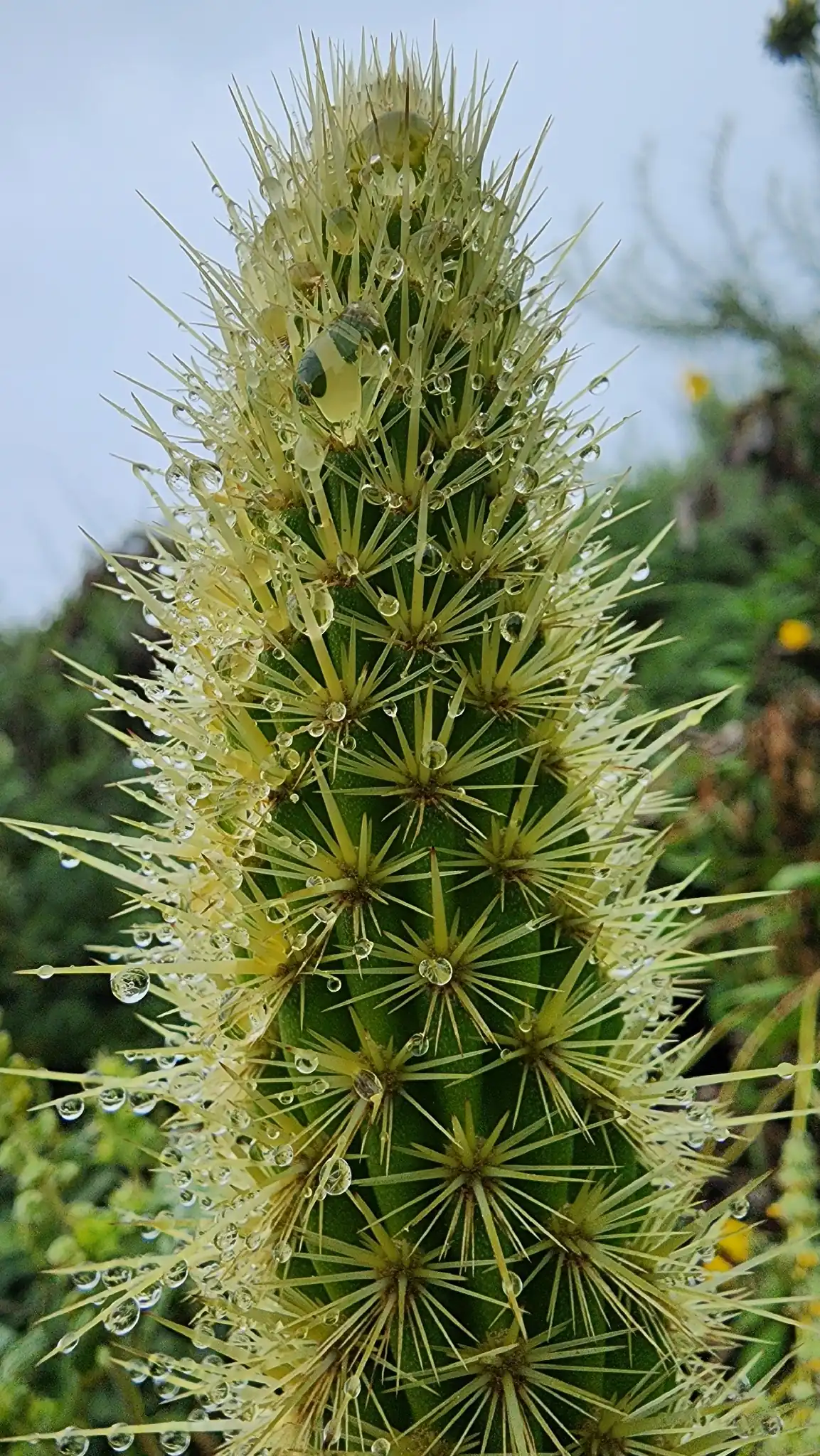
Bergerocactus emoryi is a shrubby, stem-succulent cactus native to coastal sage scrub and rocky bluffs of extreme southern California and northwestern Baja California. It forms dense, low-mounding thickets of slender green cylindrical stems completely clothed in a velvety carpet of sharp golden-yellow spines.
This species features 14-to-18-ribbed stems that bear small, waxy, yellow flowers on short spiny tubes along the stem sides in spring. As the dense golden spines age over successive seasons, they turn gray or black, creating a distinct two-toned pattern across established colonies.
Uses & Benefits:
Essentials
At a Glance
Plant Type
Cactus Succulent
Height
71"
Width
118"
Light
Full Sun
Zones
9, 10
Water
Low
Humidity
Low
Lifespan
Perennial
Native To
North America
Toxicity
Non-toxic (spiny skin irritant)
Bloom period
Spring – Early summer
In flower about 4 months of the year
Planting
How to Grow
- Select a planting site in full sun with gritty, highly porous sandy or rocky soil.
- Position on a slope or raised bed to ensure immediate surface water drainage away from the stems.
- Water sparingly during the active spring and summer growing season, allowing soil to dry completely between applications.
- Cease irrigation entirely through late fall and winter to prevent collar rot.
Pro Tip
Keep the root zone completely dry during winter dormancy, as cold damp soil rapidly induces root rot.
Keep It Thriving
Care Guide
Do
- Plant in fast-draining mineral mixes rich in pumice, gravel, or coarse sand.
- Provide clear overhead shelter if growing in regions with heavy winter rainfall.
- Position away from high-traffic walkways to prevent accidental spine contact.
Don't
- Do not cut into old, woody leafless stem bases during pruning, as re-sprouting from old tissue is poor.
- Do not apply summer irrigation until the surrounding soil mix is thoroughly dry.
- Do not allow organic mulch or fallen leaf litter to accumulate against the stem bases.
Seasonal Care Calendar
| Task | Jan | Feb | Mar | Apr | May | Jun | Jul | Aug | Sep | Oct | Nov | Dec |
|---|---|---|---|---|---|---|---|---|---|---|---|---|
| Fertilize | ||||||||||||
| Pest Check | ||||||||||||
| Prune | ||||||||||||
| Winter Prep |
Watch Out For
Pests & Diseases
Common Pests
Common Diseases
In the Garden
Landscape Uses & Companions
Landscape Uses
Multiply
Propagation Methods
Good to Know
Common Questions
Velvet Cactus questions
What zones can Velvet Cactus grow in?
Velvet Cactus is hardy in USDA Zones 9–10: in that range it survives winter in the ground. Colder than Zone 9, grow it in a container you can move to shelter for the winter, or as an annual.
Is Velvet Cactus deer resistant?
Yes — Velvet Cactus is rated deer-resistant. Deer typically pass it over, though extreme hunger can override any plant's defenses.
When does Velvet Cactus bloom?
Velvet Cactus typically blooms from early spring to early summer. Exact timing shifts a week or two with your zone — Sow's bloom calendar maps it to your garden.
Does Velvet Cactus need full sun?
Velvet Cactus does best in full sun (6+ hours).
Is Velvet Cactus drought tolerant?
Yes — once established (usually after the first full season), Velvet Cactus handles dry spells with minimal watering. Water deeply its first year to build the root system that makes that possible.
Keep exploring
Explore the genus
Hardy in your zone?
Grow Velvet Cactus with confidence
See it in a design of your actual yard, get zone-matched care reminders, and track it season by season in your garden journal.