The Story
Plant Bio
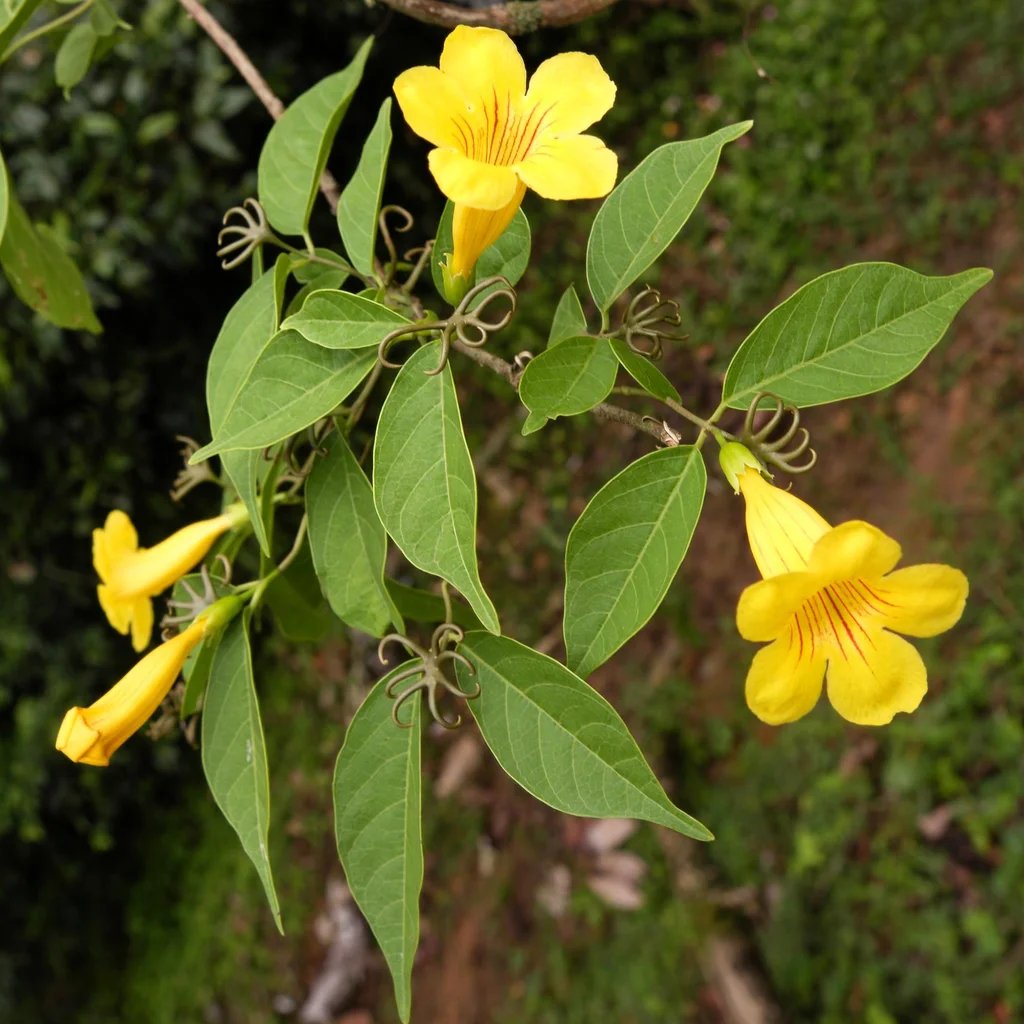
Dolichandra unguis-cati is a long-lived woody liana from tropical America that climbs to 100 feet by wiry stems and three-clawed tendrils, rooting deeply with extensive tuberous roots. Leaves are opposite and bifoliate with the third leaflet reduced to a small three-forked claw, semi-persistent through the season.
Flowers are bright yellow trumpets 2 to 3 inches long with orange-red lines in the throat, borne singly or in twos and threes in the leaf axils in a short intense spring flush. Long flattened pods to 3 feet release winged seeds, while underground tubers resprout after pulling and separate it from non-tuberous trumpet vines.
Uses & Benefits:
Essentials
At a Glance
Plant Type
Vine
Height
1181"
Width
480"
Light
Full Sun, Partial Sun
Zones
8, 9, 10
Water
Medium
Humidity
Average to humid
Lifespan
Long-lived perennial vine
Native To
Mexico to Argentina, Central America, Caribbean
Toxicity
Mildly toxic if ingested, skin irritant
Bloom period
Early spring – Late spring
In flower about 3 months of the year
Planting
How to Grow
- Do not plant; choose a non-invasive native vine instead.
- If already present, cut stems to the ground in late spring after flowering.
- Dig and bag all tuberous roots; do not put stems or pods in compost or green waste.
- Watch for seedlings for two seasons and pull them while small.
Pro Tip
Dig out every tuber; stems left on the ground reroot and split pods scatter winged seed that restocks the soil.
Keep It Thriving
Care Guide
Do
- Learn it under both names Dolichandra and Macfadyena to avoid accidental purchase.
- Bag and bin pods and stem pieces; never compost or dump them.
- Report naturalized patches to your local invasive-plant program.
Don't
- Do not plant on fences, trees or houses even in containers.
- Do not confuse it with Uncaria medicinal cat's claw.
- Do not hand-pull mature vines and leave tubers behind; they resprout.
Seasonal Care Calendar
| Task | Jan | Feb | Mar | Apr | May | Jun | Jul | Aug | Sep | Oct | Nov | Dec |
|---|---|---|---|---|---|---|---|---|---|---|---|---|
| Pest Check | ||||||||||||
| Prune | ||||||||||||
| Spring Cleanup | ||||||||||||
| Winter Prep |
Watch Out For
Pests & Diseases
Common Pests
Common Diseases
Multiply
Propagation Methods
Good to Know
Common Questions
Cat's Claw Creeper questions
What zones can Cat's Claw Creeper grow in?
Cat's Claw Creeper is hardy in USDA Zones 8–10: in that range it survives winter in the ground. Colder than Zone 8, grow it in a container you can move to shelter for the winter, or as an annual.
When does Cat's Claw Creeper bloom?
Cat's Claw Creeper typically blooms in spring. Exact timing shifts a week or two with your zone — Sow's bloom calendar maps it to your garden.
Does Cat's Claw Creeper need full sun?
Cat's Claw Creeper does best in full sun to part shade. In hot climates, afternoon shade keeps blooms fresher longer.
Is Cat's Claw Creeper drought tolerant?
Yes — once established (usually after the first full season), Cat's Claw Creeper handles dry spells with minimal watering. Water deeply its first year to build the root system that makes that possible.
Keep exploring
Explore the genus
Hardy in your zone?
Grow Cat's Claw Creeper with confidence
See it in a design of your actual yard, get zone-matched care reminders, and track it season by season in your garden journal.