The Story
Plant Bio
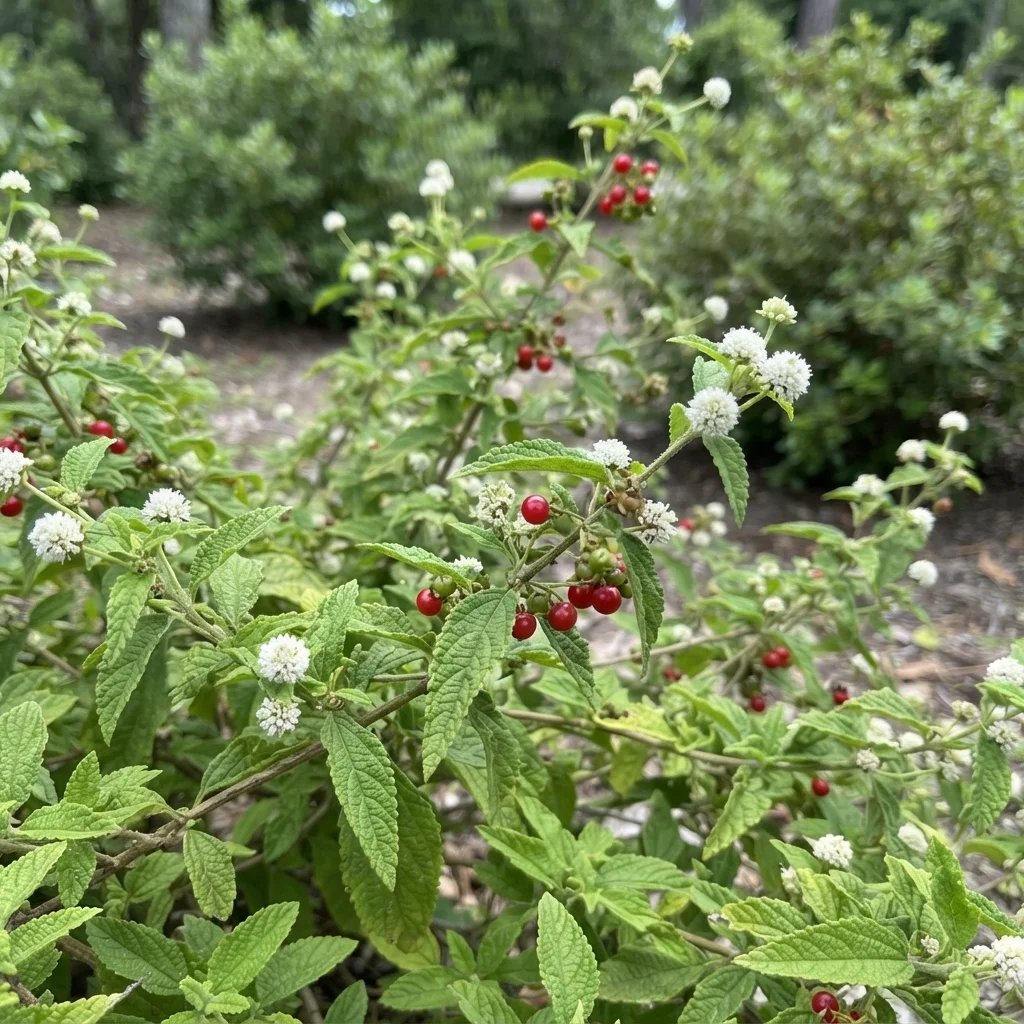
Varronia globosa, still sold as Cordia globosa, is an evergreen shrub reaching six to ten feet with wiry, somewhat straggling stems and small coarse bright green leaves one to two inches long. The stems end in tight globular clusters of small scented white flowers that give way to clusters of fleshy red berries.
Unlike tree-forming cordias, this species stays shrubby and dense enough to clip as a low hedge, flowering and fruiting in overlapping cycles through most of the year. The combination of rough lance-shaped leaves, ball-shaped white flower heads, and bird-sown red fruit sets it apart from other South Florida hammock shrubs.
Uses & Benefits:
Essentials
At a Glance
Plant Type
Shrub
Height
96"
Width
72"
Light
Full Sun, Partial Sun
Zones
10
Water
Low to moderate
Humidity
Unknown
Lifespan
Long-lived shrub
Native To
Florida, Mexico, Central America, Caribbean to NE Brazil
Toxicity
Unknown - no toxicity data reported
Bloom period
Year round
In flower about 12 months of the year
Planting
How to Grow
- Set plants in full sun to light shade in sandy, limestone-based soil that drains fast and never floods.
- Dig the hole no deeper than the pot and twice as wide, backfill with native sand and water in deep.
- Water regularly for the first warm season, then taper off; established plants handle very long dry spells.
- Spread a thin mulch ring to keep roots cool and pull weeds, keeping mulch off the stems.
- Clip lightly to shape after a heavy bloom; thin crowded wiry stems to keep air and light inside.
Pro Tip
Plant for a six-foot shrub from the start and pull bird-sown seedlings while small; light clipping after a heavy flush keeps it dense without stimulating a tangle of wiry shoots.
Keep It Thriving
Care Guide
Do
- Do give it full sun and alkaline sand or calcareous soil with sharp drainage.
- Do water new plants through establishment, then rely on rainfall except in extreme drought.
- Do leave flowers and red berries for butterflies, bees, and fruit-eating birds.
- Do source nursery-grown plants and protect wild Florida populations.
Don't
- Do not plant in wet soil, low spots that flood, or heavy clay that stays soggy.
- Do not shear into old leafless wood or expect it to stay a small perennial.
- Do not collect seed or plants from wild hammocks and old fields.
- Do not spray open flower clusters; bees work the blooms through much of the year.
Seasonal Care Calendar
| Task | Jan | Feb | Mar | Apr | May | Jun | Jul | Aug | Sep | Oct | Nov | Dec |
|---|---|---|---|---|---|---|---|---|---|---|---|---|
| Mulch | ||||||||||||
| Pest Check | ||||||||||||
| Plant | ||||||||||||
| Propagate | ||||||||||||
| Prune |
Watch Out For
Pests & Diseases
Common Pests
Common Diseases
In the Garden
Landscape Uses & Companions
Landscape Uses
Multiply
Propagation Methods
Good to Know
Common Questions
Bloodberry questions
What zones can Bloodberry grow in?
Bloodberry is hardy in USDA Zone 10: in that range it survives winter in the ground. Colder than Zone 10, grow it in a container you can move to shelter for the winter.
When does Bloodberry bloom?
Bloodberry typically blooms year-round. Exact timing shifts a week or two with your zone — Sow's bloom calendar maps it to your garden.
Does Bloodberry need full sun?
Bloodberry does best in full sun to part shade. In hot climates, afternoon shade keeps blooms fresher longer.
Is Bloodberry drought tolerant?
Yes — once established (usually after the first full season), Bloodberry handles dry spells with minimal watering. Water deeply its first year to build the root system that makes that possible.
Keep exploring
Explore the genus
Hardy in your zone?
Grow Bloodberry with confidence
See it in a design of your actual yard, get zone-matched care reminders, and track it season by season in your garden journal.