The Story
Plant Bio
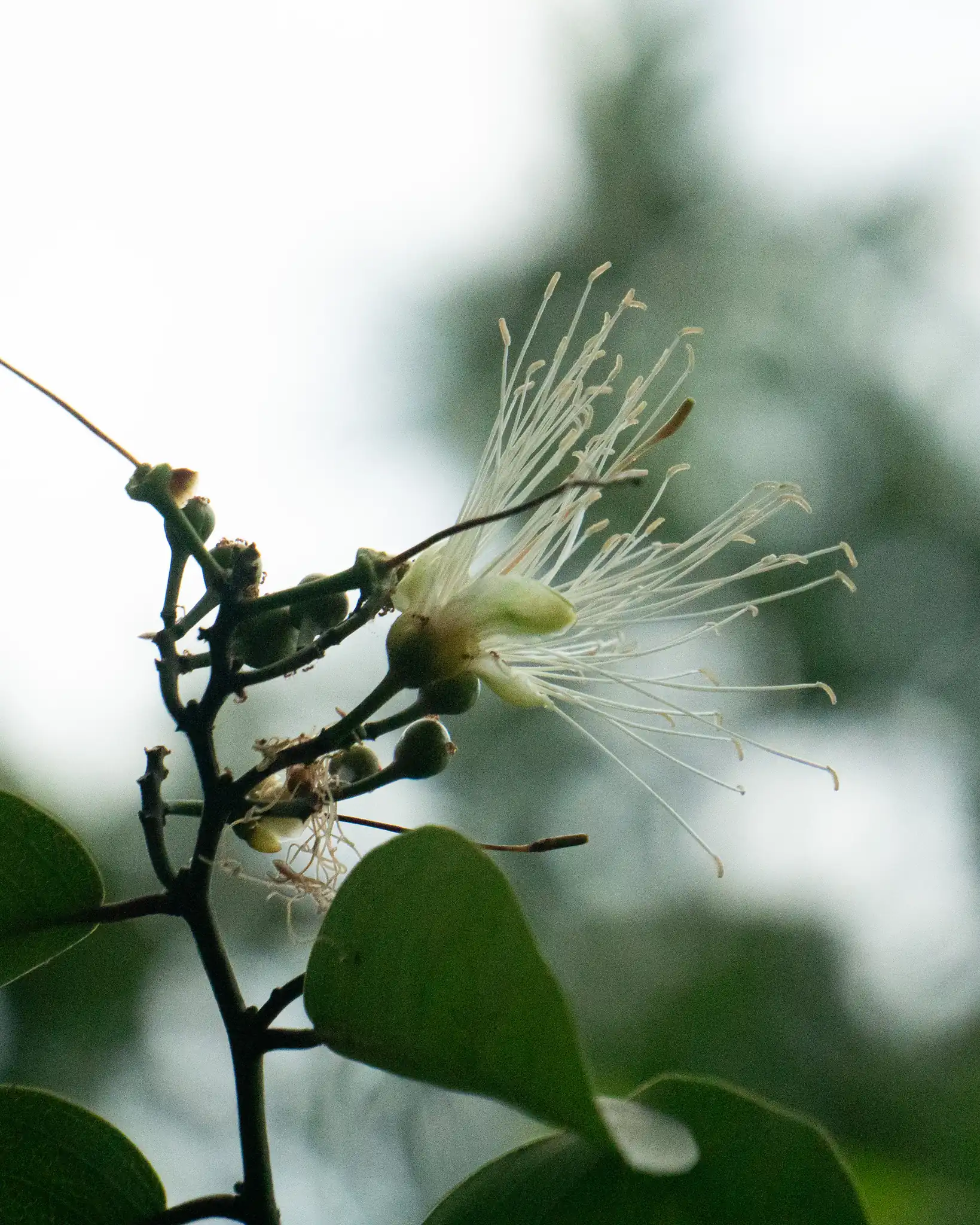
Cynophalla flexuosa, the limber caper, is an evergreen shrub or small tree reaching 7 to 13 feet in the wild and to 20 feet in gardens, with an irregular clambering crown that climbs when supported. The leaves are simple, oblong and leathery with a bay-like gloss, 1 to 3 inches long on short orange petioles, and the spring to late-summer flowers open white and age pinkish with very long pink-tipped stamens.
It is separated from Jamaican caper by smooth green leaf undersides and by larger nocturnal fragrant flowers with petals to three-quarters of an inch and stamens to more than two inches. The flowers are followed by narrow bean-like pods that split to expose seeds in white oily pulp, and nursery stock is still sold under Capparis flexuosa and Morisonia flexuosa.
Uses & Benefits:
Essentials
At a Glance
Plant Type
Shrub
Height
144"
Width
120"
Light
Full Sun
Zones
9, 10
Water
Low
Humidity
Tolerant
Lifespan
Long-lived
Native To
Florida, Mexico, West Indies, Central America, northern South America
Toxicity
Unknown
Bloom period
Spring – Late summer
In flower about 6 months of the year
Planting
How to Grow
- Plant in full sun in moist sandy or limestone soil with good drainage and some organic matter.
- Set the rootball level with the grade and water deeply to settle the soil around the roots.
- Mulch 2 to 3 inches deep, keeping mulch off the stem, and water until established.
- Prune after flowering to shape as a shrub, small tree, or barrier hedge.
Pro Tip
Cut back after the summer flush to shape; it resprouts from pruning and holds as a dense barrier if tipped regularly.
Keep It Thriving
Care Guide
Do
- Do plant in full sun with sharp drainage.
- Do prune after flowering to keep the crown dense.
- Do leave spent pods for Blue Jays and Mockingbirds that disperse the seed.
Don't
- Do not plant in wet or poorly drained soil.
- Do not shear into old bare wood expecting fast regrowth.
- Do not expect high salt spray tolerance at the immediate beachfront.
Seasonal Care Calendar
| Task | Jan | Feb | Mar | Apr | May | Jun | Jul | Aug | Sep | Oct | Nov | Dec |
|---|---|---|---|---|---|---|---|---|---|---|---|---|
| Mulch | ||||||||||||
| Pest Check | ||||||||||||
| Plant | ||||||||||||
| Prune |
Watch Out For
Pests & Diseases
Common Pests
Common Diseases
In the Garden
Landscape Uses & Companions
Landscape Uses
Multiply
Propagation Methods
Good to Know
Common Questions
Limber Caper questions
What zones can Limber Caper grow in?
Limber Caper is hardy in USDA Zones 9–10: in that range it survives winter in the ground. Colder than Zone 9, grow it in a container you can move to shelter for the winter.
When does Limber Caper bloom?
Limber Caper typically blooms from spring to summer. Exact timing shifts a week or two with your zone — Sow's bloom calendar maps it to your garden.
Does Limber Caper need full sun?
Limber Caper does best in full sun (6+ hours).
Is Limber Caper drought tolerant?
Yes — once established (usually after the first full season), Limber Caper handles dry spells with minimal watering. Water deeply its first year to build the root system that makes that possible.
Keep exploring
Explore the genus
Hardy in your zone?
Grow Limber Caper with confidence
See it in a design of your actual yard, get zone-matched care reminders, and track it season by season in your garden journal.