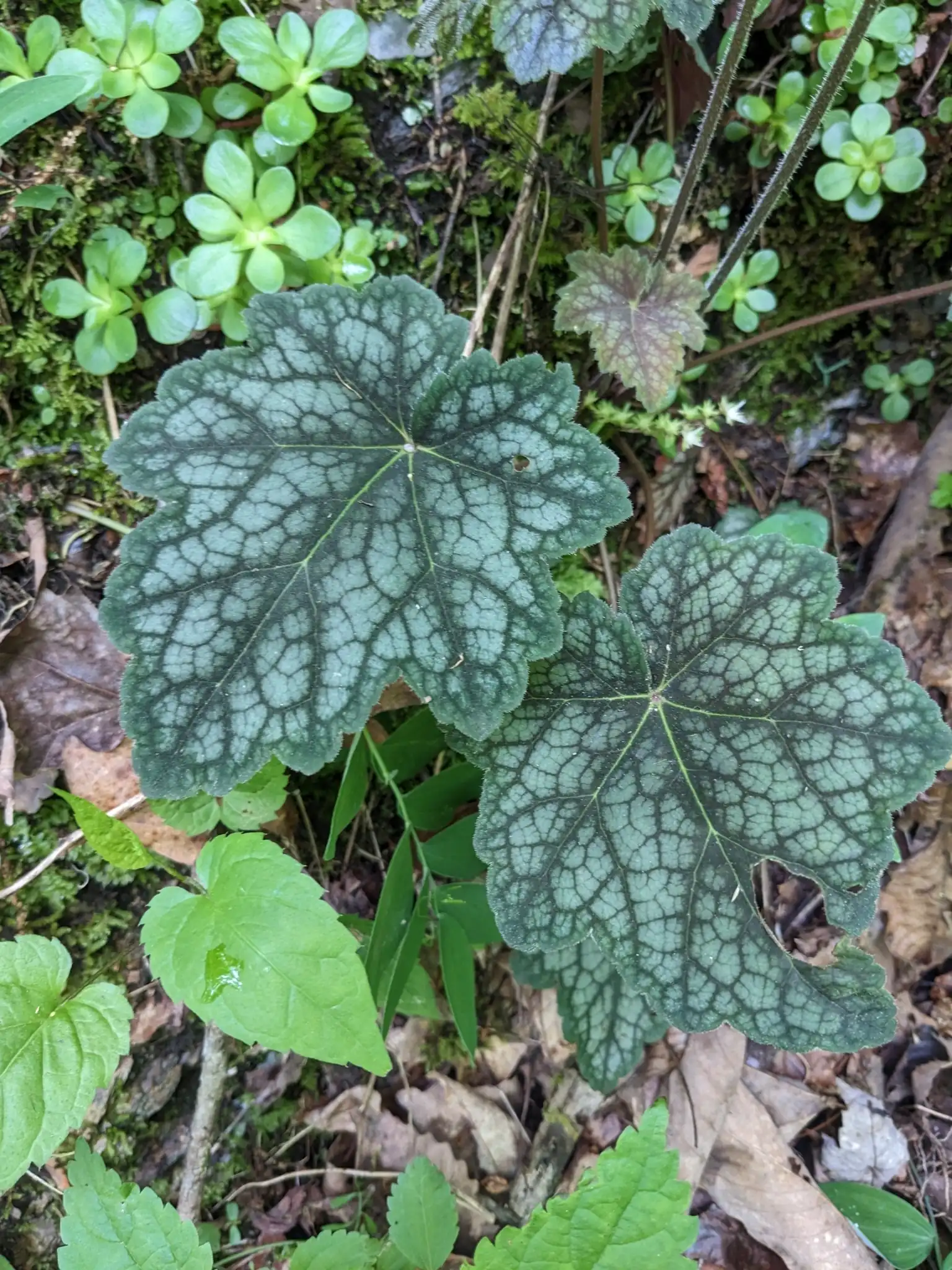
14 named cultivars
 ‘Palace Purple’Palace Purple Coral Bells
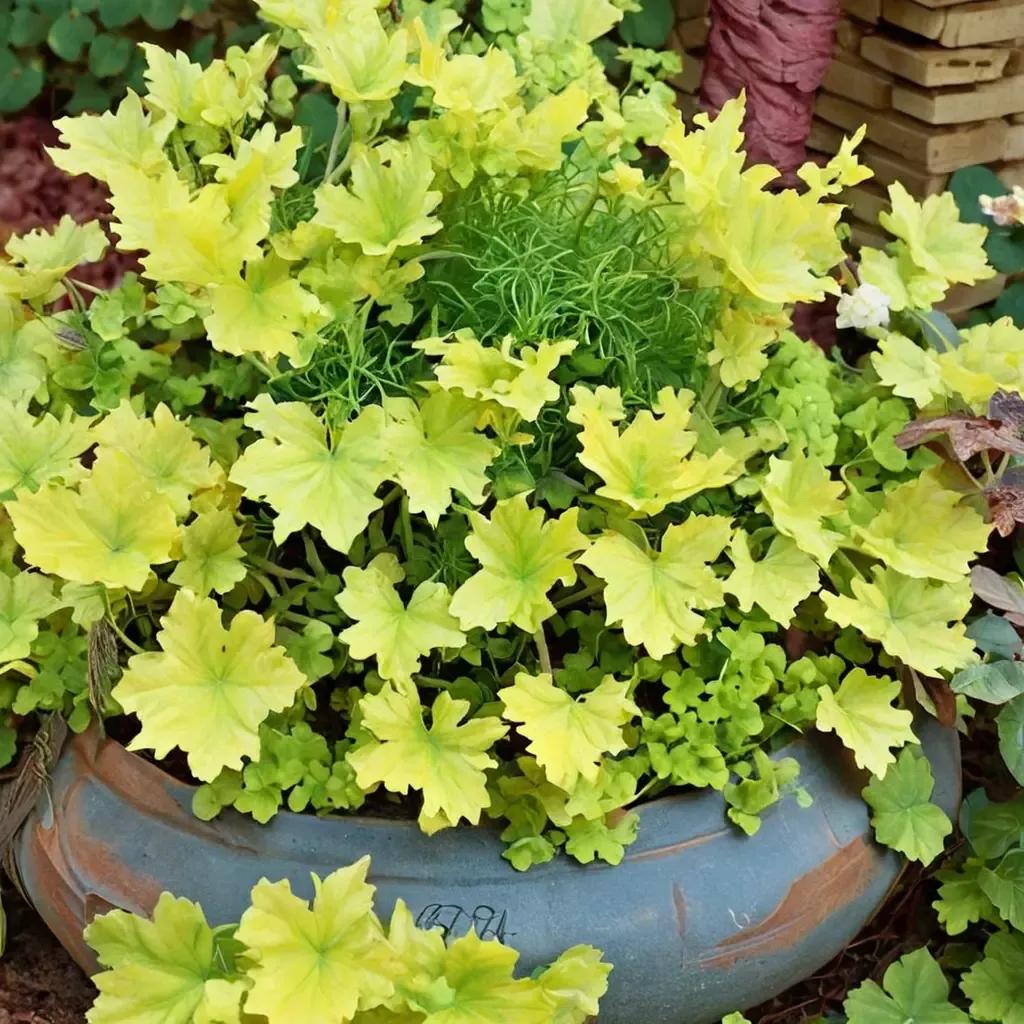 ‘Lime Marmalade’Lime Marmalade Coral Bells
 ‘Autumn Leaves’Autumn Leaves Coral Bell
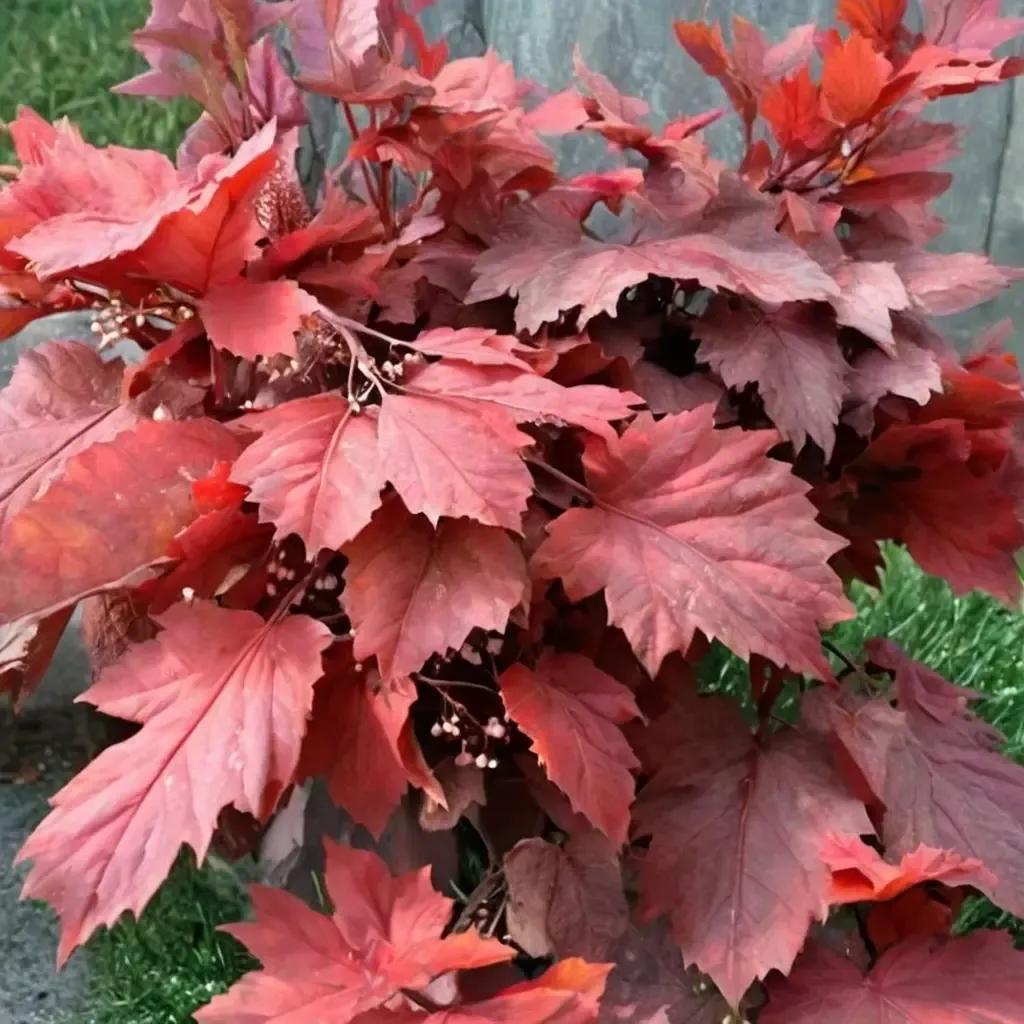 ‘Magma’Magma Coral Bell
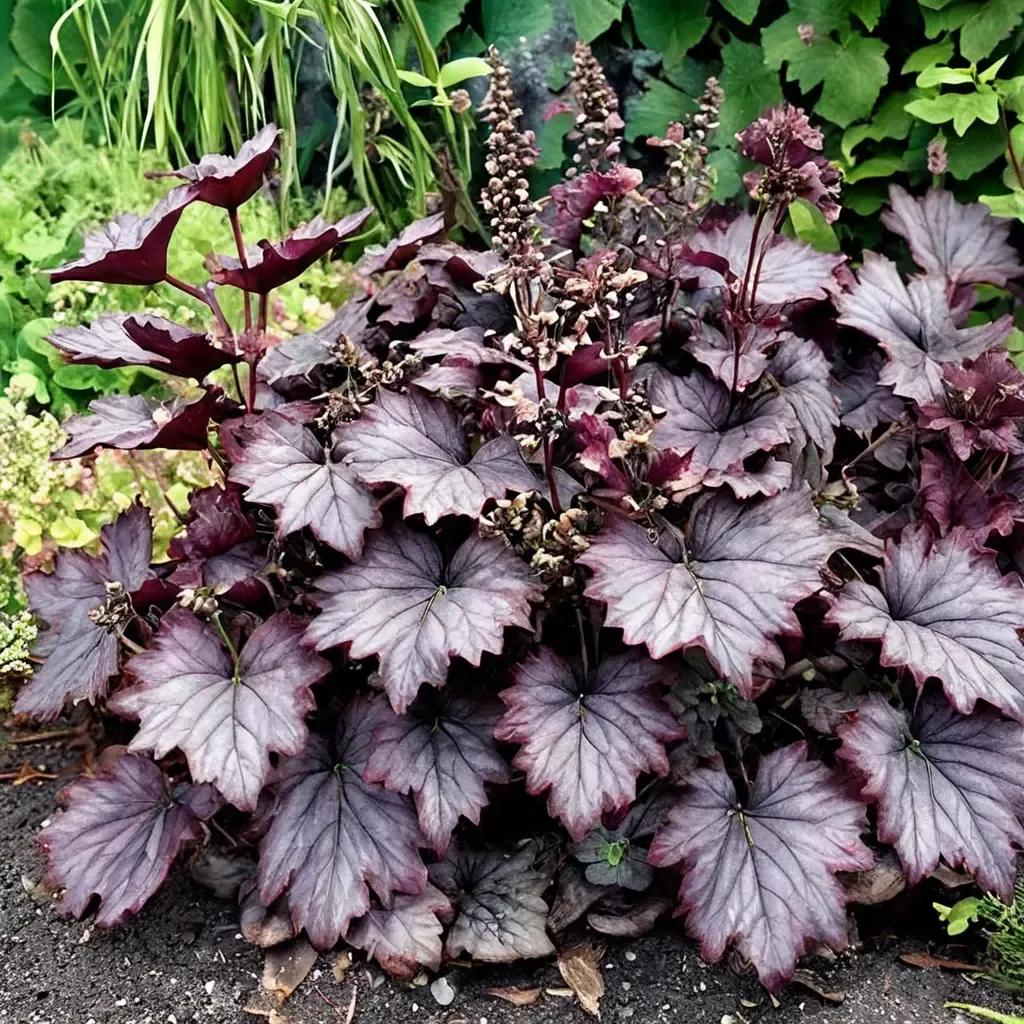 ‘Northern Exposure Purple’Northern Exposure Purple Coral Bells
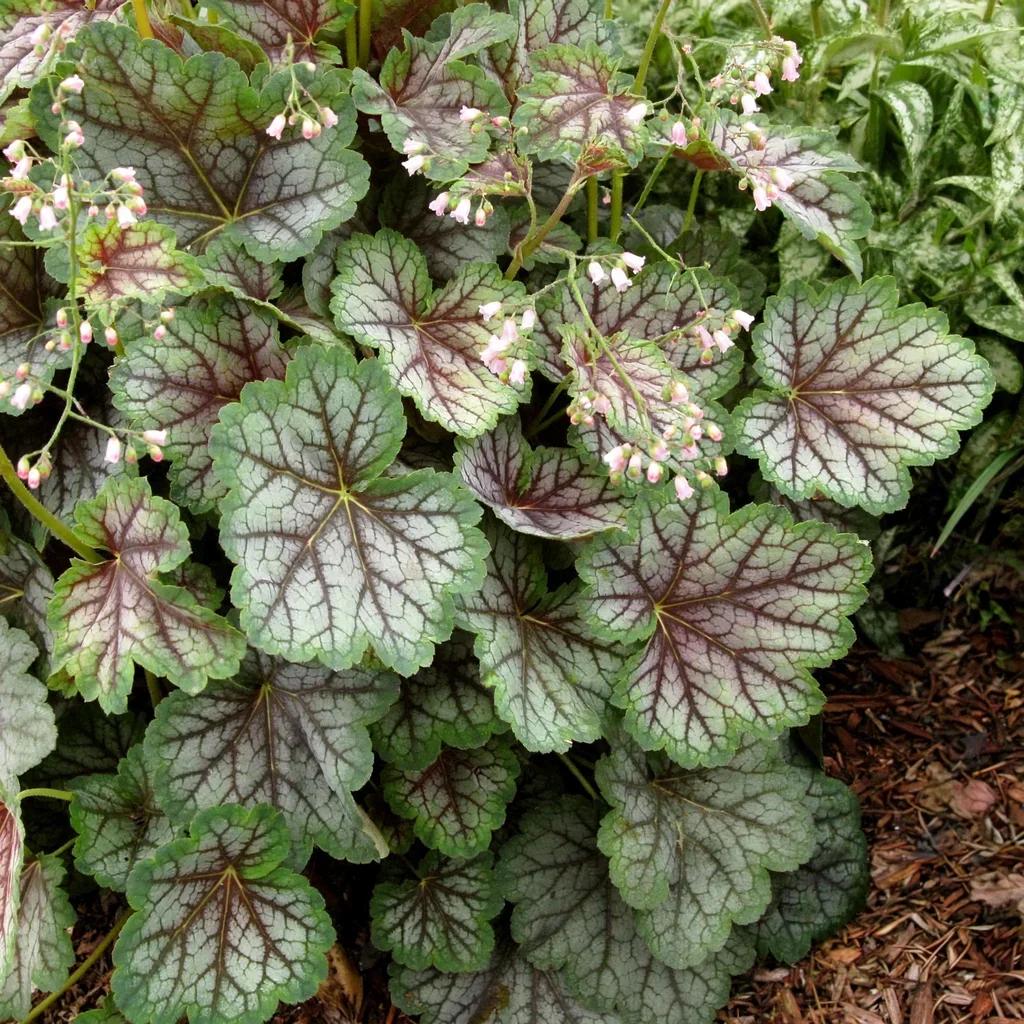 ‘Green Spice’Green Spice Coral Bells
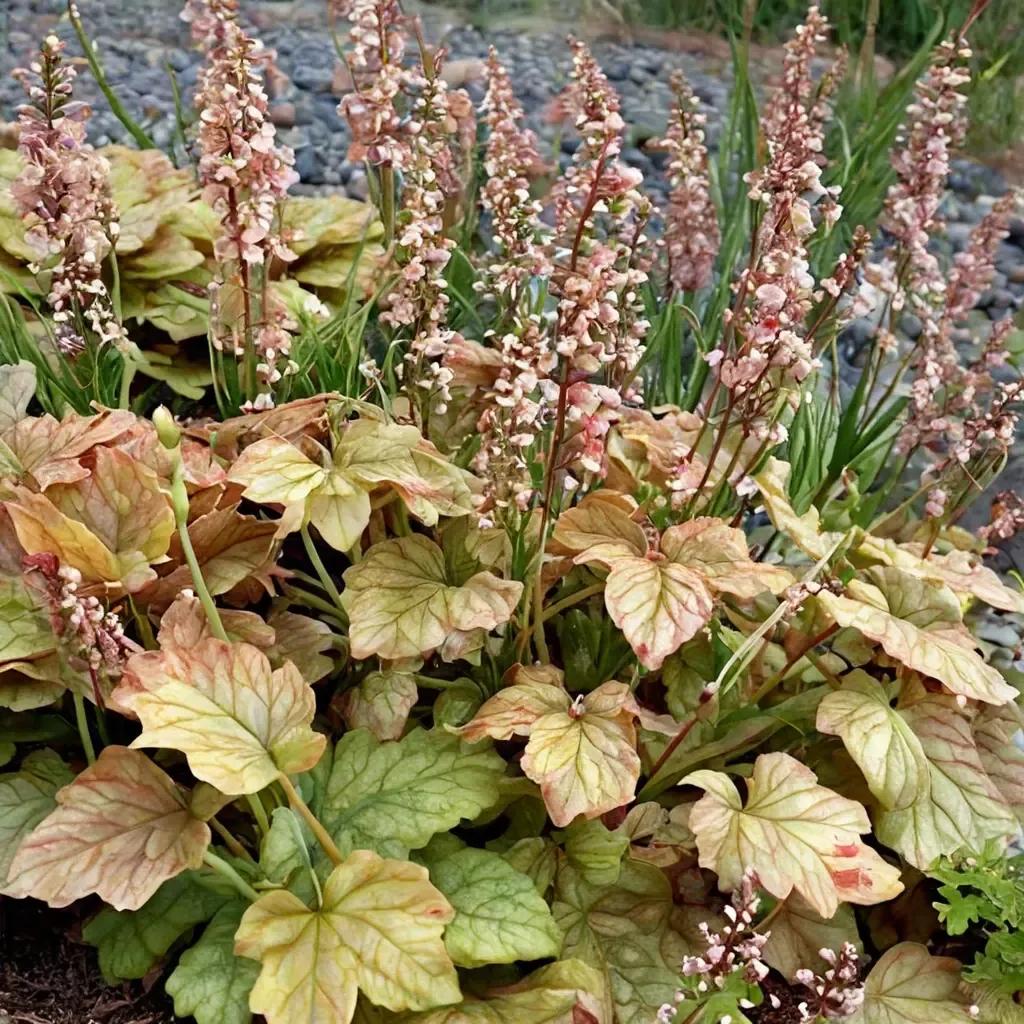 ‘Champagne’Champagne Coral Bell
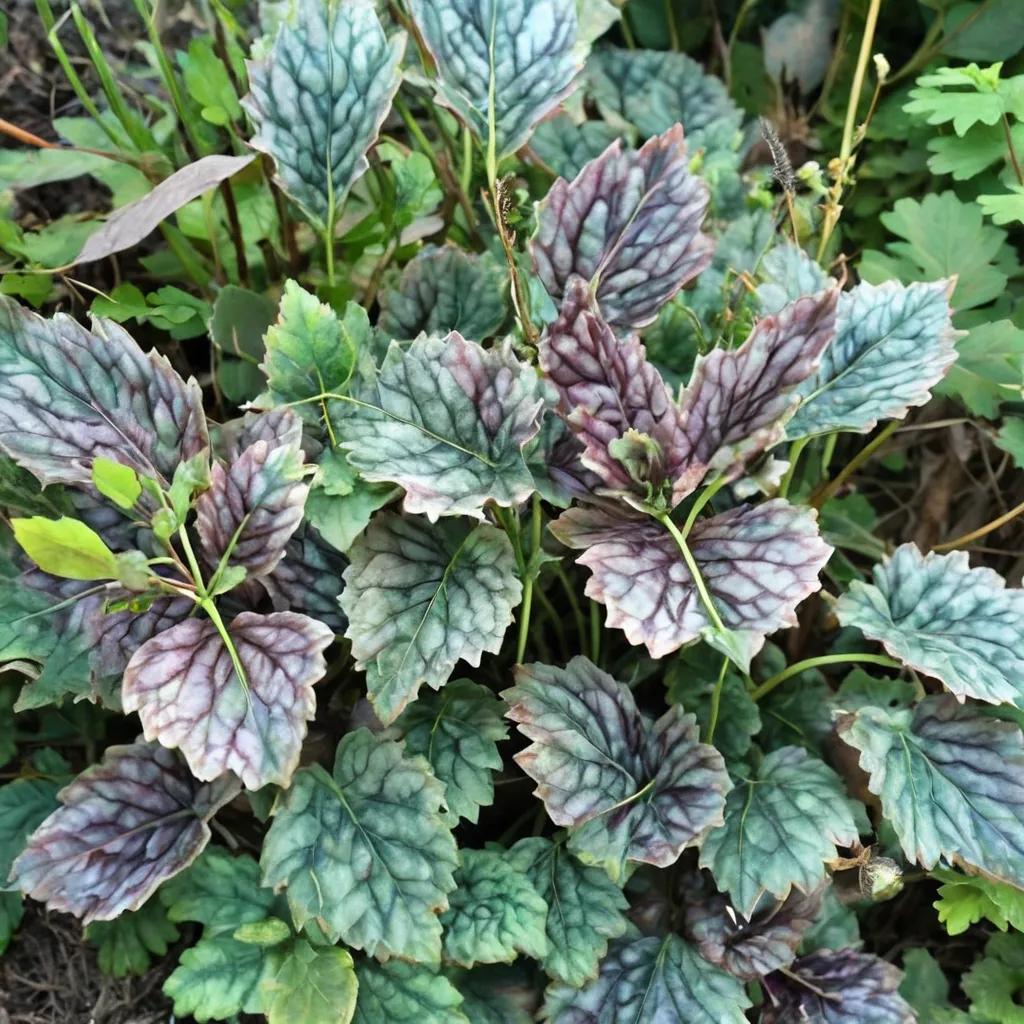 ‘Sterling Silver’Sterling Silver Coral Bells
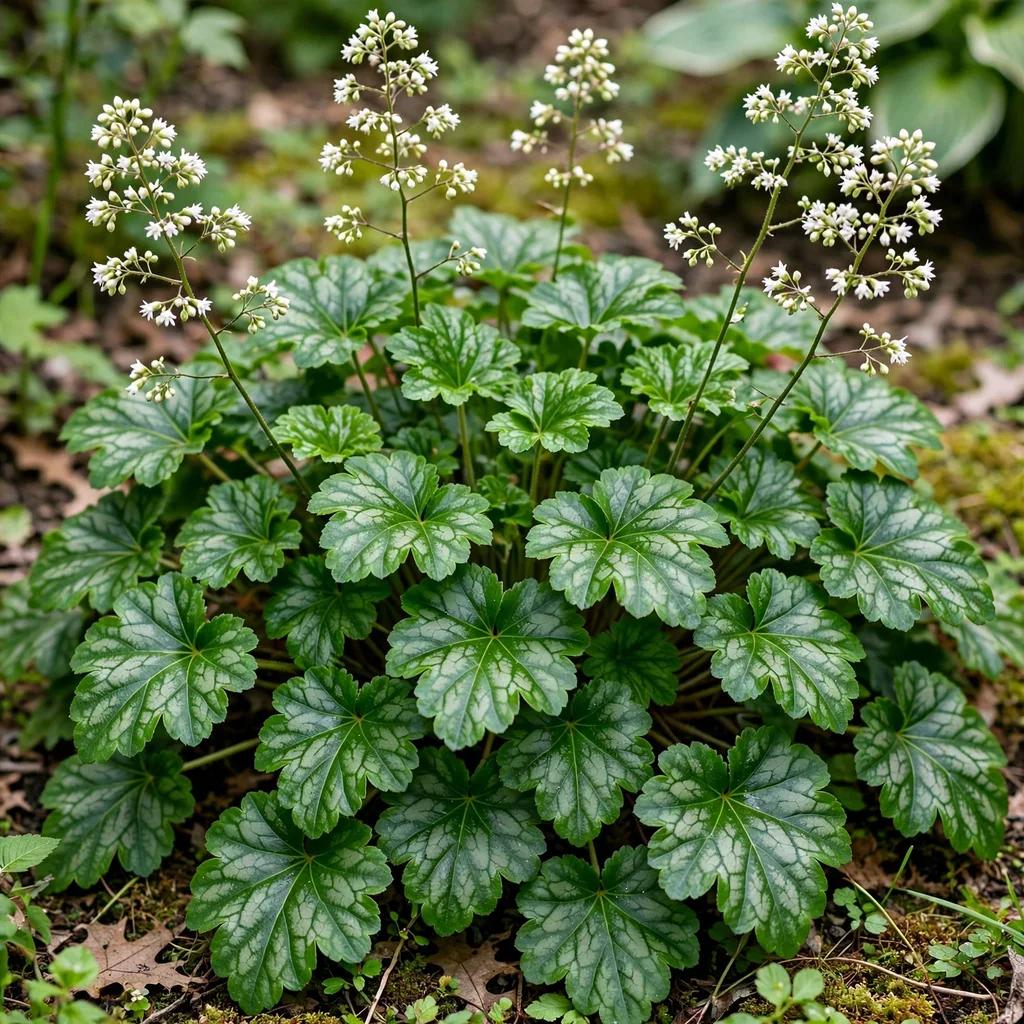 ‘Emerald Veil’Emerald Veil American Alumroot
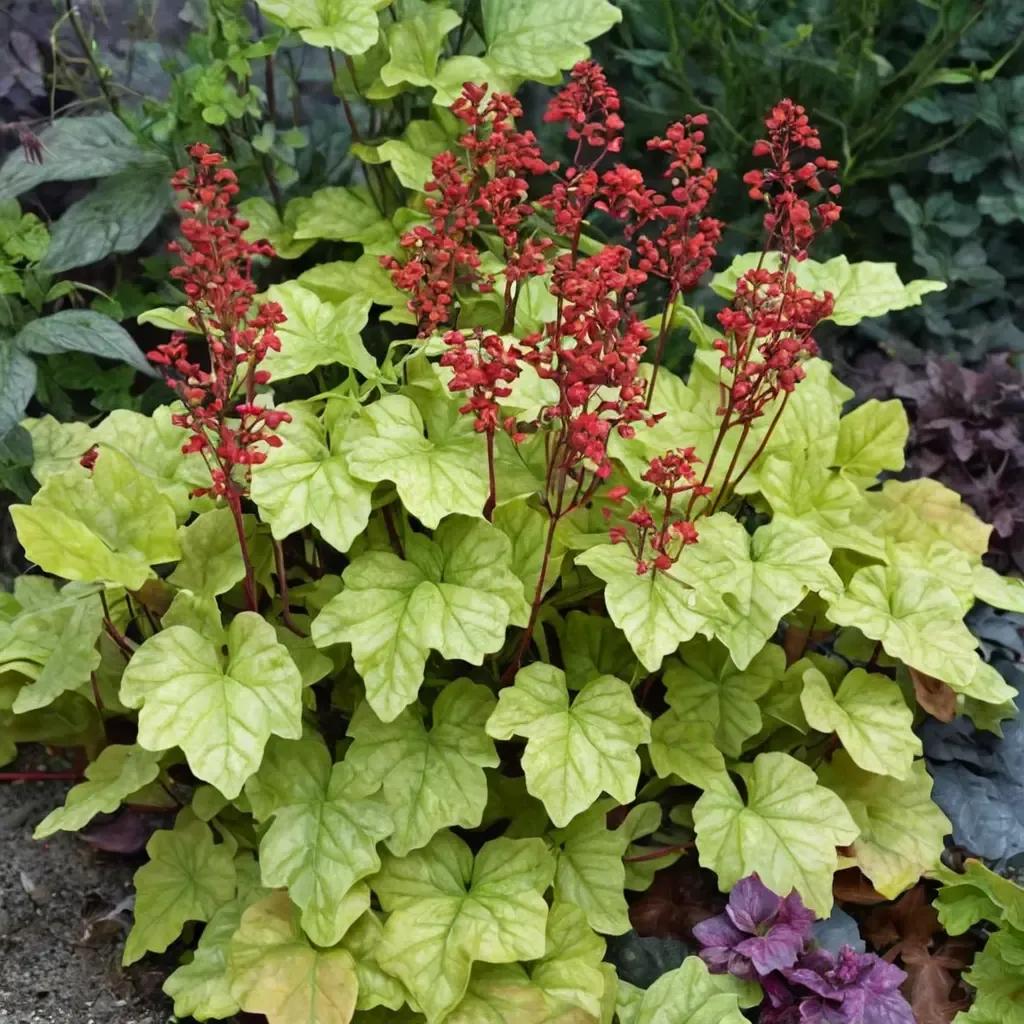 ‘Appletini’Appletini Heuchera
 ‘Frilly’Frilly Alumroot
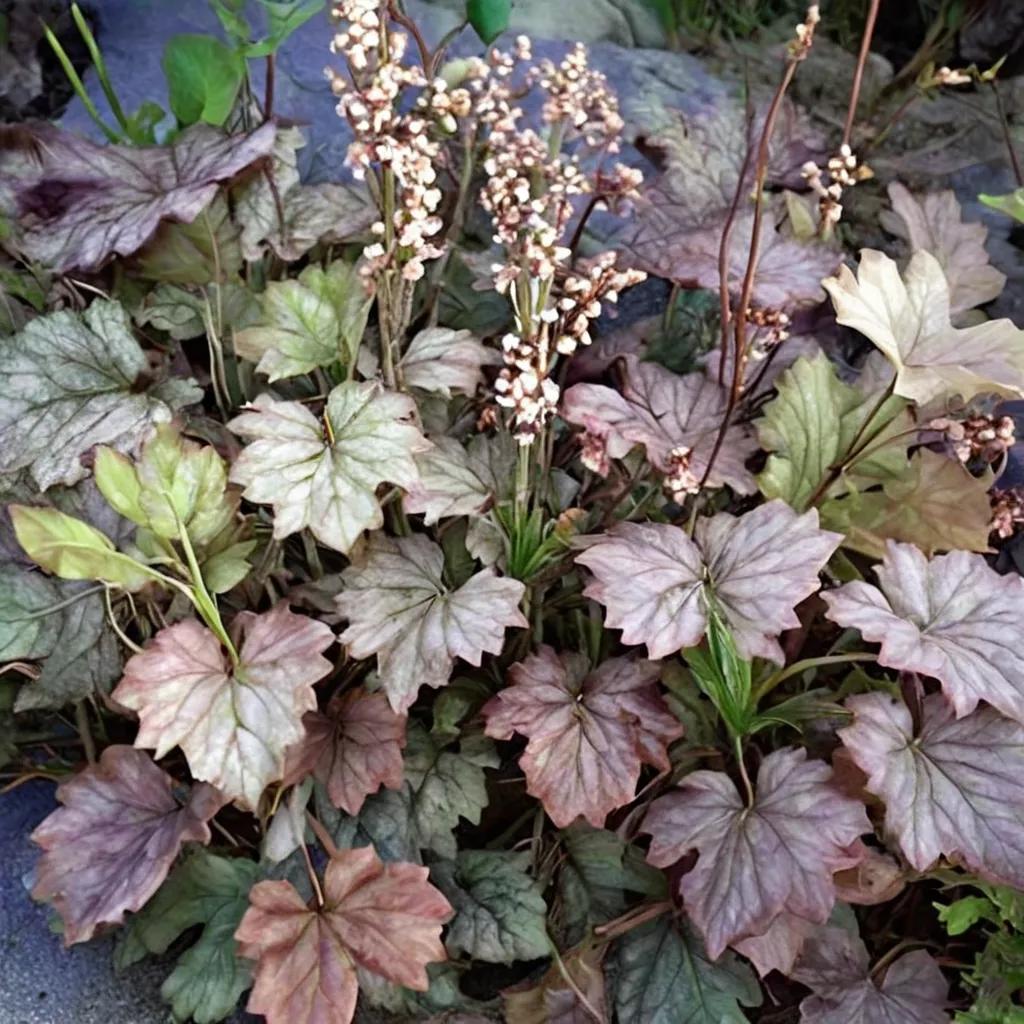 ‘Bartram’Bartram American Alumroot
 ‘Dale’Dale's Strain Alumroot
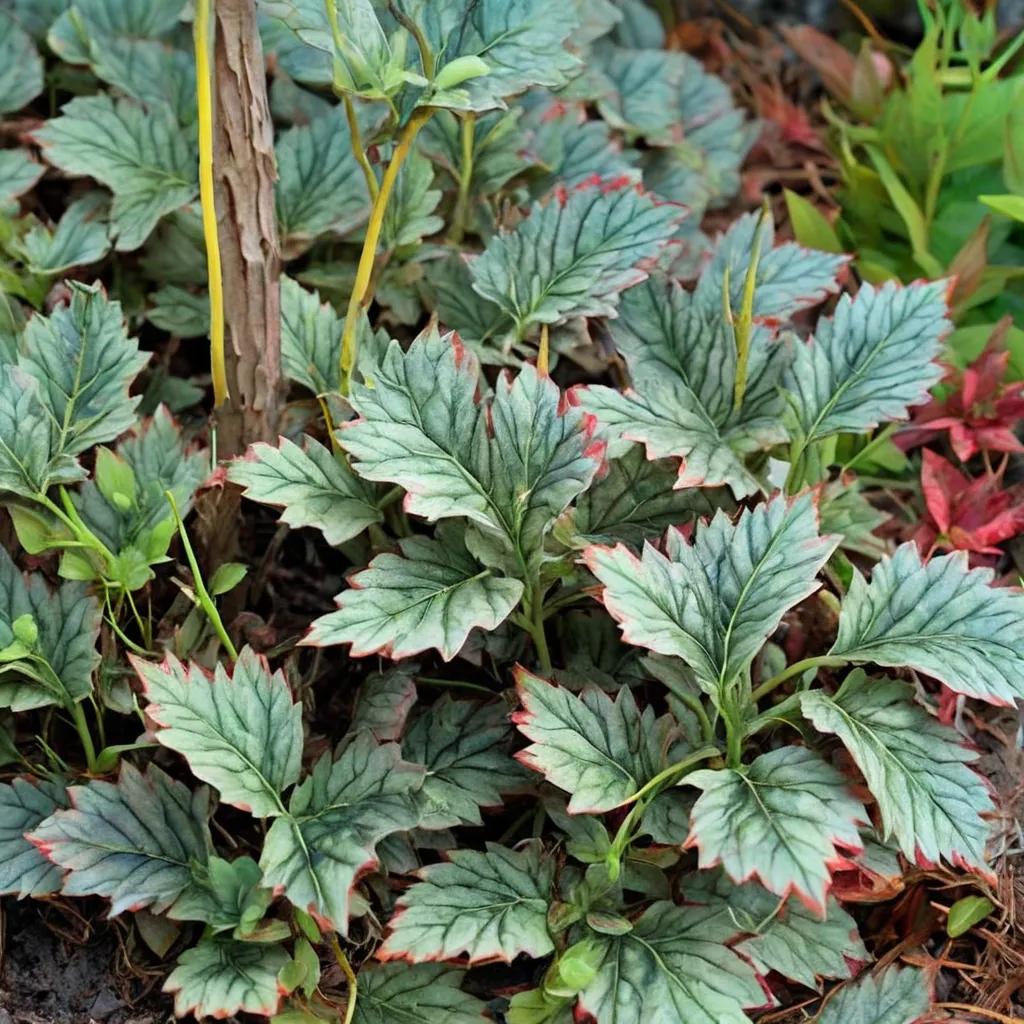 ‘Ring of Fire’Ring of Fire Coral Bells
The Story
Plant Bio
Heuchera americana, American alumroot, is a clumping evergreen perennial native to eastern and central North America from Ontario southward. It forms a low mound of long-stalked heart-shaped leaves, shallowly lobed and toothed, often marbled with silver or bronze. Airy panicles of small greenish-cream bells rise a foot or more above the foliage in late spring.
The foliage is the point and it holds through winter, which is why this species is the parent of most modern heucheras — the garden varieties with lime, peach and burgundy leaves trace back to it. Unlike many of those hybrids it tolerates real heat and humidity, and it grows in dry shade where little else keeps its colour.
Uses & Benefits:
Essentials
At a Glance
Plant Type
Perennial
Height
24"
Width
18"
Light
Partial Sun, Shade
Zones
4, 5, 6, 7, 8, 9
Water
Low to moderate
Humidity
Moderate
Lifespan
Perennial
Native To
Eastern and central North America
Toxicity
Non-toxic
Planting
How to Grow
- Plant in spring or autumn in humus-rich, well-drained soil.
- Choose dappled or partial shade; some sun is tolerated.
- Set the crown at soil level, never buried.
- Water through the first season; it is drought-tolerant after.
- Mulch lightly, keeping mulch off the crown.
- Divide every three or four years when clumps heave upward.
Pro Tip
Replant it deeper every few years — heucheras push themselves out of the ground as the woody crown lengthens, and lifting and resetting them is the standard fix.
Keep It Thriving
Care Guide
Do
- Plant in well-drained soil with good humus 🌱
- Divide every three or four years ✂️
- Use it for winter foliage in shade 🍂
- Reset heaved crowns deeper 🪴
Don't
- Plant in heavy wet soil; the crown rots ❌
- Bury the crown when planting ❌
- Let it sit in winter wet ❌
Seasonal Care Calendar
| Task | Jan | Feb | Mar | Apr | May | Jun | Jul | Aug | Sep | Oct | Nov | Dec |
|---|---|---|---|---|---|---|---|---|---|---|---|---|
| Divide | ||||||||||||
| Prune |
Watch Out For
Pests & Diseases
Common Pests
Common Diseases
In the Garden
Landscape Uses & Companions
Landscape Uses
Multiply
Propagation Methods
Good to Know
Common Questions
Coral Bells questions
What zones can Coral Bells grow in?
Coral Bells is hardy in USDA Zones 4–9. Inside that range it survives winter in the ground; outside it, grow it as an annual or a container plant you protect.
Is Coral Bells deer resistant?
Yes — Coral Bells is rated deer-resistant. Deer typically pass it over, though extreme hunger can override any plant's defenses.
When does Coral Bells bloom?
Coral Bells typically blooms in late spring to summer through late summer. Exact timing shifts a week or two with your zone — Sow's bloom calendar maps it to your garden.
Does Coral Bells need full sun?
Coral Bells does best in part shade.
Is Coral Bells drought tolerant?
Yes — once established (usually after the first full season), Coral Bells handles dry spells with minimal watering. Water deeply its first year to build the root system that makes that possible.
More Heuchera to compare
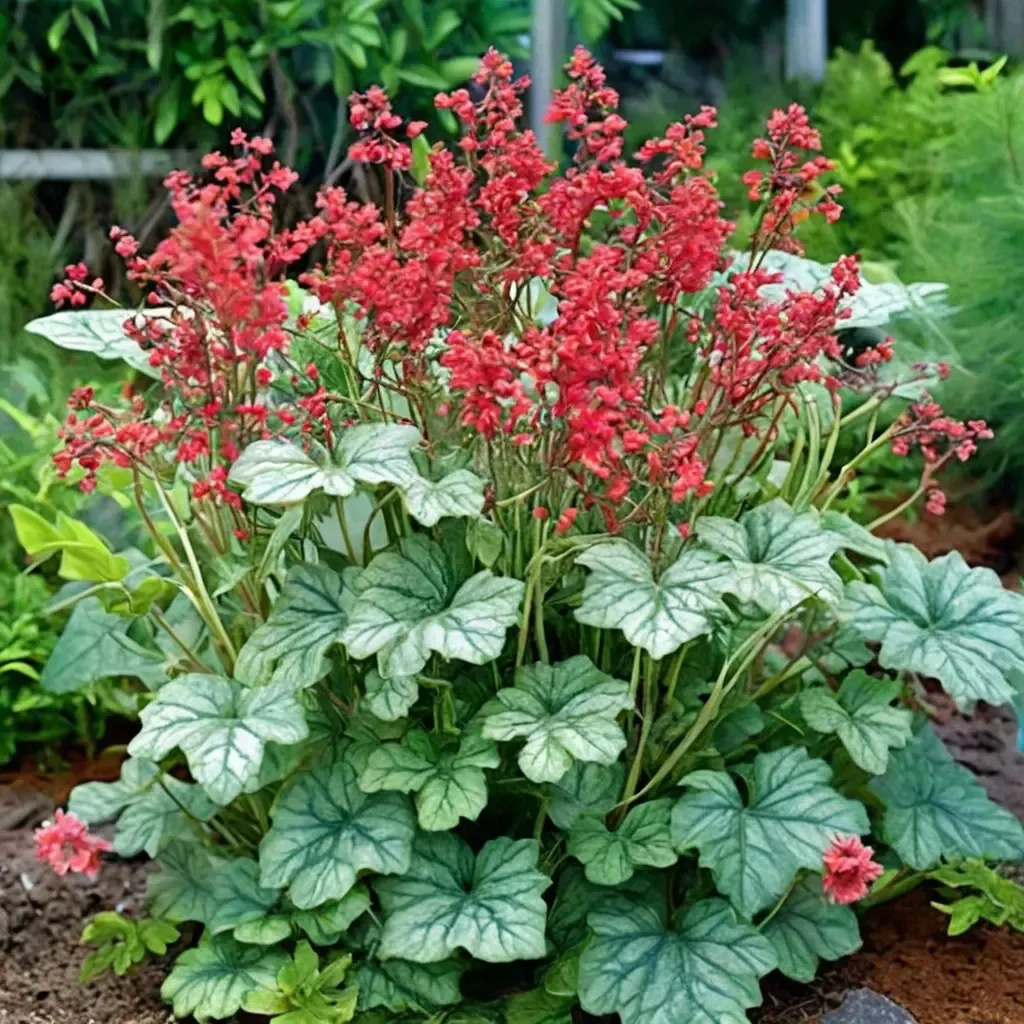
Mixed Coral Bells
Heuchera sanguinea 'Mixed Coral Bells'
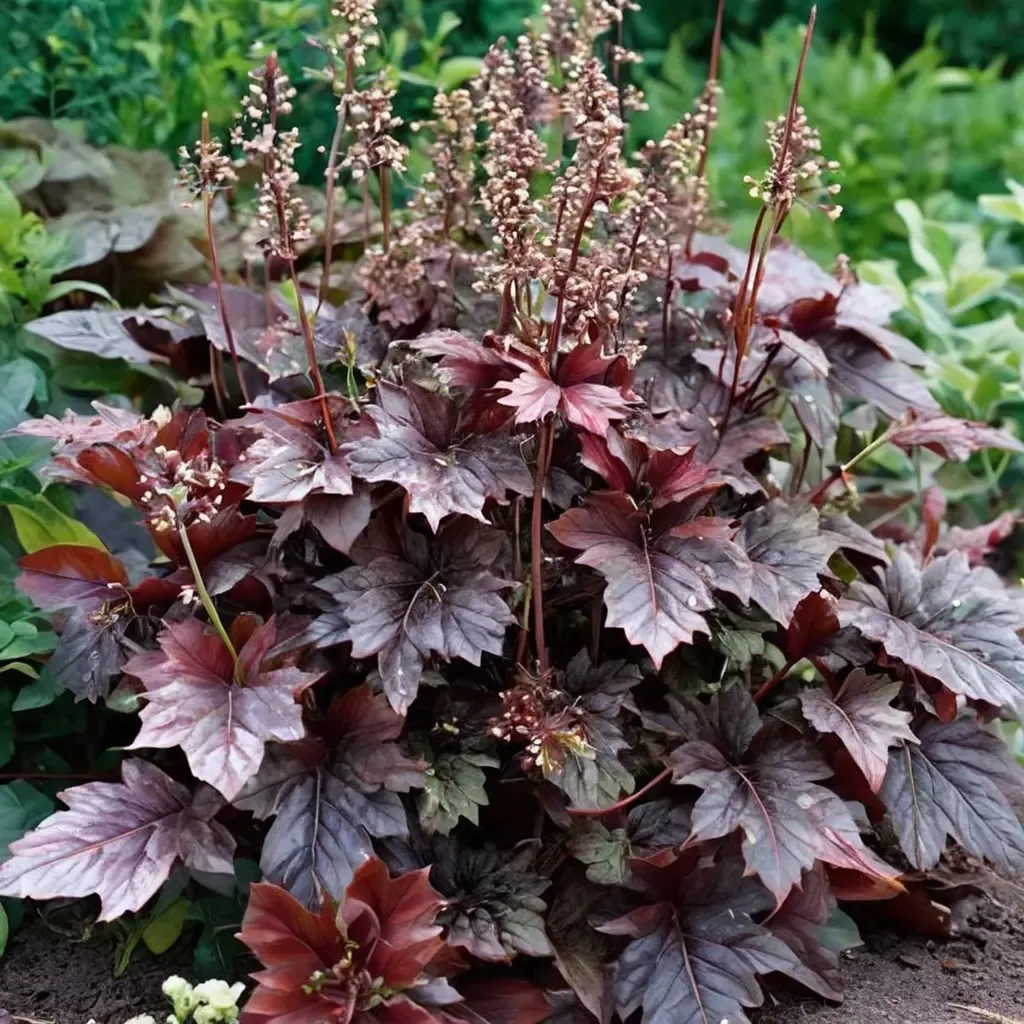
Palace Purple Coral Bells
Heuchera americana 'Palace Purple'
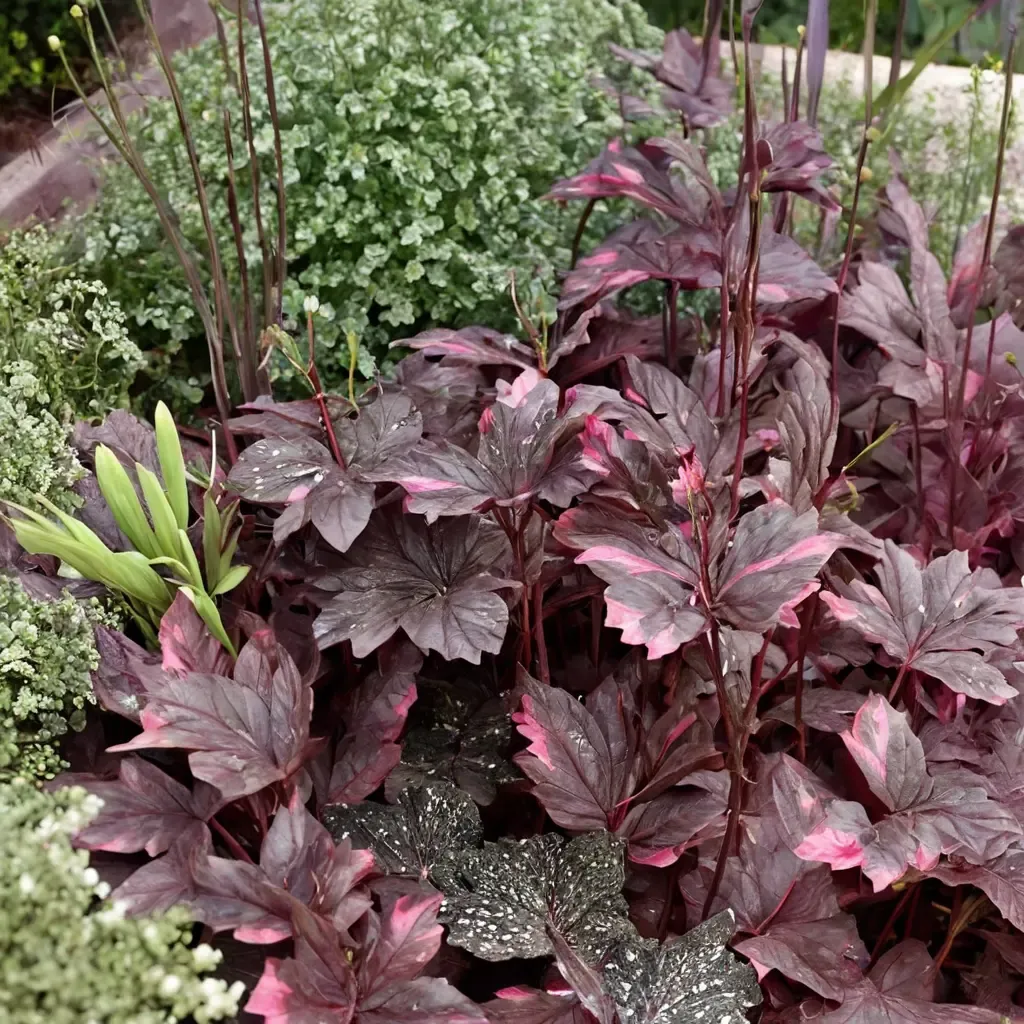
Midnight Rose Coral Bell
Heuchera x brizoides 'Midnight Rose'
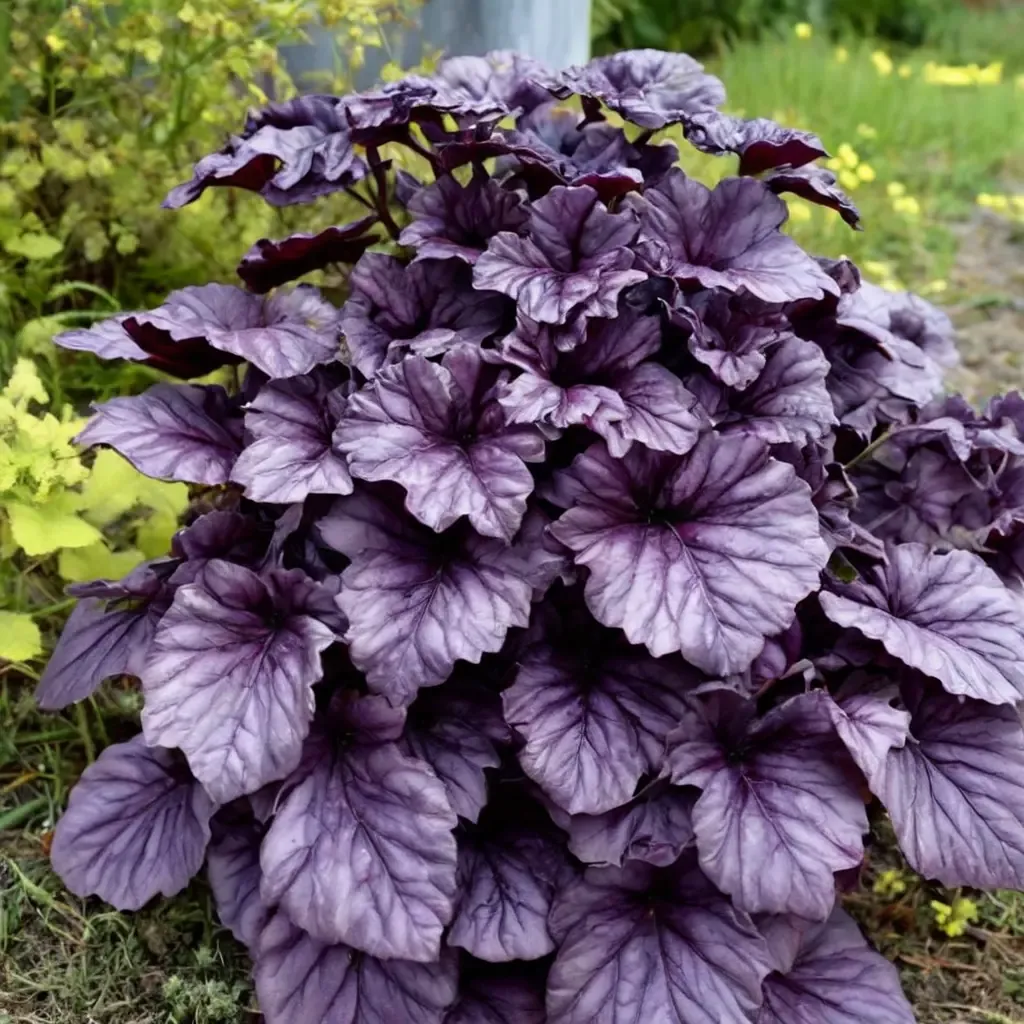
Wildberry Coral Bells
Heuchera x brizoides 'Wildberry'
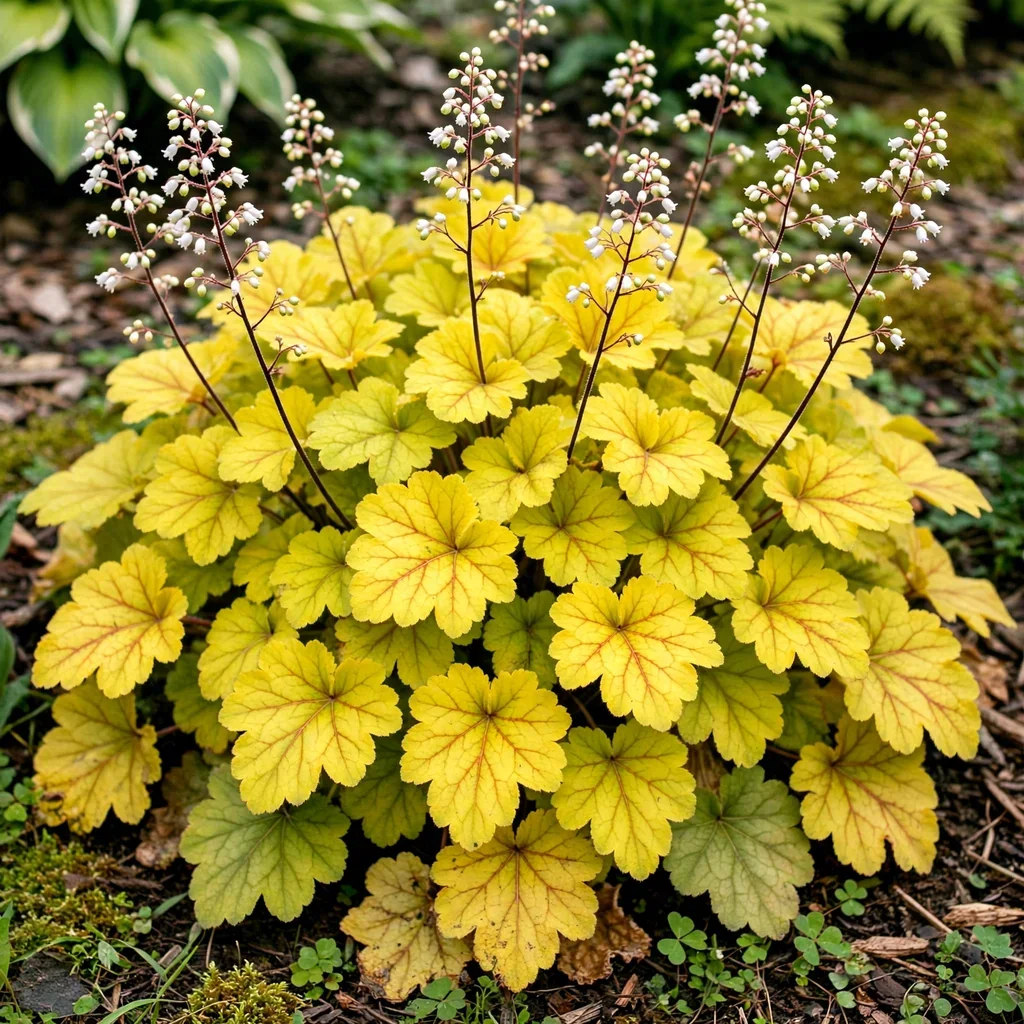
Electra Coral Bells
Heuchera sanguinea 'Electra'
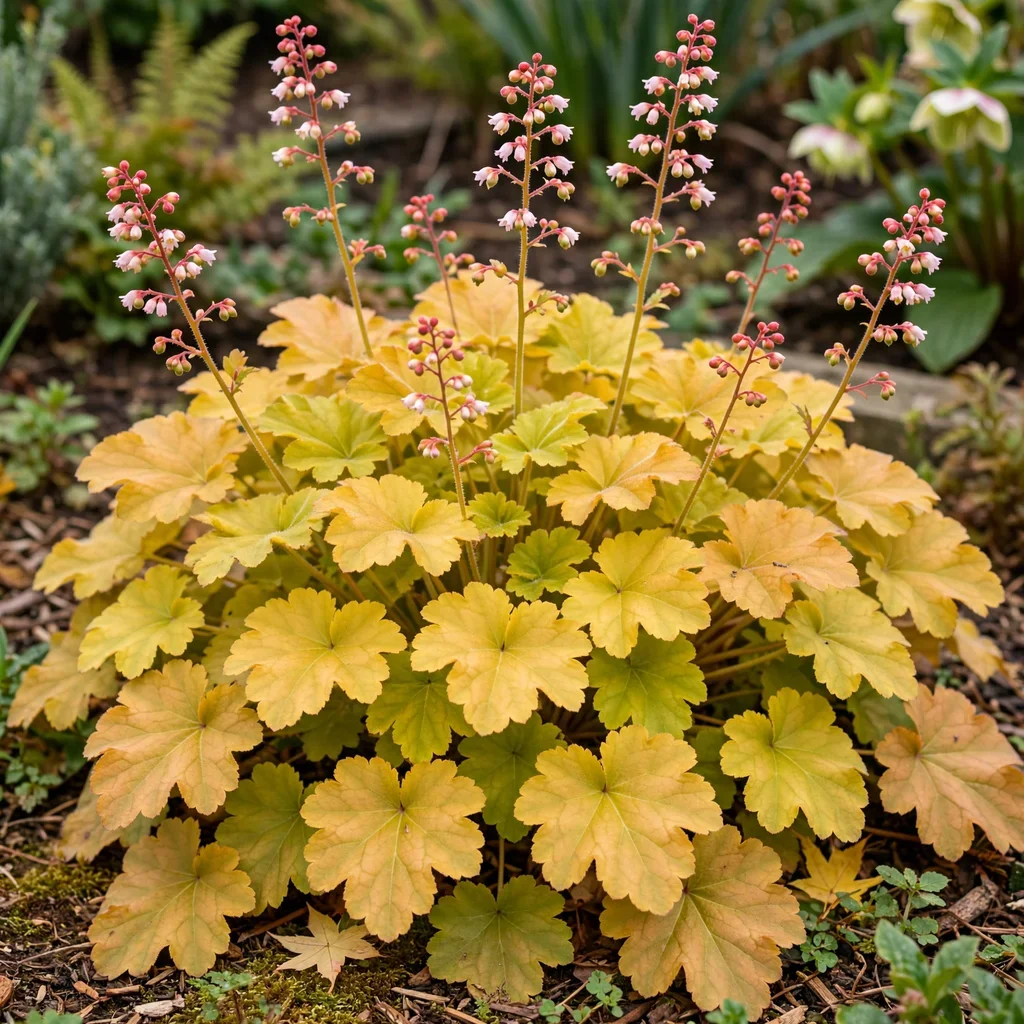
Caramel Coral Bells
Heuchera sanguinea 'Caramel'
Keep exploring
Explore the genus
Grow Coral Bells with confidence
See it in a design of your actual yard, get zone-matched care reminders, and track it season by season in your garden journal.