The Story
Plant Bio
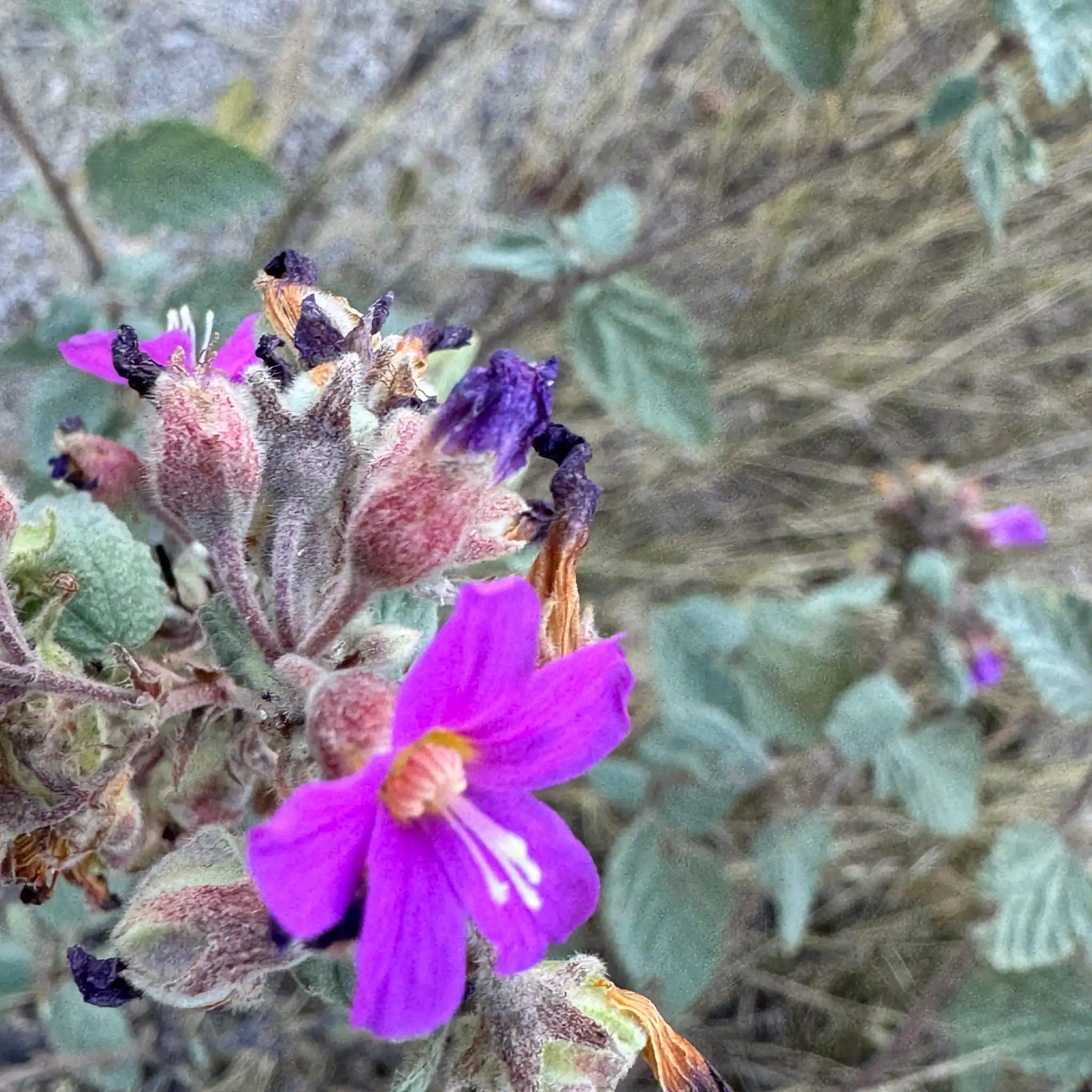
Melochia tomentosa is an evergreen shrub of the cacao family that makes a loose open bush three to six feet tall in gardens and to ten feet if never pruned. The alternate leaves are gray-green to blue-green and softly felted with star-shaped hairs on rocky, fast-draining ground.
What sets it apart is the velvety, toothed foliage that stays gray and fuzzy even in heat and drought. From spring to fall it carries small five-petalled pink to magenta flowers about half an inch across in few-flowered clusters on new growth.
Uses & Benefits:
Essentials
At a Glance
Plant Type
Shrub
Height
72"
Width
48"
Light
Full Sun, Partial Sun
Zones
8, 9, 10
Water
Low to moderate
Humidity
Unknown
Lifespan
Perennial shrub
Native To
Tropical Americas including South Florida and South Texas
Toxicity
Not known to be toxic
Bloom period
Spring – Fall
In flower about 9 months of the year
Planting
How to Grow
- Plant in full sun in rocky, sandy or limestone soil with sharp drainage.
- Water to settle roots, then allow soil to dry between waterings.
- Tip-prune lightly after flowering to keep the bush dense.
- Hold off water in winter and protect the crown from hard frost in Zone 8.
Pro Tip
Give it full sun and lean, fast-draining soil and water sparingly; excess irrigation rots the crown while drought only pauses bloom.
Keep It Thriving
Care Guide
Do
- Plant in full sun with fast drainage
- Water deeply but infrequently once established
- Tip back lightly after bloom to shape
Don't
- Do not overwater or plant in soggy clay
- Do not shear hard into old bare wood
- Do not prune heavily late in the season after buds set
Seasonal Care Calendar
| Task | Jan | Feb | Mar | Apr | May | Jun | Jul | Aug | Sep | Oct | Nov | Dec |
|---|---|---|---|---|---|---|---|---|---|---|---|---|
| Pest Check | ||||||||||||
| Plant | ||||||||||||
| Prune | ||||||||||||
| Winter Prep |
Watch Out For
Pests & Diseases
Common Pests
Common Diseases
In the Garden
Landscape Uses & Companions
Landscape Uses
Good to Know
Common Questions
Pyramid Bush questions
What zones can Pyramid Bush grow in?
Pyramid Bush is hardy in USDA Zones 8–10: in that range it survives winter in the ground. Colder than Zone 8, grow it in a container you can move to shelter for the winter.
Is Pyramid Bush deer resistant?
Not reliably. Deer may browse Pyramid Bush, especially tender spring growth — plan on repellents or fencing where pressure is high.
When does Pyramid Bush bloom?
Pyramid Bush typically blooms from spring to fall. Exact timing shifts a week or two with your zone — Sow's bloom calendar maps it to your garden.
Does Pyramid Bush need full sun?
Pyramid Bush does best in full sun to part shade. In hot climates, afternoon shade keeps blooms fresher longer.
Is Pyramid Bush drought tolerant?
Yes — once established (usually after the first full season), Pyramid Bush handles dry spells with minimal watering. Water deeply its first year to build the root system that makes that possible.
Keep exploring
Explore the genus
Hardy in your zone?
Grow Pyramid Bush with confidence
See it in a design of your actual yard, get zone-matched care reminders, and track it season by season in your garden journal.