The Story
Plant Bio
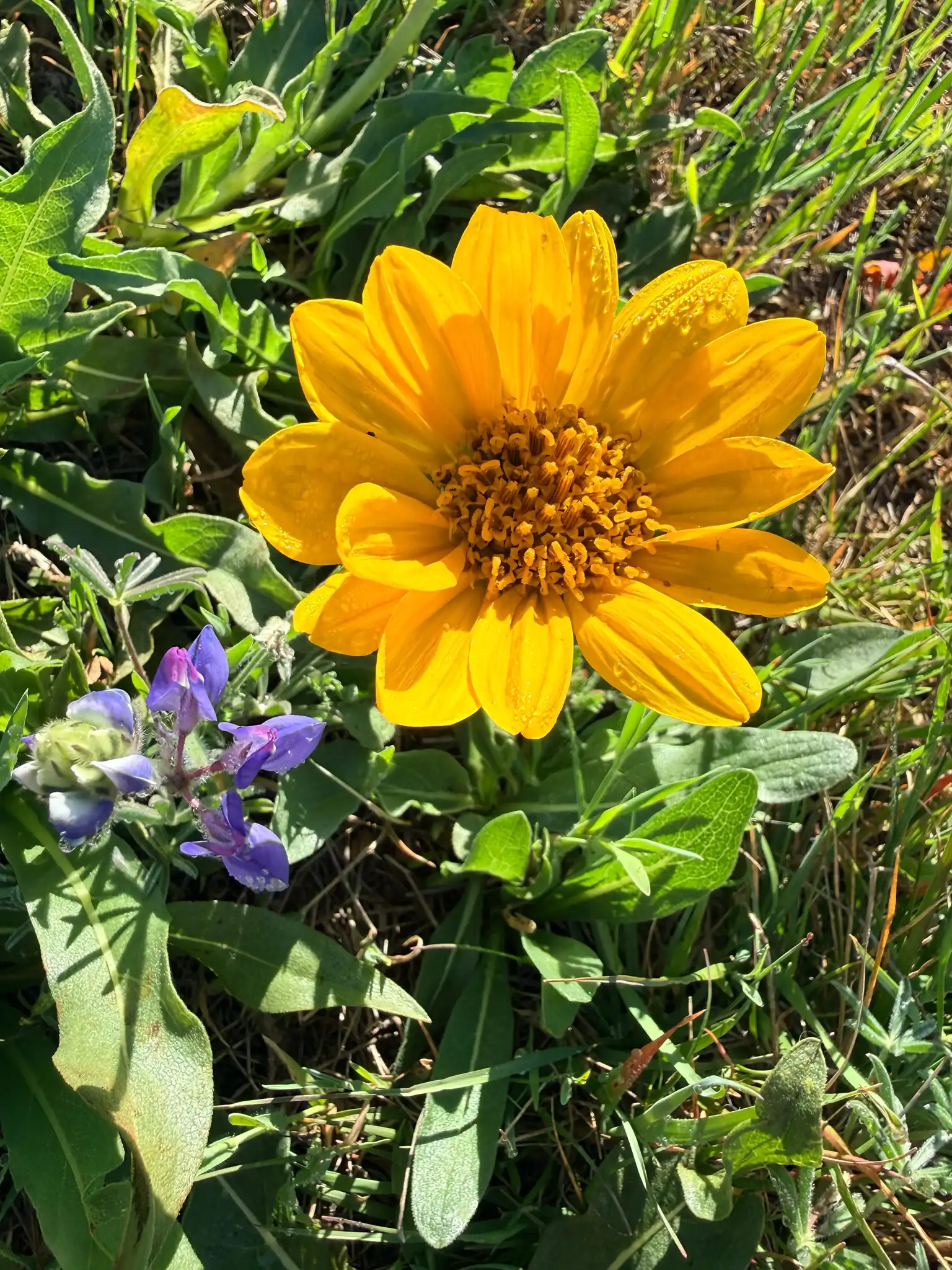
Wyethia angustifolia, known as narrowleaf mule-ears, is a summer-deciduous herbaceous perennial native to open grasslands, meadows, and hillsides across the Pacific Coast of North America. It forms upright clumps of long, lanceolate basal leaves up to 20 inches in length that grow from a thick, woody taproot and caudex.
Bright golden-yellow flower heads resembling small sunflowers are produced on hairy stems above the foliage in late spring. As summer progresses and soils dry out, the foliage browns and dies back completely as an adaptation to seasonal drought.
Uses & Benefits:
Essentials
At a Glance
Plant Type
Perennial
Height
35"
Width
35"
Light
Full Sun
Zones
6, 7, 8, 9
Water
Low
Humidity
Low
Lifespan
Perennial
Native To
North America
Toxicity
Non-toxic
Bloom period
Late spring – Mid-summer
In flower about 3 months of the year
Marketplace
Where to Buy
Shipping costs Year-round shipping Free shipping
Planting
How to Grow
- Select a planting site in full sun with well-draining soil to accommodate the deep taproot.
- Plant nursery stock in early spring, matching the soil level of the pot.
- Water weekly during the initial spring growing season to help establish roots.
- Withhold supplemental water in mid-to-late summer as plants enter their natural dormancy period.
Pro Tip
Do not overwater during summer dormancy when leaves turn brown, as wet soil while dormant induces taproot rot.
Keep It Thriving
Care Guide
Do
- Plant in deep, well-draining soil to allow the taproot to develop fully.
- Provide seed cold stratification for 90 to 120 days prior to spring sowing.
- Allow foliage to dry out naturally as summer dormancy approaches.
Don't
- Do not overwater during summer dormancy when plants are leafless.
- Do not prune live green foliage before summer dieback occurs.
- Do not apply heavy fertilizer, as lean native soils produce sturdier growth.
Seasonal Care Calendar
| Task | Jan | Feb | Mar | Apr | May | Jun | Jul | Aug | Sep | Oct | Nov | Dec |
|---|---|---|---|---|---|---|---|---|---|---|---|---|
| Plant | ||||||||||||
| Propagate | ||||||||||||
| Spring Cleanup | ||||||||||||
| Winter Prep |
Watch Out For
Pests & Diseases
Common Pests
Common Diseases
In the Garden
Landscape Uses & Companions
Landscape Uses
Multiply
Propagation Methods
Good to Know
Common Questions
Narrowleaf Mule-Ears questions
What zones can Narrowleaf Mule-Ears grow in?
Narrowleaf Mule-Ears is hardy in USDA Zones 6–9: in that range it survives winter in the ground. Colder than Zone 6, grow it in a container you can move to shelter for the winter, or as an annual. Warmer than Zone 9, winter isn't the problem: it prefers colder winters, and summer heat can shorten its life.
Is Narrowleaf Mule-Ears deer resistant?
Not reliably. Deer may browse Narrowleaf Mule-Ears, especially tender spring growth — plan on repellents or fencing where pressure is high.
When does Narrowleaf Mule-Ears bloom?
Narrowleaf Mule-Ears typically blooms from late spring to mid-summer. Exact timing shifts a week or two with your zone — Sow's bloom calendar maps it to your garden.
Does Narrowleaf Mule-Ears need full sun?
Narrowleaf Mule-Ears does best in full sun (6+ hours).
Is Narrowleaf Mule-Ears drought tolerant?
Yes — once established (usually after the first full season), Narrowleaf Mule-Ears handles dry spells with minimal watering. Water deeply its first year to build the root system that makes that possible.
Keep exploring
Explore the genus
Hardy in your zone?
Grow Narrowleaf Mule-Ears with confidence
See it in a design of your actual yard, get zone-matched care reminders, and track it season by season in your garden journal.