The Story
Plant Bio
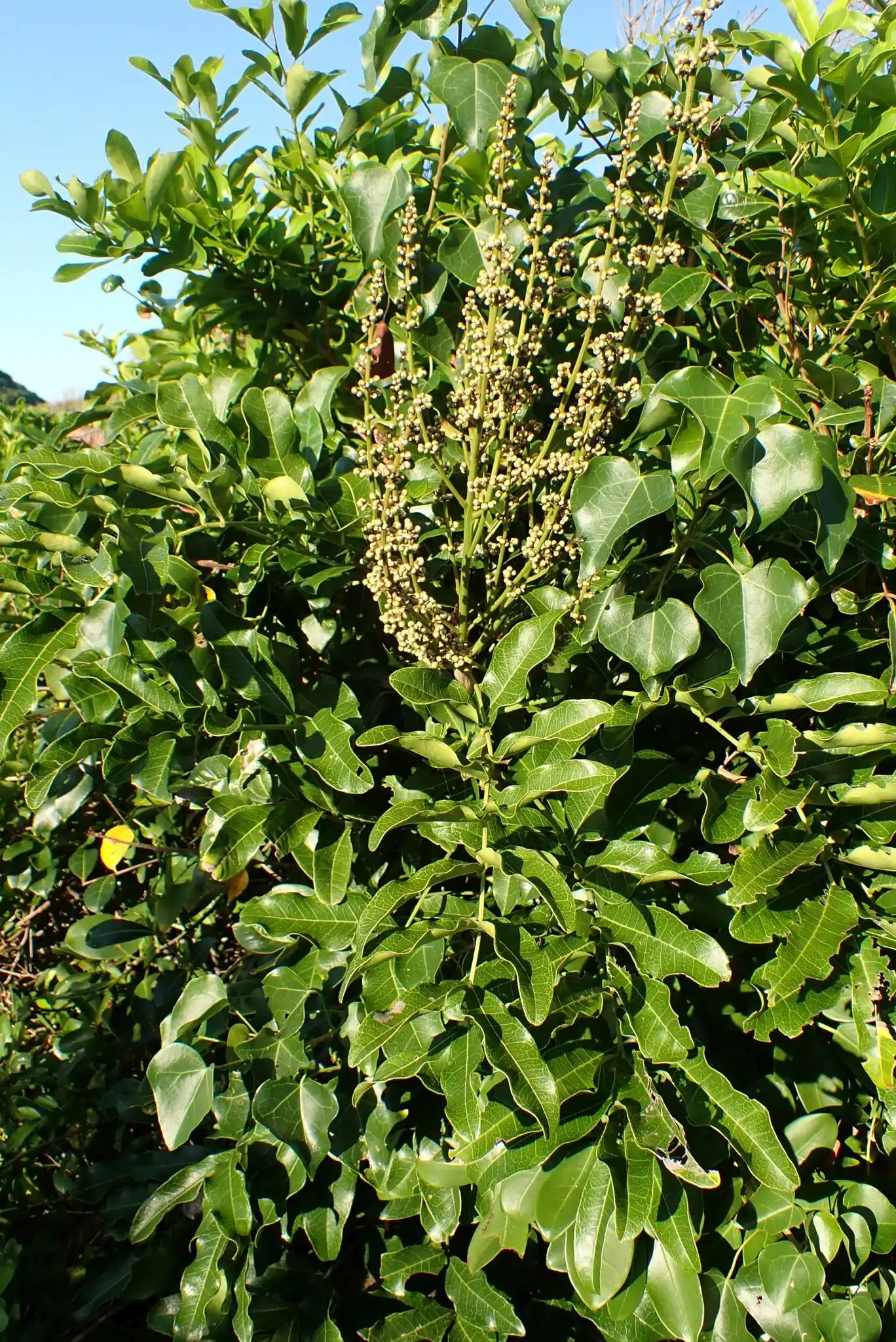
Deinbollia oblongifolia is an erect, sparsely branched shrub or small slender tree reaching about 16 feet in gardens, with a rounded compact canopy. Its alternate compound leaves to 20 inches long carry 5 to 10 pairs of opposite oblong-elliptic leaflets that emerge pale green and harden to dark green with pale veins.
It flowers in dense terminal pyramidal panicles to 14 inches long, with small white to cream flowers to 0.4 inches across on silvery-golden velvety stalks, followed by round fleshy yellow to yellow-orange berries about 0.4 inches across. Crushed seeds lather in water from saponins, the source of its soapberry name, while the same fruits are eaten by birds and monkeys in the wild.
Uses & Benefits:
Essentials
At a Glance
Plant Type
Shrub
Height
197"
Width
197"
Light
Full Sun, Partial Sun, Shade
Zones
9, 10
Water
Low to moderate
Humidity
Unknown
Lifespan
Woody perennial
Native To
Mozambique to South Africa
Toxicity
Uncertain - seeds may irritate
Bloom period
Fall – Early winter
In flower about 4 months of the year
Planting
How to Grow
- Grow in full sun or bright indoor light in a fast-draining sandy mix.
- Keep the mix evenly moist but never wet; allow the surface to dry between waterings.
- Provide frost-free winter protection; it tolerates only light frost.
- Pinch shoot tips of young plants to build a bushy frame.
- Repot container plants as needed to maintain drainage and stability.
Pro Tip
When caterpillars strip the leaves, leave it alone; it flushes back on its own and spraying breaks the butterfly cycle.
Keep It Thriving
Care Guide
Do
- Do grow in well-draining sandy soil in full sun.
- Do pinch young plants to encourage dense branching.
- Do allow refoliation after caterpillar feeding without spraying.
Don't
- Do not keep roots soggy or in heavy clay.
- Do not expect a lychee-like edible crop in pots.
- Do not eat seeds; soapy saponins can irritate.
Seasonal Care Calendar
| Task | Jan | Feb | Mar | Apr | May | Jun | Jul | Aug | Sep | Oct | Nov | Dec |
|---|---|---|---|---|---|---|---|---|---|---|---|---|
| Pest Check | ||||||||||||
| Pinch | ||||||||||||
| Plant | ||||||||||||
| Propagate | ||||||||||||
| Winter Prep |
Watch Out For
Pests & Diseases
Common Pests
Common Diseases
In the Garden
Landscape Uses & Companions
Landscape Uses
Companion Plants
Multiply
Propagation Methods
Good to Know
Common Questions
Dune Soapberry questions
What zones can Dune Soapberry grow in?
Dune Soapberry is hardy in USDA Zones 9–10: in that range it survives winter in the ground. Colder than Zone 9, grow it in a container you can move to shelter for the winter.
When does Dune Soapberry bloom?
Dune Soapberry typically blooms from early fall to early winter. Exact timing shifts a week or two with your zone — Sow's bloom calendar maps it to your garden.
Does Dune Soapberry need full sun?
Dune Soapberry does best in full sun to part shade. In hot climates, afternoon shade keeps blooms fresher longer.
Is Dune Soapberry drought tolerant?
Yes — once established (usually after the first full season), Dune Soapberry handles dry spells with minimal watering. Water deeply its first year to build the root system that makes that possible.
Keep exploring
Explore the genus
Hardy in your zone?
Grow Dune Soapberry with confidence
See it in a design of your actual yard, get zone-matched care reminders, and track it season by season in your garden journal.