The Story
Plant Bio
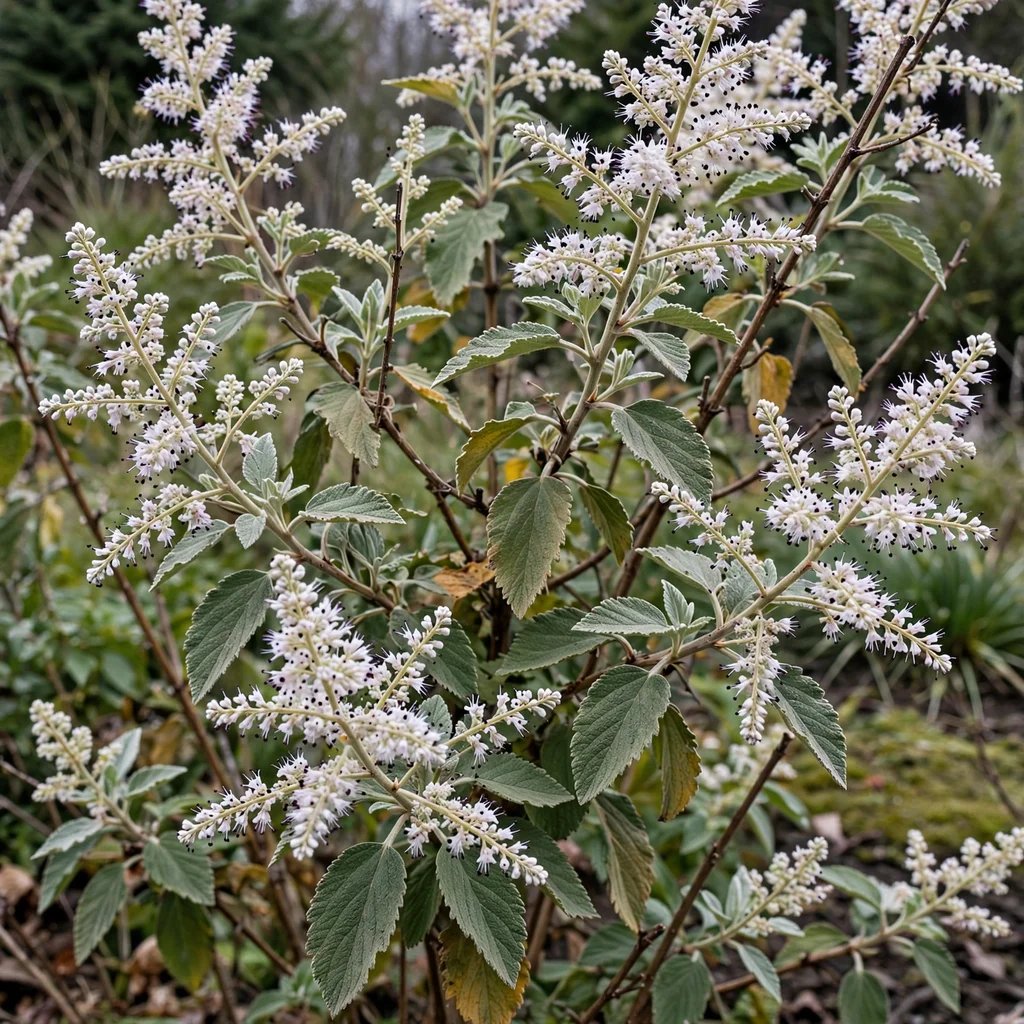
Tetradenia riparia is a fast-growing semi-deciduous shrub to small tree from riverbanks and forest margins of eastern and southern Africa, reaching eight to nine feet in cultivation with irregular four-angled branches. The bright green heart-shaped leaves are bluntly toothed, glandular-hairy and sticky, with ruby-tinged young growth that smells strongly of ginger when crushed.
Plants are dioecious, so males and females bloom differently; male plants produce open misty plumes and females produce shorter compact heads, both as erect panicles of small white to pale lilac flowers with dark anthers held above the foliage on bare winter wood. It grows about thirty inches in a season and can flower in its first year from cuttings, dropping leaves in cold or dry spells to bloom leafless.
Uses & Benefits:
Essentials
At a Glance
Plant Type
Shrub
Height
108"
Width
36"
Light
Full Sun, Partial Sun
Zones
9, 10
Water
Moderate
Humidity
Unknown
Lifespan
Long-lived shrub
Native To
Eastern and southern Africa
Toxicity
Non-toxic
Bloom period
Winter – Early spring
In flower about 4 months of the year
Planting
How to Grow
- Set out after frost in full sun against a warm sheltered wall.
- Dig compost into light well-drained soil and plant at nursery depth.
- Water deeply through the first summer, then water in summer and keep drier in winter.
- Mulch around the base and pinch new shoots in spring and summer to branch.
- Cut back hard by one-third after winter bloom to keep it compact.
Pro Tip
Cut stems back hard to one-third once after winter bloom and pinch new shoots through summer; shearing repeatedly gives thin lanky regrowth and fewer plumes.
Keep It Thriving
Care Guide
Do
- Plant in light well-drained composted soil in full sun.
- Water through summer and ease off in winter.
- Mulch to hold moisture in summer.
- Shelter against a warm wall where frost threatens.
Don't
- Do not shear repeatedly through summer.
- Do not overwater cuttings or winter pots.
- Do not plant in heavy wet clay.
- Do not expect seed unless male and female plants grow together.
Seasonal Care Calendar
| Task | Jan | Feb | Mar | Apr | May | Jun | Jul | Aug | Sep | Oct | Nov | Dec |
|---|---|---|---|---|---|---|---|---|---|---|---|---|
| Mulch | ||||||||||||
| Pest Check | ||||||||||||
| Pinch | ||||||||||||
| Prune | ||||||||||||
| Winter Prep |
Watch Out For
Pests & Diseases
Common Pests
Common Diseases
In the Garden
Landscape Uses & Companions
Landscape Uses
Multiply
Propagation Methods
Good to Know
Common Questions
Musk Bush questions
What zones can Musk Bush grow in?
Musk Bush is hardy in USDA Zones 9–10: in that range it survives winter in the ground. Colder than Zone 9, grow it in a container you can move to shelter for the winter.
When does Musk Bush bloom?
Musk Bush typically blooms from early winter to early spring. Exact timing shifts a week or two with your zone — Sow's bloom calendar maps it to your garden.
Does Musk Bush need full sun?
Musk Bush does best in full sun to part shade. In hot climates, afternoon shade keeps blooms fresher longer.
Is Musk Bush drought tolerant?
Yes — once established (usually after the first full season), Musk Bush handles dry spells with minimal watering. Water deeply its first year to build the root system that makes that possible.
Keep exploring
Explore the genus
Hardy in your zone?
Grow Musk Bush with confidence
See it in a design of your actual yard, get zone-matched care reminders, and track it season by season in your garden journal.