The Story
Plant Bio
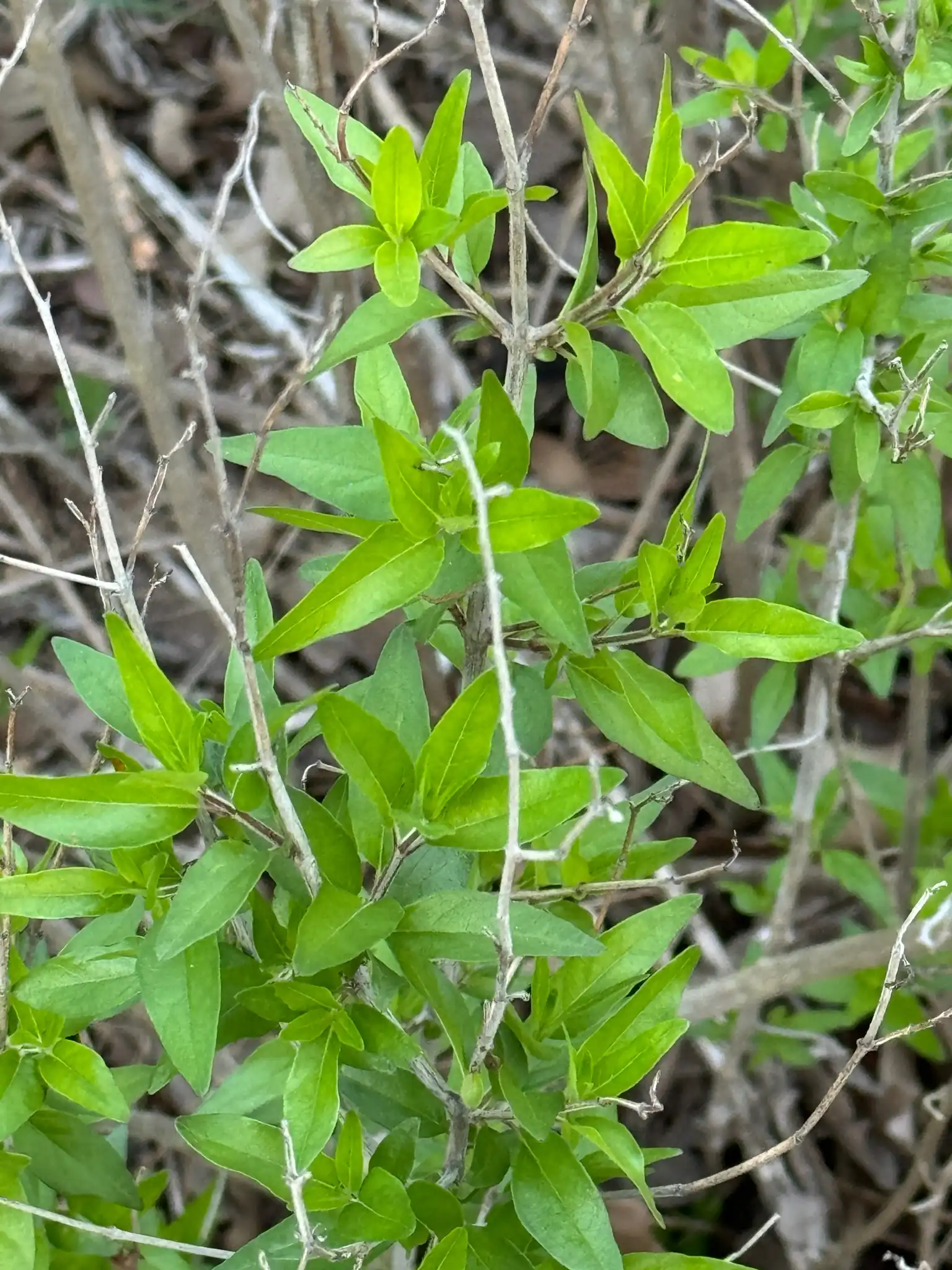
Anisacanthus quadrifidus, a member of the acanthus family, is an upright spreading deciduous shrub reaching 3 to 5 feet tall and wide with slender brittle stems and small opposite lance-shaped bright green leaves. The display comes from abundant narrow two-lipped tubes about 1 to 1.5 inches long in red-orange, produced from summer to frost with the heaviest flushes after rain.
The plants sold in gardens are var. wrightii, the northern Texas form selected for compact well-branched growth to 3 to 5 feet and hardiness to Zone 7 where it dies to the roots and resprouts in spring. Mature stems shed thin peeling bark, bloom follows rain rather than calendar date, and established plants set seed freely while remaining highly deer resistant.
Uses & Benefits:
Essentials
At a Glance
Plant Type
Shrub
Height
48"
Width
48"
Light
Full Sun, Partial Sun
Zones
7, 8, 9, 10
Water
Low
Humidity
Low to average
Lifespan
Woody perennial, 10+ years
Native To
West and south-central Texas to northern Mexico
Toxicity
Unknown
Bloom period
Summer – Fall
In flower about 6 months of the year
Planting
How to Grow
- Plant in full sun in well-drained sand, loam, clay, or caliche limestone after last frost.
- Set the crown level with the soil surface and water in deeply to settle soil around roots.
- Water sparingly through the first summer, then taper off; established plants need only occasional deep water in extended drought.
- Leave stems through winter for root protection; remove dead growth before spring sprouting.
- Shear lightly after a bloom flush if needed, but reserve hard renewal pruning to every few years.
Pro Tip
In Zone 7 treat it as a dieback perennial and cut dead stems to the ground before spring growth; in warmer zones cut back hard only every few years to renew compact growth and let rain trigger bloom.
Keep It Thriving
Care Guide
Do
- Plant in full sun with sharp drainage.
- Allow soil to dry between waterings once established.
- Cut winter-killed stems to the ground in late winter before spring growth.
Don't
- Do not overwater or plant in soggy soil that stays wet.
- Do not shear hard every year; renew severely only every few years.
- Do not fertilize heavily; this is a low-input native shrub.
Seasonal Care Calendar
| Task | Jan | Feb | Mar | Apr | May | Jun | Jul | Aug | Sep | Oct | Nov | Dec |
|---|---|---|---|---|---|---|---|---|---|---|---|---|
| Mulch | ||||||||||||
| Pest Check | ||||||||||||
| Plant | ||||||||||||
| Propagate | ||||||||||||
| Prune |
Watch Out For
Pests & Diseases
Common Pests
Common Diseases
In the Garden
Landscape Uses & Companions
Landscape Uses
Multiply
Propagation Methods
Good to Know
Common Questions
Flame Acanthus questions
What zones can Flame Acanthus grow in?
Flame Acanthus is hardy in USDA Zones 7–10: in that range it survives winter in the ground. Colder than Zone 7, grow it in a container you can move to shelter for the winter.
Is Flame Acanthus deer resistant?
Yes — Flame Acanthus is rated deer-resistant. Deer typically pass it over, though extreme hunger can override any plant's defenses.
When does Flame Acanthus bloom?
Flame Acanthus typically blooms from summer to fall. Exact timing shifts a week or two with your zone — Sow's bloom calendar maps it to your garden.
Does Flame Acanthus need full sun?
Flame Acanthus does best in full sun to part shade. In hot climates, afternoon shade keeps blooms fresher longer.
Is Flame Acanthus drought tolerant?
Yes — once established (usually after the first full season), Flame Acanthus handles dry spells with minimal watering. Water deeply its first year to build the root system that makes that possible.
Keep exploring
Explore the genus
Hardy in your zone?
Grow Flame Acanthus with confidence
See it in a design of your actual yard, get zone-matched care reminders, and track it season by season in your garden journal.