The Story
Plant Bio
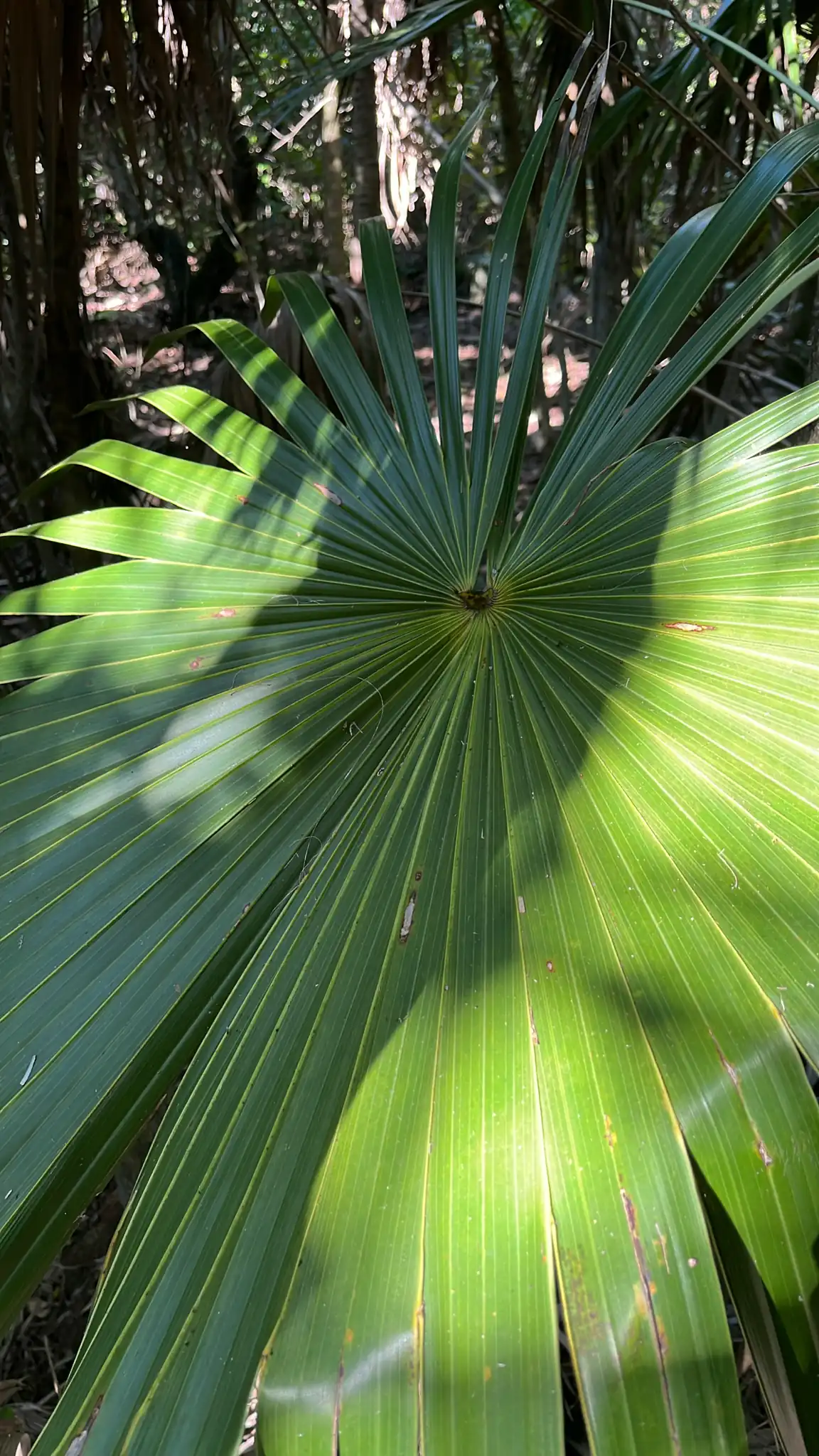
Thrinax radiata is a solitary spineless fan palm from coastal limestone scrub around the northwestern Caribbean, forming a slender trunk topped by a compact crown. In cultivation it reaches 15 to 30 feet after decades at about 6 inches per year, holding 12 to 20 deep green palmate fronds 2 to 3 feet across.
Unlike clumping thatch palms sold as Coccothrinax, it never suckers and carries no spines on trunk or leaf stems. The tiny creamy-white fragrant flowers are wind-pollinated on arching yellow-stemmed stalks, followed by round white fruit under an inch across that feeds songbirds.
Uses & Benefits:
Essentials
At a Glance
Plant Type
Tropical
Height
360"
Width
120"
Light
Full Sun, Partial Sun
Zones
10
Water
Low once established
Humidity
Tolerant
Lifespan
Long-lived, decades
Native To
South Florida, Bahamas and Caribbean to SE Mexico and Nicaragua
Toxicity
Non-toxic to humans; pet toxicity unknown
Bloom period
Autumn
In flower about 3 months of the year
Planting
How to Grow
- Plant in spring in full sun to part sun in well-drained sand, loam, or lime rock with high pH.
- Dig the hole no deeper than the rootball and backfill with native calcareous soil, firming to remove air pockets.
- Water deeply to establish through the first warm season, then taper to rare deep soakings.
- Feed lightly with palm fertilizer every 3 to 4 months or not at all once established.
Pro Tip
Set it in high-pH limestone sand in full sun and leave it alone; rich fertilizer, acid soil, and standing water kill more Florida thatch than drought.
Keep It Thriving
Care Guide
Do
- Grow in alkaline limestone soil with sharp drainage
- Water to establish, then keep on the dry side in winter
- Remove only fully dead fronds, cutting cleanly without wounding the trunk
Don't
- Do not plant in acid soil or waterlogged ground
- Do not overfertilize or overwater established plants
- Do not flood the crown with salt water or cut into green trunk tissue
Seasonal Care Calendar
| Task | Jan | Feb | Mar | Apr | May | Jun | Jul | Aug | Sep | Oct | Nov | Dec |
|---|---|---|---|---|---|---|---|---|---|---|---|---|
| Fertilize | ||||||||||||
| Pest Check | ||||||||||||
| Plant | ||||||||||||
| Propagate | ||||||||||||
| Prune |
Watch Out For
Pests & Diseases
Common Pests
Common Diseases
In the Garden
Landscape Uses & Companions
Landscape Uses
Multiply
Propagation Methods
Good to Know
Common Questions
Florida Thatch Palm questions
What zones can Florida Thatch Palm grow in?
Florida Thatch Palm is hardy in USDA Zone 10: in that range it survives winter in the ground. Colder than Zone 10, grow it in a container you can move to shelter for the winter, or as an annual.
When does Florida Thatch Palm bloom?
Florida Thatch Palm typically blooms in fall. Exact timing shifts a week or two with your zone — Sow's bloom calendar maps it to your garden.
Does Florida Thatch Palm need full sun?
Florida Thatch Palm does best in full sun to part shade. In hot climates, afternoon shade keeps blooms fresher longer.
Is Florida Thatch Palm drought tolerant?
Yes — once established (usually after the first full season), Florida Thatch Palm handles dry spells with minimal watering. Water deeply its first year to build the root system that makes that possible.
Keep exploring
Explore the genus
Hardy in your zone?
Grow Florida Thatch Palm with confidence
See it in a design of your actual yard, get zone-matched care reminders, and track it season by season in your garden journal.