The Story
Plant Bio
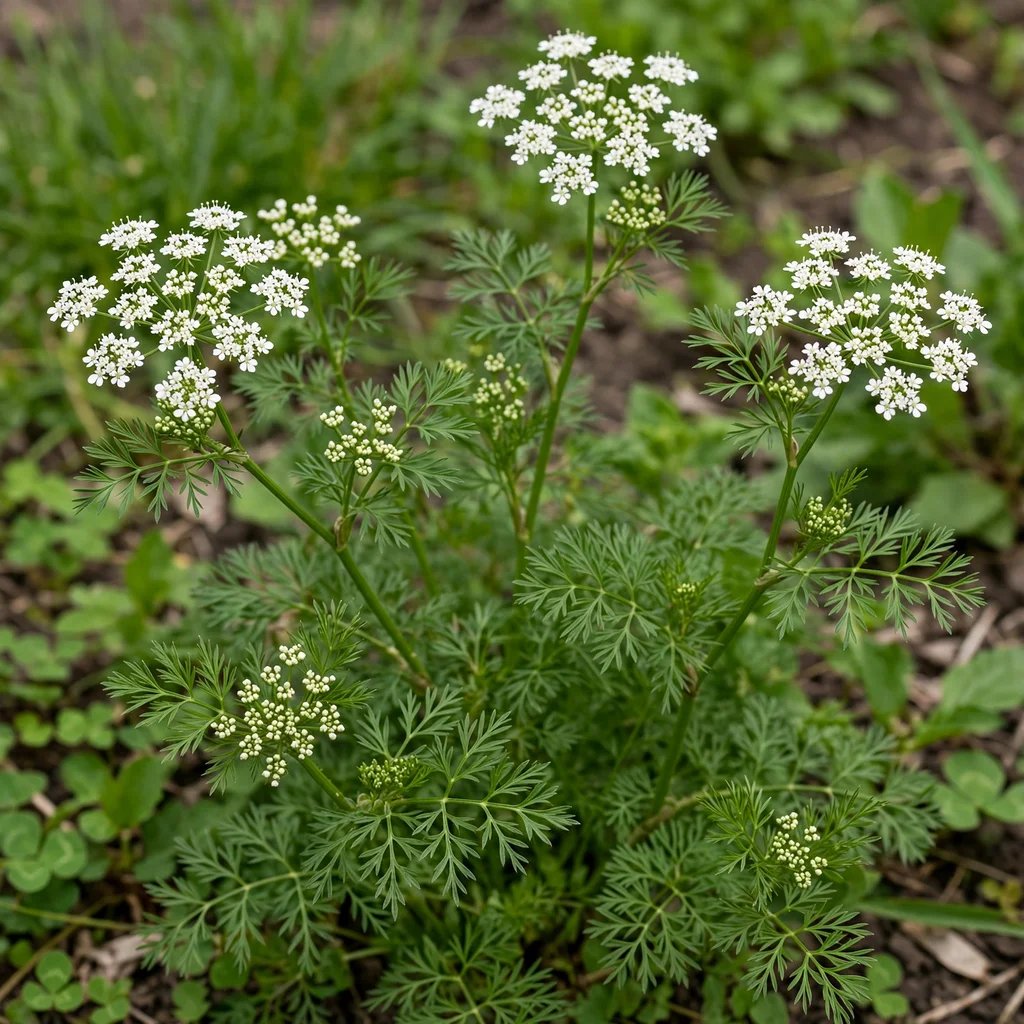
Carum carvi is a hardy biennial herb forming a low carrot-like rosette from a deep taproot the first year, then sending up erect hollow stems 12 to 30 inches tall the second year. The foliage is smooth, finely divided and fern-like, and second-year plants carry flat compound umbels of small white to pink-tinged white flowers.
Unlike annual umbels grown for one-season leaf, caraway requires winter cold to flower and dies after setting seed in its second summer. The crop is the small crescent-shaped seed, rich in aromatic oils and strongest in full sun, with the leaves and first-year root also edible.
Uses & Benefits:
Essentials
At a Glance
Plant Type
Fruit Vegetable
Height
24"
Width
12"
Light
Full Sun, Partial Sun
Zones
4, 5, 6, 7, 8, 9
Water
Medium
Humidity
Low to moderate
Lifespan
Biennial
Native To
Europe, western Asia, North Africa
Toxicity
Non-toxic - edible leaves, seeds and first-year root
Bloom period
Late spring – Early summer
In flower about 2 months of the year
Planting
How to Grow
- Sow fresh seed 1/4 inch deep in situ in spring in full sun, in moist well-drained garden soil.
- Thin seedlings to 8 to 12 inches apart and keep the bed weed-free through the first-year rosette stage.
- Leave the taproot undisturbed; do not transplant and do not cut back the rosette before winter.
- Allow second-year stems to flower and set seed, then harvest umbels as fruits turn brown in late summer.
Pro Tip
Sow fresh seed where it is to grow and do not transplant; disturbance of the taproot checks growth and winter cold is required for second-year flowering.
Keep It Thriving
Care Guide
Do
- Sow in situ and allow plants to self-sow where you want a continuing patch.
- Keep first-year rosettes weed-free while they establish.
- Grow in full sun for the highest oil content in the seed.
Don't
- Do not transplant or disturb the long taproot.
- Do not expect flowers in the first year; flowering follows winter cold in year two.
- Do not plant close to fennel or wormwood, where growth is poor.
Seasonal Care Calendar
| Task | Jan | Feb | Mar | Apr | May | Jun | Jul | Aug | Sep | Oct | Nov | Dec |
|---|---|---|---|---|---|---|---|---|---|---|---|---|
| Harvest | ||||||||||||
| Pest Check | ||||||||||||
| Plant | ||||||||||||
| Propagate | ||||||||||||
| Spring Cleanup |
Watch Out For
Pests & Diseases
Common Pests
Common Diseases
In the Garden
Landscape Uses & Companions
Landscape Uses
Multiply
Propagation Methods
Good to Know
Common Questions
Caraway questions
What zones can Caraway grow in?
Caraway is hardy in USDA Zones 4–9: in that range it survives winter in the ground. Warmer than Zone 9, winter isn't the problem: it prefers colder winters, and summer heat can shorten its life.
When does Caraway bloom?
Caraway typically blooms from late spring to early summer. Exact timing shifts a week or two with your zone — Sow's bloom calendar maps it to your garden.
Does Caraway need full sun?
Caraway does best in full sun to part shade. In hot climates, afternoon shade keeps blooms fresher longer.
Keep exploring
Explore the genus
Grow Caraway with confidence
See it in a design of your actual yard, get zone-matched care reminders, and track it season by season in your garden journal.