The Story
Plant Bio
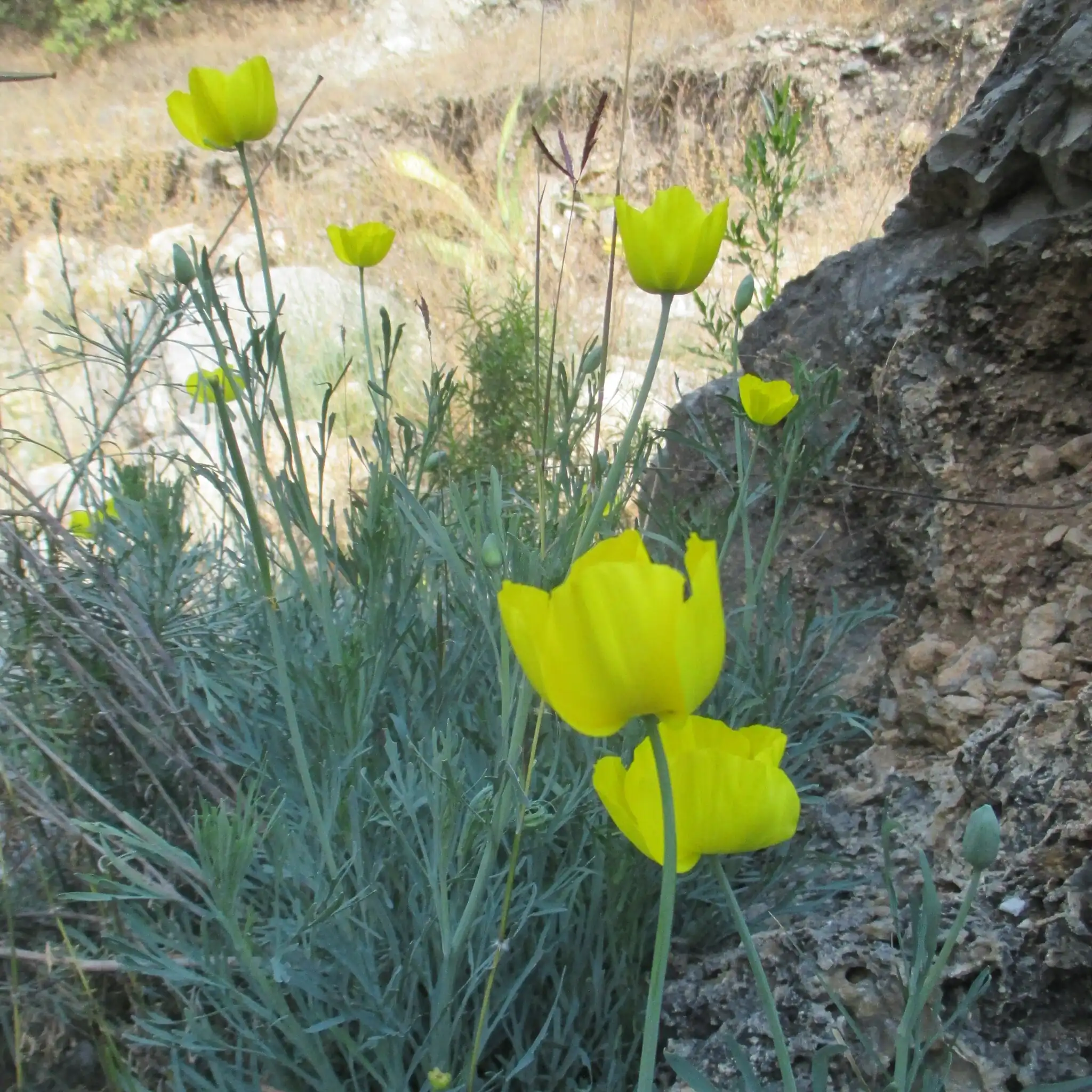
Hunnemannia fumariifolia, the Mexican tulip poppy, is a short-lived evergreen perennial from the highlands of Mexico and southern Texas, forming a bushy mound with a woody base and herbaceous stems. The foliage is blue-green and finely dissected into ferny segments, carried on stems reaching one to two feet tall and as wide.
The flowers are solitary cup-shaped poppies to three inches across, with four crinkled sulfur-yellow petals around a boss of orange stamens, followed by long slender capsules. Plants bloom from summer into fall, and in mild coastal gardens continue from spring to winter, self-sowing freely to replace the short-lived mother plant.
Uses & Benefits:
Essentials
At a Glance
Plant Type
Perennial
Height
24"
Width
24"
Light
Full Sun, Partial Sun
Zones
8, 9, 10
Water
Low
Humidity
Low to moderate
Lifespan
Short-lived perennial
Native To
Mexico and southern Texas
Toxicity
Unknown - may irritate if ingested in quantity
Bloom period
Summer – Fall
In flower about 6 months of the year
Planting
How to Grow
- Sow seed directly in place in early spring in full sun, barely covering the seed in well-drained soil.
- Thin seedlings to 12 inches apart and water in; thereafter water sparingly once established.
- Leave a few spent flowers to form slender capsules and drop seed for next year.
- In zones 9-10 cut back worn stems in late winter to renew the woody base; in colder zones pull plants after frost.
Pro Tip
Sow seed directly where it is to grow and leave self-sown seedlings undisturbed; the taproot resents transplanting and established plants need little water.
Keep It Thriving
Care Guide
Do
- Give full sun and sharp drainage in sandy, loamy, or rocky soil.
- Allow plants to self-sow to maintain the patch year to year.
- Protect crowns from hard frost below 20F in cool areas.
Don't
- Do not transplant established plants or disturb seedlings.
- Do not overwater or plant in soggy ground.
- Do not cut off all seed capsules if you want return seedlings.
Seasonal Care Calendar
| Task | Jan | Feb | Mar | Apr | May | Jun | Jul | Aug | Sep | Oct | Nov | Dec |
|---|---|---|---|---|---|---|---|---|---|---|---|---|
| Deadhead | ||||||||||||
| Pest Check | ||||||||||||
| Plant | ||||||||||||
| Propagate | ||||||||||||
| Winter Prep |
Watch Out For
Pests & Diseases
Common Pests
Common Diseases
In the Garden
Landscape Uses & Companions
Landscape Uses
Multiply
Propagation Methods
Good to Know
Common Questions
Mexican Tulip Poppy questions
What zones can Mexican Tulip Poppy grow in?
Mexican Tulip Poppy is hardy in USDA Zones 8–10: in that range it survives winter in the ground. Colder than Zone 8, grow it in a container you can move to shelter for the winter, or as an annual.
When does Mexican Tulip Poppy bloom?
Mexican Tulip Poppy typically blooms from summer to fall. Exact timing shifts a week or two with your zone — Sow's bloom calendar maps it to your garden.
Does Mexican Tulip Poppy need full sun?
Mexican Tulip Poppy does best in full sun to part shade. In hot climates, afternoon shade keeps blooms fresher longer.
Is Mexican Tulip Poppy drought tolerant?
Yes — once established (usually after the first full season), Mexican Tulip Poppy handles dry spells with minimal watering. Water deeply its first year to build the root system that makes that possible.
Keep exploring
Explore the genus
Hardy in your zone?
Grow Mexican Tulip Poppy with confidence
See it in a design of your actual yard, get zone-matched care reminders, and track it season by season in your garden journal.