The Story
Plant Bio
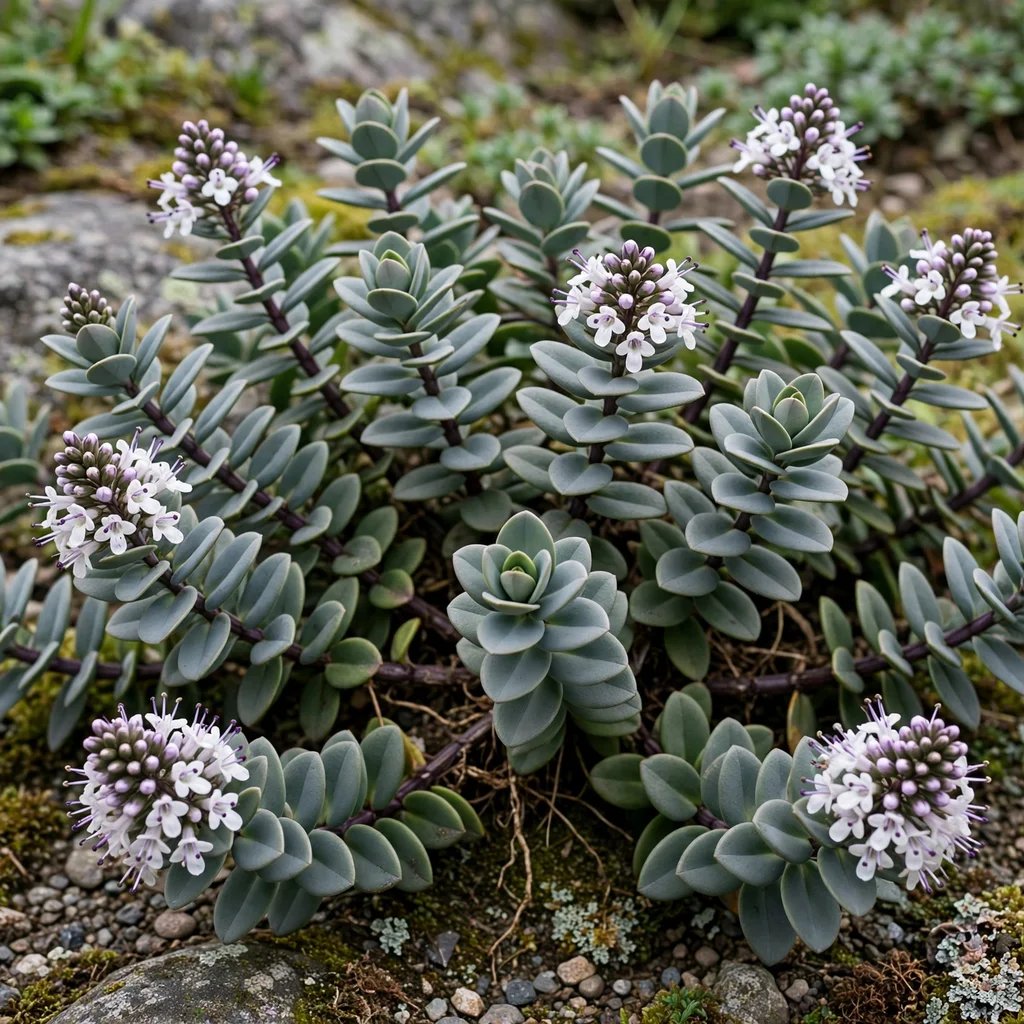
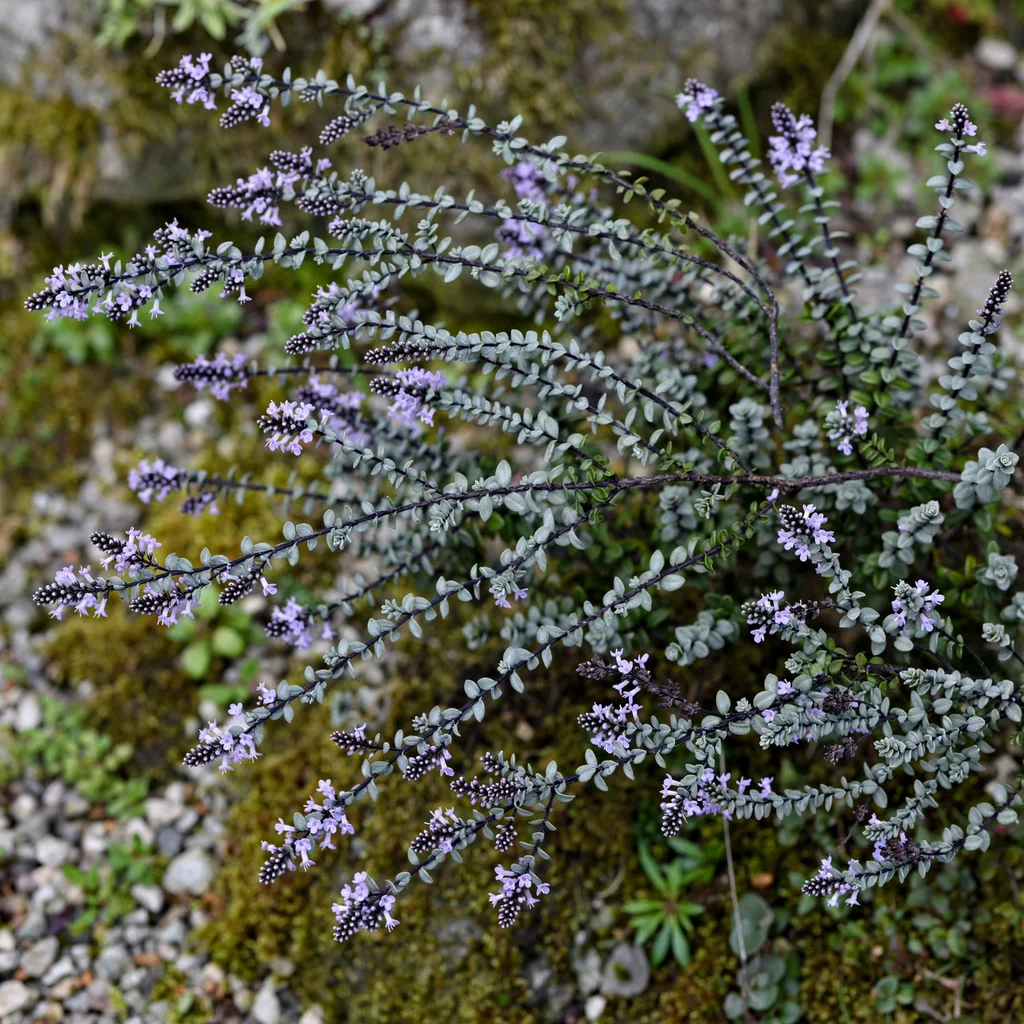
Veronica pinguifolia, the thick-leaved speedwell, is a dwarf evergreen shrub from the dry mountains east of New Zealand's Main Divide, reaching 12 to 20 inches tall and spreading 30 to 40 inches into a dense mat. Stems darken to purple beneath the leaves and turn prostrate with age, rooting where the mat meets free-draining rocky ground.
Leaves are thick, fleshy and grey-green to blue-grey, elliptic and about half an inch long, set in four distinct ranks along the stem. Flowers are white with blue anthers, packed into short dense terminal spikes one to two inches long from late spring into summer.
Uses & Benefits:
Essentials
At a Glance
Plant Type
Shrub
Height
18"
Width
36"
Light
Full Sun, Partial Sun
Zones
6, 7, 8, 9, 10
Water
Moderate
Humidity
Low
Lifespan
Long-lived evergreen shrub
Native To
South Island, New Zealand
Toxicity
Low irritant risk; skin/eye irritant, no known ingestion toxicity
Bloom period
Late spring – Early fall
In flower about 5 months of the year
Planting
How to Grow
- Set in full sun to part shade, with afternoon shade in hot areas.
- Plant high in poor to moderately fertile sandy loam that drains fast; work in grit if soil is heavy.
- Water regularly the first season, then reduce; keep soil moist but never soggy around the crown.
- Deadhead spent spikes after flowering and remove frost-damaged wood in late spring.
- Top with gravel, not rich mulch, to keep the base dry through winter.
Pro Tip
Plant it high in lean, sharply drained soil and keep the crown dry; wet heavy ground rots the roots and blackens the base faster than cold ever will.
Keep It Thriving
Care Guide
Do
- Give full sun and open air for tight, blue-grey growth.
- Provide sharp drainage on a slope or raised mound.
- Water deeply then let dry between waterings once established.
Don't
- Do not plant in heavy clay or a wet winter hollow.
- Do not shear annually or cut into old leafless wood.
- Do not overwater or overhead-water in summer humidity.
Seasonal Care Calendar
| Task | Jan | Feb | Mar | Apr | May | Jun | Jul | Aug | Sep | Oct | Nov | Dec |
|---|---|---|---|---|---|---|---|---|---|---|---|---|
| Deadhead | ||||||||||||
| Mulch | ||||||||||||
| Pest Check | ||||||||||||
| Plant | ||||||||||||
| Prune |
Watch Out For
Pests & Diseases
Common Pests
Common Diseases
In the Garden
Landscape Uses & Companions
Landscape Uses
Multiply
Propagation Methods
Good to Know
Common Questions
Thick-Leaved Speedwell questions
What zones can Thick-Leaved Speedwell grow in?
Thick-Leaved Speedwell is hardy in USDA Zones 6–10: in that range it survives winter in the ground. Colder than Zone 6, grow it in a container you can move to shelter for the winter.
Is Thick-Leaved Speedwell deer resistant?
Yes — Thick-Leaved Speedwell is rated deer-resistant. Deer typically pass it over, though extreme hunger can override any plant's defenses.
When does Thick-Leaved Speedwell bloom?
Thick-Leaved Speedwell typically blooms from late spring to early fall. Exact timing shifts a week or two with your zone — Sow's bloom calendar maps it to your garden.
Does Thick-Leaved Speedwell need full sun?
Thick-Leaved Speedwell does best in full sun to part shade. In hot climates, afternoon shade keeps blooms fresher longer.
Is Thick-Leaved Speedwell drought tolerant?
Yes — once established (usually after the first full season), Thick-Leaved Speedwell handles dry spells with minimal watering. Water deeply its first year to build the root system that makes that possible.
More Hebe to compare
Keep exploring
Explore the genus
Hardy in your zone?
Grow Thick-Leaved Speedwell with confidence
See it in a design of your actual yard, get zone-matched care reminders, and track it season by season in your garden journal.