The Story
Plant Bio
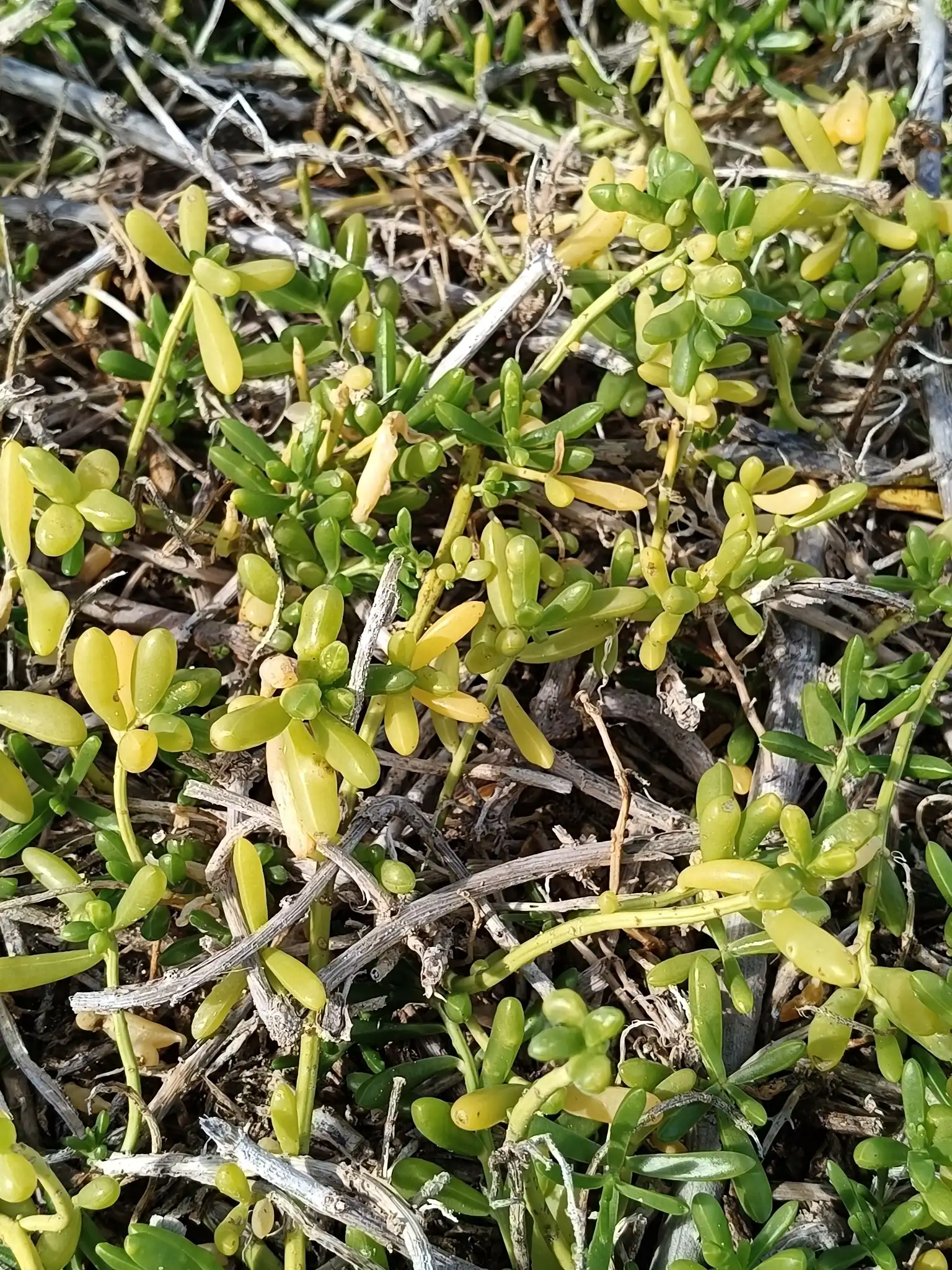
Batis maritima, commonly known as saltwort, is a creeping succulent subshrub native to coastal salt marshes and tidal flats across southern North America and the Caribbean. Its jointed woody stems root as they spread over saline substrates, forming dense mats of fleshy, light green to yellow-green leaves.
This obligate halophyte relies on high sodium availability in the soil to balance osmotic pressure and sustain its foliage density. In summer and fall, it produces minute axillary spikes of greenish-white flowers followed by small, fleshy fruits that provide food and cover for coastal marsh wildlife.
Uses & Benefits:
Essentials
At a Glance
Plant Type
Groundcover
Height
36"
Width
79"
Light
Full Sun
Zones
8, 9, 10
Water
Low to Medium
Humidity
High
Lifespan
Perennial
Native To
Southern Coastal North America, Caribbean, South America
Toxicity
Non-toxic
Bloom period
Summer – Fall
In flower about 6 months of the year
Planting
How to Grow
- Select a site in full sunlight with direct exposure to saline or brackish soil moisture.
- Space starter plugs 18 to 24 inches apart across moist sand, loam, or clay substrate.
- Keep substrate consistently damp to flooded with saline or brackish water during root establishment.
- Allow stems to root along node contacts as the creeping stems expand into a dense carpet.
- Trim back dead or winter-burned stem tips in early spring to encourage dense new shoots.
Pro Tip
Plant in absolute full sun and maintain saline or brackish soil conditions, as shade and prolonged freshwater cultivation lead to stem rot and foliage drop.
Keep It Thriving
Care Guide
Do
- Provide maximum direct sunlight throughout the entire growing season.
- Maintain saturated or periodically inundated saline soil conditions.
- Allow creeping stems room to spread across open soil or wind flats.
Don't
- Do not plant in shaded locations or under dense overstory canopy.
- Do not prune hard into old, leafless woody stem bases.
- Do not over-fertilize with rich organic matter or high-nitrogen amendments.
Seasonal Care Calendar
| Task | Jan | Feb | Mar | Apr | May | Jun | Jul | Aug | Sep | Oct | Nov | Dec |
|---|---|---|---|---|---|---|---|---|---|---|---|---|
| Fertilize | ||||||||||||
| Pest Check | ||||||||||||
| Propagate | ||||||||||||
| Prune |
Watch Out For
Pests & Diseases
Common Pests
Common Diseases
In the Garden
Landscape Uses & Companions
Landscape Uses
Multiply
Propagation Methods
Good to Know
Common Questions
Saltwort questions
What zones can Saltwort grow in?
Saltwort is hardy in USDA Zones 8–10: in that range it survives winter in the ground. Colder than Zone 8, grow it in a container you can move to shelter for the winter, or as an annual.
When does Saltwort bloom?
Saltwort typically blooms from summer to fall. Exact timing shifts a week or two with your zone — Sow's bloom calendar maps it to your garden.
Does Saltwort need full sun?
Saltwort does best in full sun (6+ hours).
Is Saltwort drought tolerant?
Yes — once established (usually after the first full season), Saltwort handles dry spells with minimal watering. Water deeply its first year to build the root system that makes that possible.
Keep exploring
Explore the genus
Hardy in your zone?
Grow Saltwort with confidence
See it in a design of your actual yard, get zone-matched care reminders, and track it season by season in your garden journal.