The Story
Plant Bio
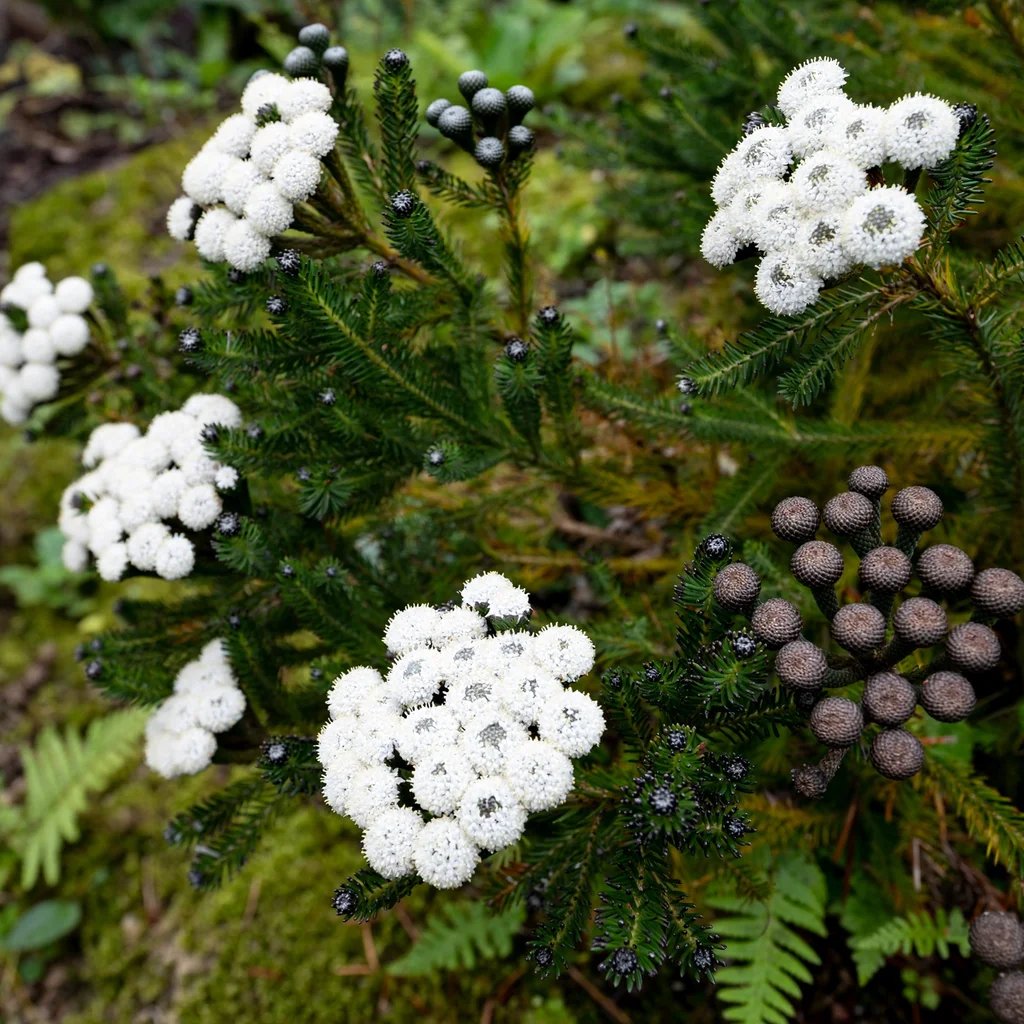
Brunia albiflora is a tall single-stemmed evergreen shrub from the Western Cape, reaching seven to ten feet with dense feathery branching. The foliage is dark green and pine-like, with soft linear leaves about half an inch long tipped in black that clothe the stems to the base.
What is sold as white brunia carries tight spherical knobs of tiny white flowers with protruding yellow stamens, grouped into flat-topped clusters. The buds open green-black and silver before whitening, and the spent heads persist on the bush for years.
Uses & Benefits:
Essentials
At a Glance
Plant Type
Shrub
Height
118"
Width
79"
Light
Full Sun, Partial Sun
Zones
9, 10
Water
Moderate - moist but well-drained
Humidity
Low to moderate
Lifespan
Long-lived evergreen shrub
Native To
South Africa - Western Cape
Toxicity
Unknown - no toxicity reported
Bloom period
Late winter – Early spring
In flower about 2 months of the year
Planting
How to Grow
- Plant in full sun with 6 or more hours of light in acidic sandy soil that drains freely.
- Set the rootball level with the soil surface in a hole amended with peat and coarse sand, then water in deeply.
- Water to keep the root zone evenly moist in fall and winter, letting excess drain away completely.
- Feed once in late winter with a low-phosphorus slow-release fertilizer; avoid manure and high-phosphorus products.
- Tip-prune lightly after flowering to encourage branching, staying well above leafless wood.
Pro Tip
Pinch regularly to keep it branched, but never cut below the lowest leaves; a stem cut into old leafless wood dies outright.
Keep It Thriving
Care Guide
Do
- Grow in acidic, sandy-peaty soil that stays moist yet drains freely.
- Water deeply in dry periods, especially through the cool season.
- Pinch new shoots to build a dense branched framework.
Don't
- Do not cut back into old leafless wood; the branch dies and young single-leader plants can be killed.
- Do not apply high-phosphorus fertilizer, strong chemicals, or manure.
- Do not leave the pot or planting hole waterlogged.
Seasonal Care Calendar
| Task | Jan | Feb | Mar | Apr | May | Jun | Jul | Aug | Sep | Oct | Nov | Dec |
|---|---|---|---|---|---|---|---|---|---|---|---|---|
| Fertilize | ||||||||||||
| Pest Check | ||||||||||||
| Propagate | ||||||||||||
| Prune |
Watch Out For
Pests & Diseases
Common Pests
Common Diseases
In the Garden
Landscape Uses & Companions
Landscape Uses
Companion Plants
Multiply
Propagation Methods
Good to Know
Common Questions
White Brunia questions
What zones can White Brunia grow in?
White Brunia is hardy in USDA Zones 9–10: in that range it survives winter in the ground. Colder than Zone 9, grow it in a container you can move to shelter for the winter.
When does White Brunia bloom?
White Brunia typically blooms from late winter to early spring. Exact timing shifts a week or two with your zone — Sow's bloom calendar maps it to your garden.
Does White Brunia need full sun?
White Brunia does best in full sun to part shade. In hot climates, afternoon shade keeps blooms fresher longer.
Keep exploring
Explore the genus
Hardy in your zone?
Grow White Brunia with confidence
See it in a design of your actual yard, get zone-matched care reminders, and track it season by season in your garden journal.