The Story
Plant Bio
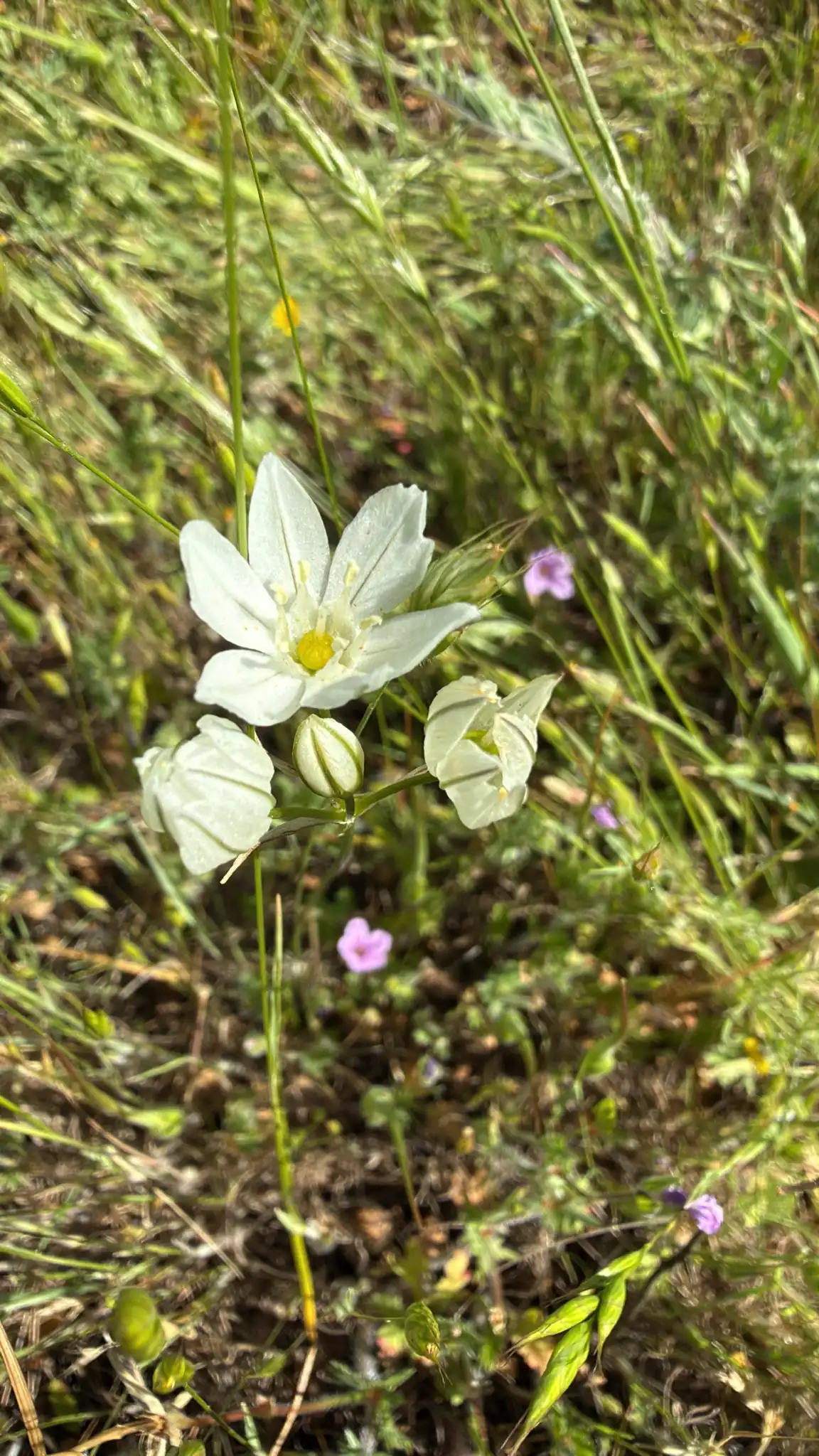
Triteleia hyacinthina is a bulbous perennial native to western North America, producing narrow, grass-like basal foliage during the cool, wet season. In late spring or summer, slender leafless scapes rise above the fading leaves, each carrying an open umbel of white bowl-shaped flowers.
This species stands out for its bowl-to-funnel-shaped white blossoms marked with prominent dark midveins along the outer petal surfaces. It adapts to seasonal spring dampness but requires a completely dry summer dormancy period to preserve its underground corms.
Uses & Benefits:
Essentials
At a Glance
Plant Type
Bulb Corm Tuber
Height
28"
Width
6"
Light
Full Sun, Partial Sun
Zones
4, 5, 6, 7, 8, 9
Water
Low (Dry Summer)
Humidity
Moderate
Lifespan
Perennial
Native To
Western North America
Toxicity
Non-toxic
Bloom period
Late spring – Summer
In flower about 4 months of the year
Planting
How to Grow
- Select a planting site in full sun or light shade with sandy or loamy well-drained soil.
- Plant dormant corms in autumn 3 to 4 inches deep and spaced 3 inches apart.
- Maintain moderate soil moisture through winter and spring while leaves and flowers are growing.
- Cease watering completely in summer as foliage yellowing indicates dormancy onset.
Pro Tip
Withhold all summer irrigation once the foliage yellows; moisture applied during warm dormancy triggers fungal rot and destroys the corms.
Keep It Thriving
Care Guide
Do
- Allow the basal foliage to yellow and wither completely before removal.
- Ensure planting beds feature sharp drainage to prevent moisture retention in summer.
Don't
- Do not irrigate the planting site while the bulb is dormant in summer.
- Do not cut back green leaves prematurely while they are nourishing the corm.
Seasonal Care Calendar
| Task | Jan | Feb | Mar | Apr | May | Jun | Jul | Aug | Sep | Oct | Nov | Dec |
|---|---|---|---|---|---|---|---|---|---|---|---|---|
| Fertilize | ||||||||||||
| Pest Check | ||||||||||||
| Plant | ||||||||||||
| Spring Cleanup |
Watch Out For
Pests & Diseases
Common Pests
Common Diseases
In the Garden
Landscape Uses & Companions
Landscape Uses
Multiply
Propagation Methods
Good to Know
Common Questions
White Brodiaea questions
What zones can White Brodiaea grow in?
White Brodiaea is hardy in USDA Zones 4–9: in that range it survives winter in the ground. Warmer than Zone 9, winter isn't the problem: it prefers colder winters, and summer heat can shorten its life.
Is White Brodiaea deer resistant?
Not reliably. Deer may browse White Brodiaea, especially tender spring growth — plan on repellents or fencing where pressure is high.
When does White Brodiaea bloom?
White Brodiaea typically blooms from late spring to late summer. Exact timing shifts a week or two with your zone — Sow's bloom calendar maps it to your garden.
Does White Brodiaea need full sun?
White Brodiaea does best in full sun to part shade. In hot climates, afternoon shade keeps blooms fresher longer.
Is White Brodiaea drought tolerant?
Yes — once established (usually after the first full season), White Brodiaea handles dry spells with minimal watering. Water deeply its first year to build the root system that makes that possible.
More Triteleia to compare
Keep exploring
Explore the genus
Grow White Brodiaea with confidence
See it in a design of your actual yard, get zone-matched care reminders, and track it season by season in your garden journal.