The Story
Plant Bio
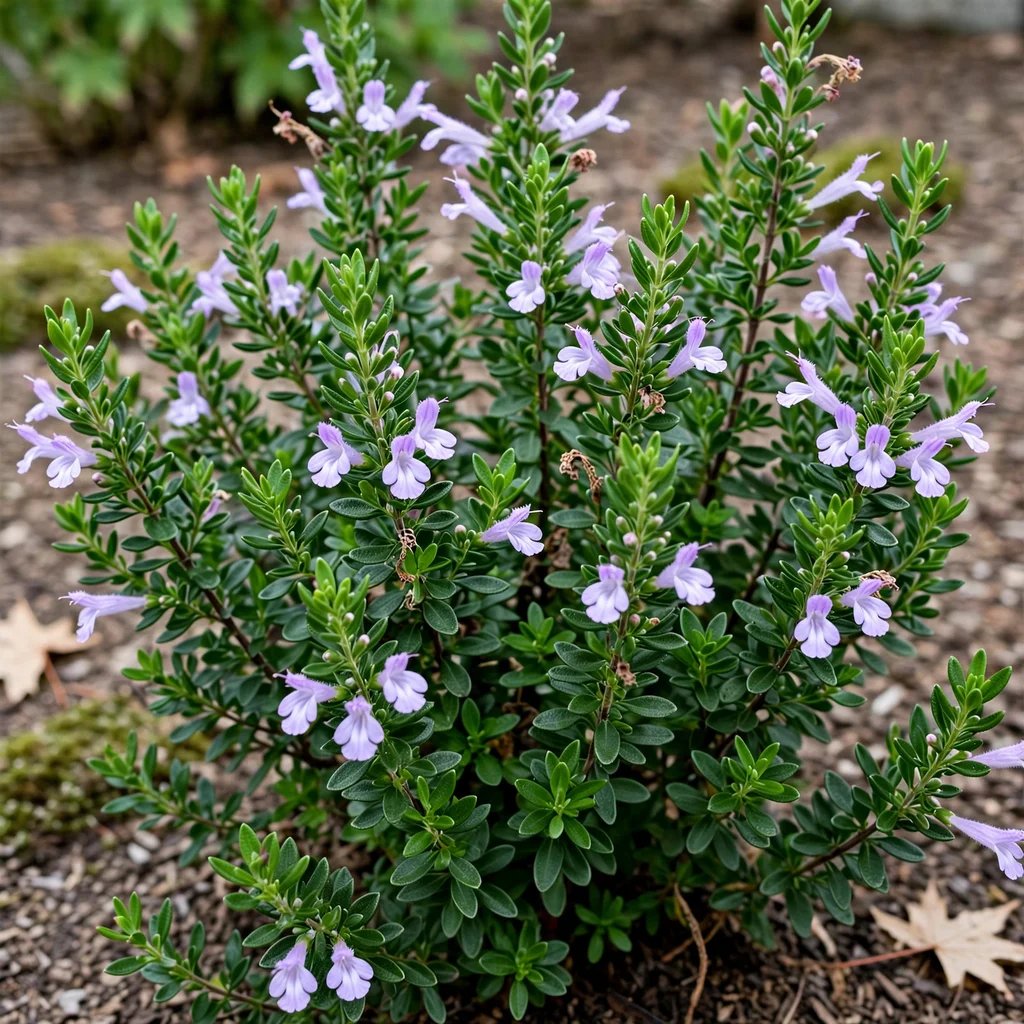
Poliomintha maderensis is a mounding brittle-stemmed woody mint from central Coahuila that holds small bright deep-green evergreen leaves with a strong oregano scent when crushed. In cultivation it forms a dense three-foot shrub that blooms on new wood from showy clusters of long narrow tubular flowers at the branch tips.
It is distinguished from P. incana and P. longiflora sold under the same nursery names by its compact habit and profuse lavender to deep violet flowers with pale throats. Moderate irrigation increases flower number from late spring into fall, with bloom continuing almost year-round where winters stay mild.
Uses & Benefits:
Essentials
At a Glance
Plant Type
Shrub
Height
36"
Width
36"
Light
Full Sun, Partial Sun
Zones
7, 8, 9, 10
Water
Low to moderate
Humidity
Low
Lifespan
Woody perennial shrub
Native To
Central Coahuila, Mexico
Toxicity
Non-toxic
Bloom period
Late spring – Fall
In flower about 7 months of the year
Planting
How to Grow
- Plant in full sun to filtered sun with 6 to 8 hours of light in very well-drained sandy or rocky soil.
- Set the crown level with the soil surface and water in once, then water moderately through the first summer to establish.
- Give moderate irrigation during bloom to increase flowering, then reduce water once established; it is heat and drought hardy.
- Shear lightly in late winter and remove dead branches anytime to keep the mound dense and compact.
- In cold zones leave roots mulched with gravel and cut frozen stems to the ground in spring to regrow.
Pro Tip
Shear lightly in late winter before growth starts and cut out dead wood anytime; flowering occurs on new wood so spring pruning keeps the plant compact without removing bloom.
Keep It Thriving
Care Guide
Do
- Do plant in very well-drained neutral to alkaline soil.
- Do give full sun for fullest foliage and bloom.
- Do shear lightly in late winter before new growth.
Don't
- Do not plant in wet clay or rich mesic soil that stays soggy.
- Do not overwater; soggy soil reduces hardiness and rots roots.
- Do not confuse with true oregano; this is a woody Chihuahuan Desert mint.
Seasonal Care Calendar
| Task | Jan | Feb | Mar | Apr | May | Jun | Jul | Aug | Sep | Oct | Nov | Dec |
|---|---|---|---|---|---|---|---|---|---|---|---|---|
| Mulch | ||||||||||||
| Pest Check | ||||||||||||
| Plant | ||||||||||||
| Prune | ||||||||||||
| Winter Prep |
Watch Out For
Pests & Diseases
Common Pests
Common Diseases
In the Garden
Landscape Uses & Companions
Landscape Uses
Multiply
Propagation Methods
Good to Know
Common Questions
Mexican Oregano questions
What zones can Mexican Oregano grow in?
Mexican Oregano is hardy in USDA Zones 7–10: in that range it survives winter in the ground. Colder than Zone 7, grow it in a container you can move to shelter for the winter.
When does Mexican Oregano bloom?
Mexican Oregano typically blooms from late spring to late fall. Exact timing shifts a week or two with your zone — Sow's bloom calendar maps it to your garden.
Does Mexican Oregano need full sun?
Mexican Oregano does best in full sun to part shade. In hot climates, afternoon shade keeps blooms fresher longer.
Is Mexican Oregano drought tolerant?
Yes — once established (usually after the first full season), Mexican Oregano handles dry spells with minimal watering. Water deeply its first year to build the root system that makes that possible.
Keep exploring
Explore the genus
Hardy in your zone?
Grow Mexican Oregano with confidence
See it in a design of your actual yard, get zone-matched care reminders, and track it season by season in your garden journal.