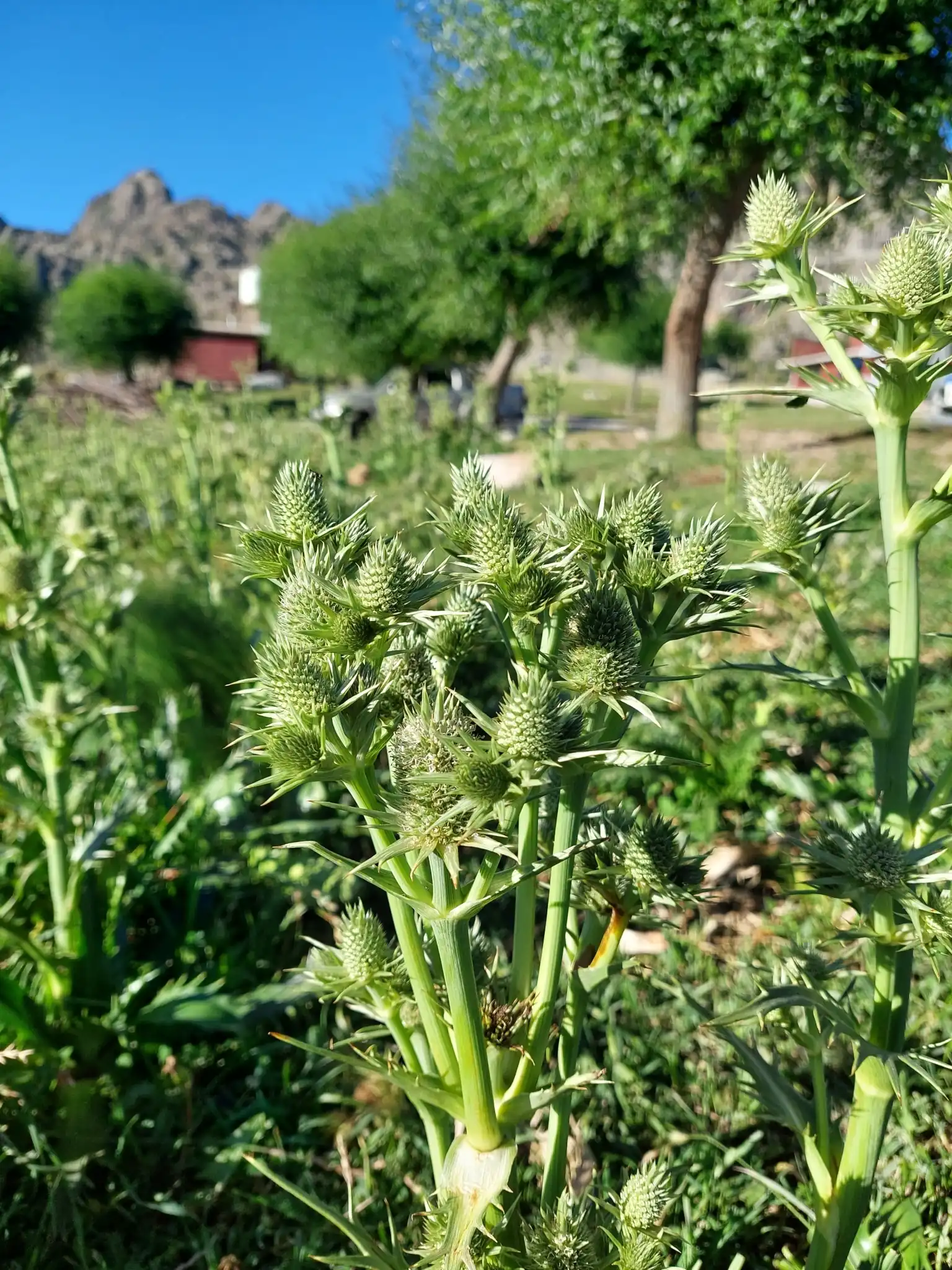
The Story
Plant Bio
Eryngium agavifolium is a perennial succulent-like herb with rosette-forming, spiky, blue-green foliage and distinctive, globe-shaped flower heads composed of small, metallic-blue flowers.
This species is renowned for its striking, agave-like foliage and its drought tolerance, making it an excellent choice for xeriscaping and low-maintenance gardens.
Uses & Benefits:
Essentials
At a Glance
Plant Type
Perennial
Height
24"
Width
18"
Light
Full Sun
Zones
4, 5, 6, 7, 8, 9
Water
Low to moderate
Humidity
Low
Lifespan
Perennial
Native To
Mediterranean, Europe
Toxicity
Non-toxic to humans and pets
Bloom period
Late summer – Late fall
In flower about 4 months of the year
Planting
How to Grow
- Tuck seeds into well-draining soil in early spring
- Water regularly until established, then reduce watering
- Mist cuttings to encourage rooting in 4 weeks
- Apply a balanced fertilizer in spring
- Divide clumps every 3-4 years in early spring
- Mulch around the plant to retain moisture
Pro Tip
Ensure excellent drainage to prevent root rot and promote healthy growth.
Keep It Thriving
Care Guide
Do
- Water during dry spells 🌱
- Prune dead or damaged foliage in early spring
- Mulch to conserve moisture and suppress weeds
Don't
- Overwater in winter ❌
- Use heavy clay soil without amendments ❌
- Allow soil to stay soggy ❌
Seasonal Care Calendar
| Task | Jan | Feb | Mar | Apr | May | Jun | Jul | Aug | Sep | Oct | Nov | Dec |
|---|---|---|---|---|---|---|---|---|---|---|---|---|
| Divide | ||||||||||||
| Spring Cleanup | ||||||||||||
| Winter Prep |
Watch Out For
Pests & Diseases
Common Pests
Common Diseases
In the Garden
Landscape Uses & Companions
Landscape Uses
Multiply
Propagation Methods
Good to Know
Common Questions
Sea Holly questions
What zones can Sea Holly grow in?
Sea Holly is hardy in USDA Zones 4–9: in that range it survives winter in the ground. Warmer than Zone 9, winter isn't the problem: it prefers colder winters, and summer heat can shorten its life.
Is Sea Holly deer resistant?
Not reliably. Deer may browse Sea Holly, especially tender spring growth — plan on repellents or fencing where pressure is high.
When does Sea Holly bloom?
Sea Holly typically blooms from late summer to late fall. Exact timing shifts a week or two with your zone — Sow's bloom calendar maps it to your garden.
Does Sea Holly need full sun?
Sea Holly does best in full sun (6+ hours).
Is Sea Holly drought tolerant?
Yes — once established (usually after the first full season), Sea Holly handles dry spells with minimal watering. Water deeply its first year to build the root system that makes that possible.
More Eryngium to compare
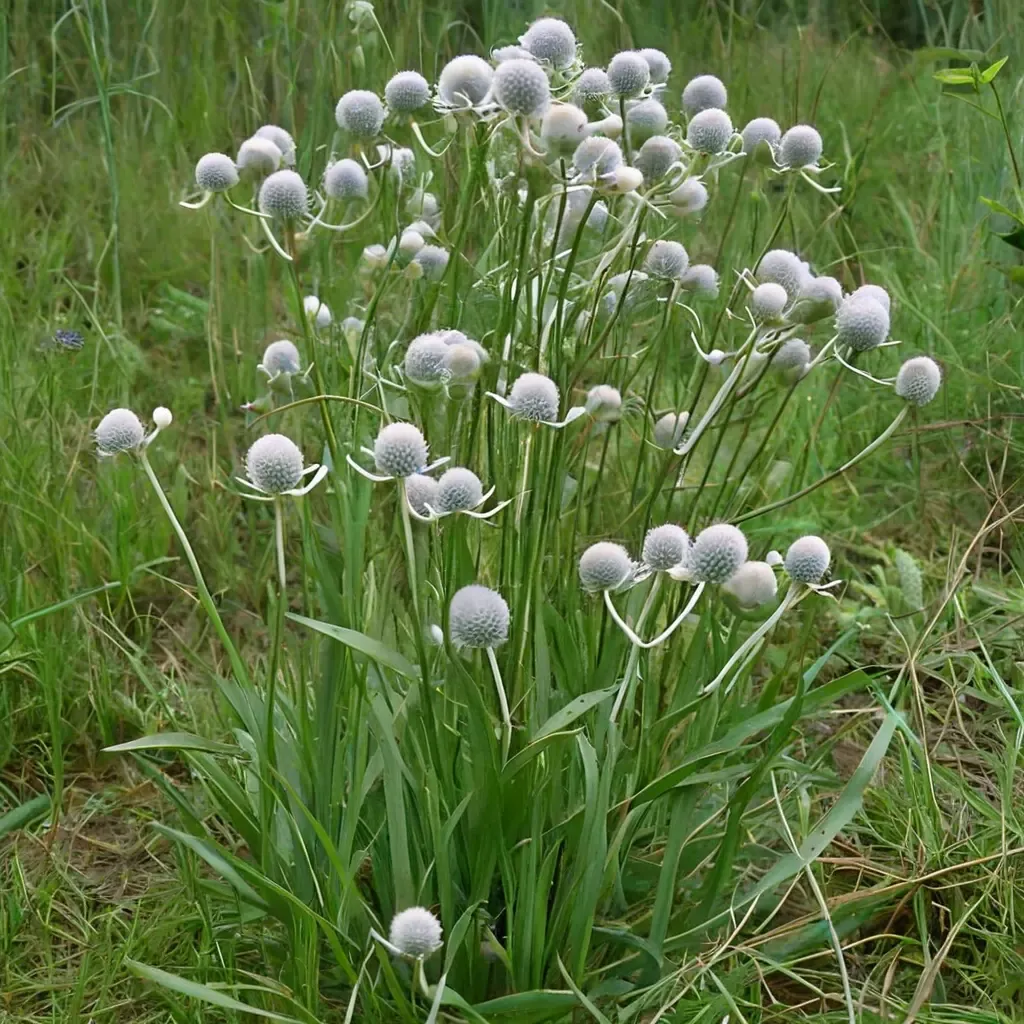
Rattlesnake master
Eryngium yuccifolium
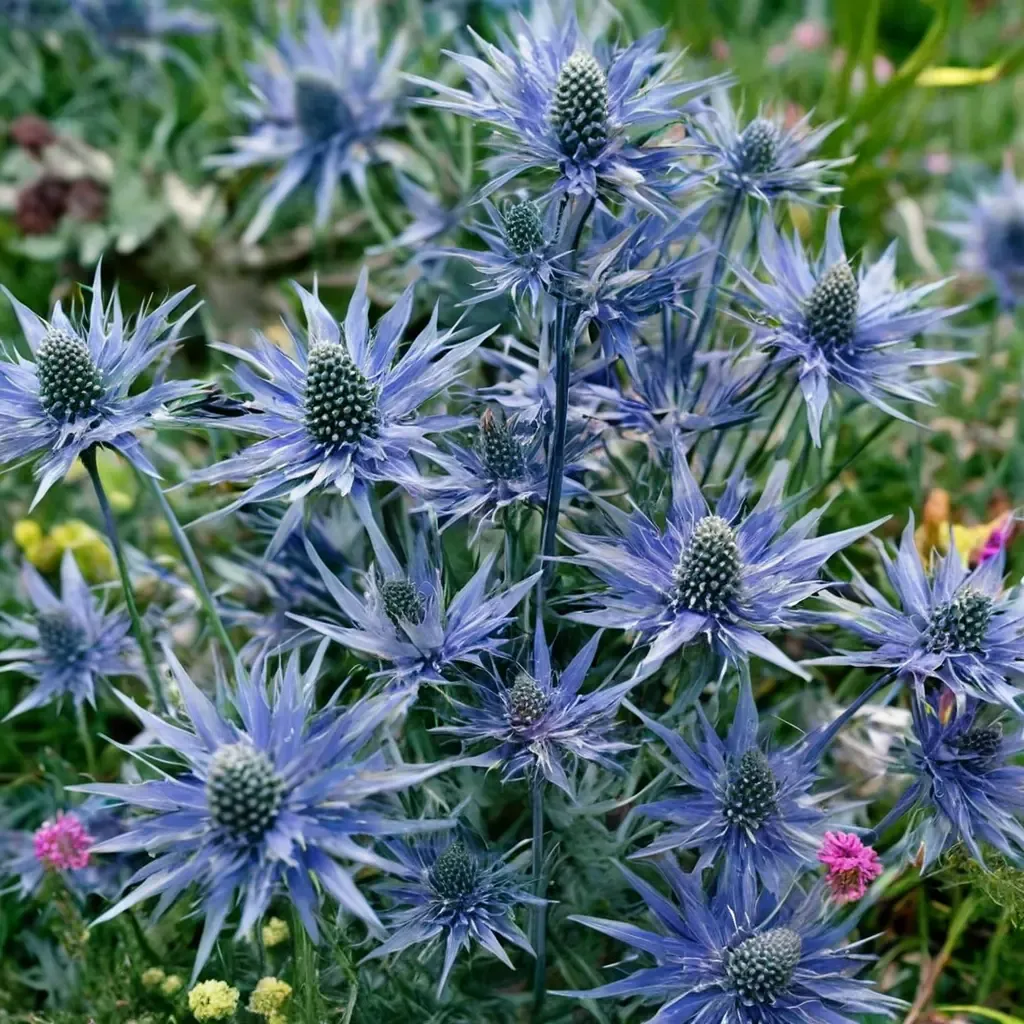
Big Blue Sea Holly
Eryngium x hybrida 'Big Blue'
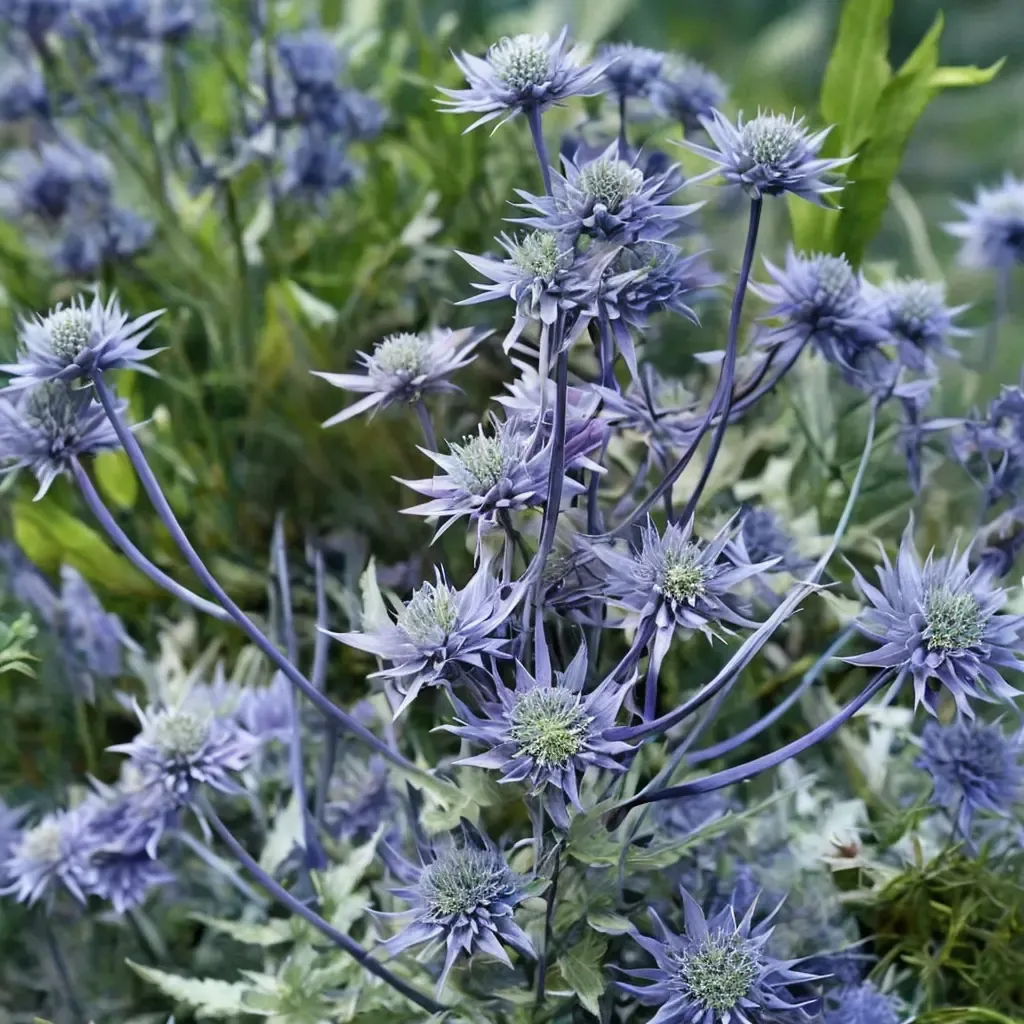
Blue Glitter Sea Holly
Eryngium planum 'Blue Glitter'
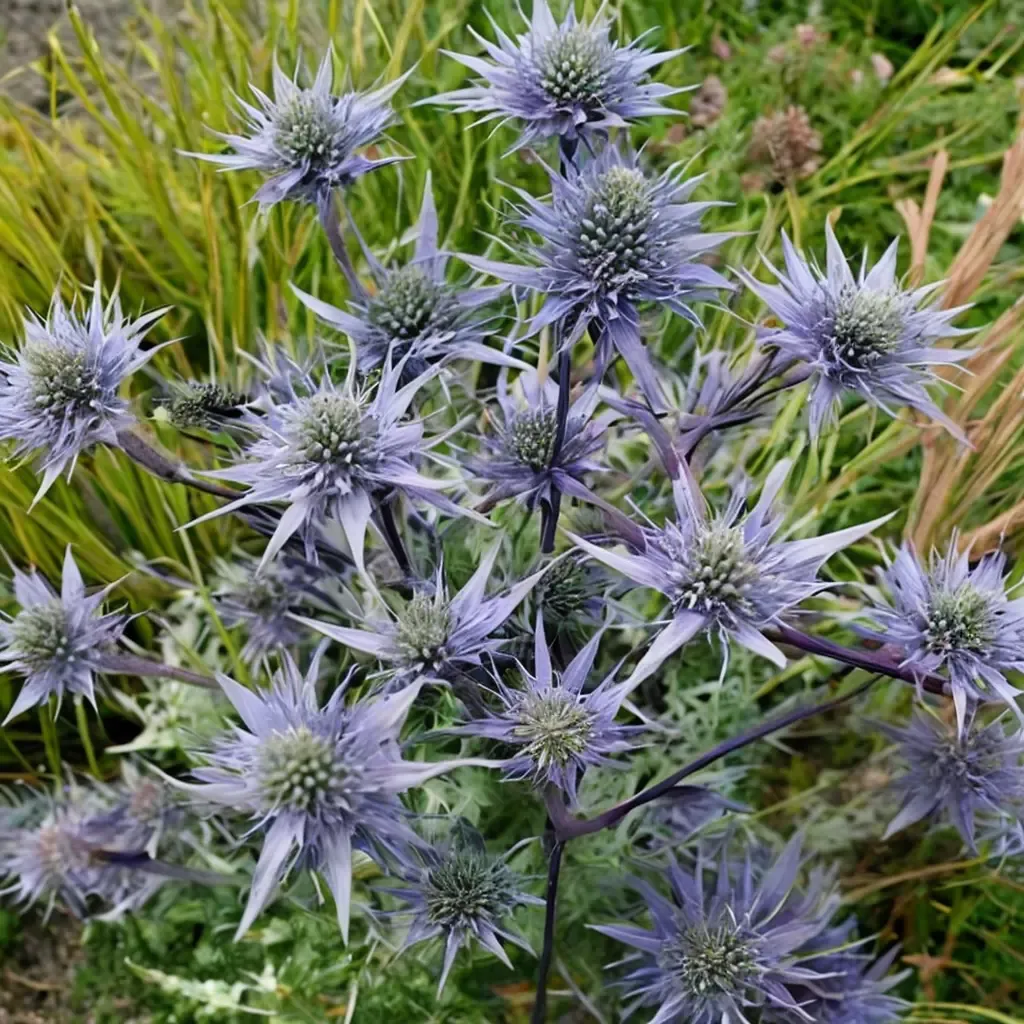
Picos Blue Sea Holly
Eryngium bourgatii 'Picos Blue'
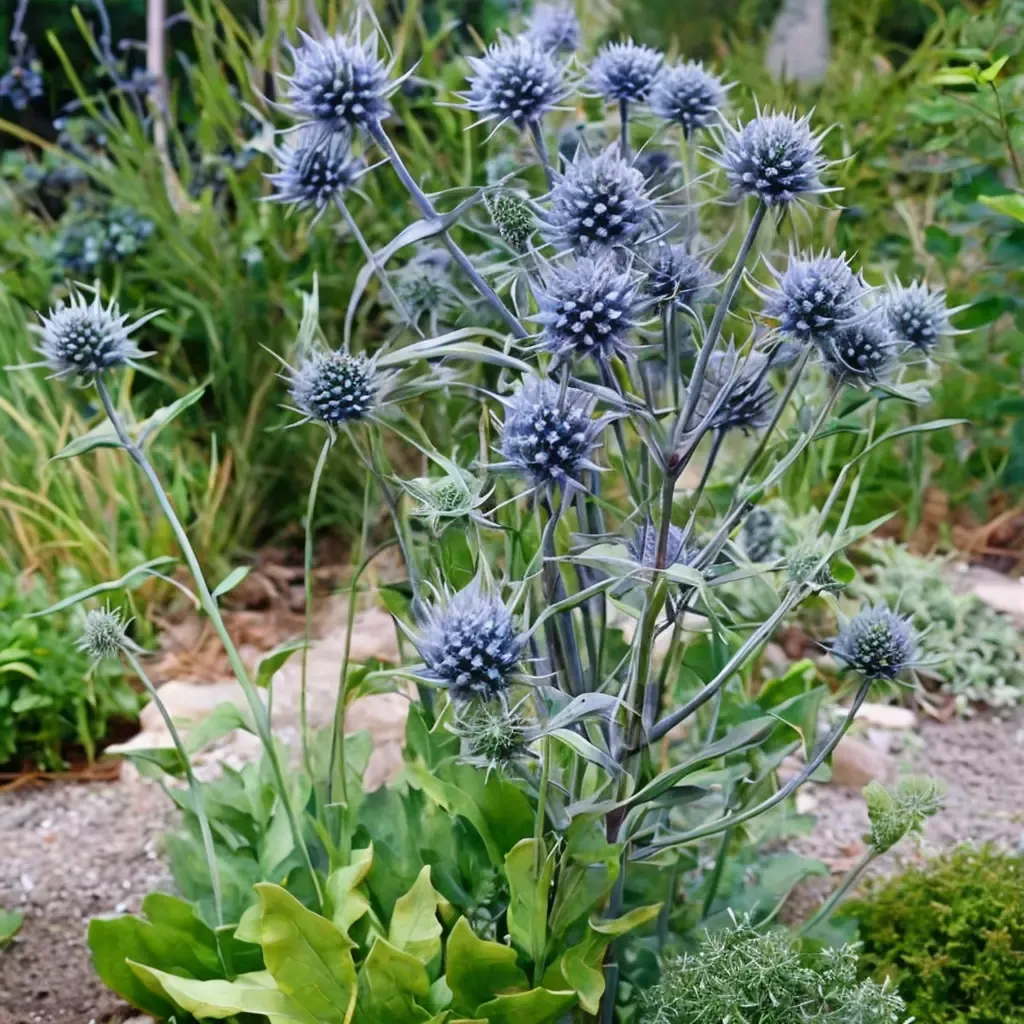
Flat Sea Holly
Eryngium planum
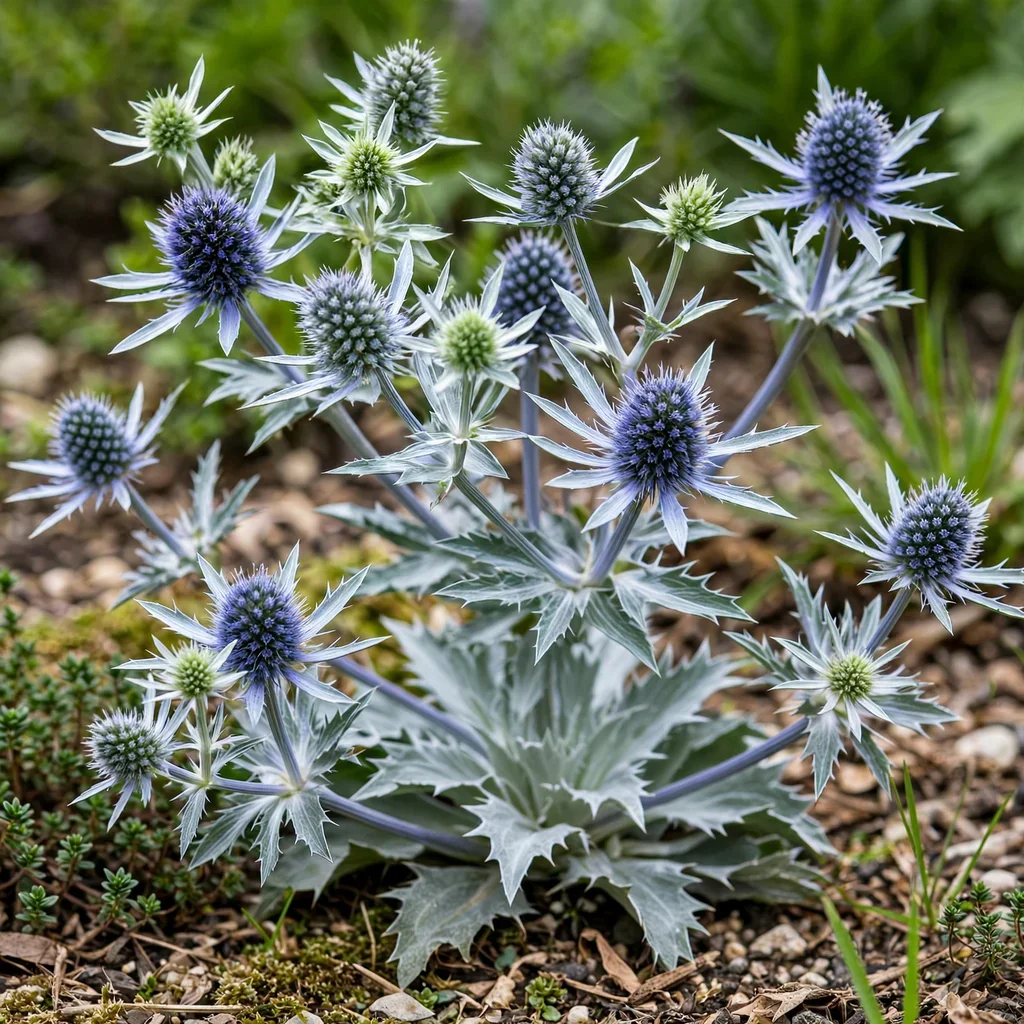
Blue Hobbit Eryngium
Eryngium x zabelii 'Blue Hobbit'
Keep exploring
Explore the genus
Grow Sea Holly with confidence
See it in a design of your actual yard, get zone-matched care reminders, and track it season by season in your garden journal.