The Story
Plant Bio
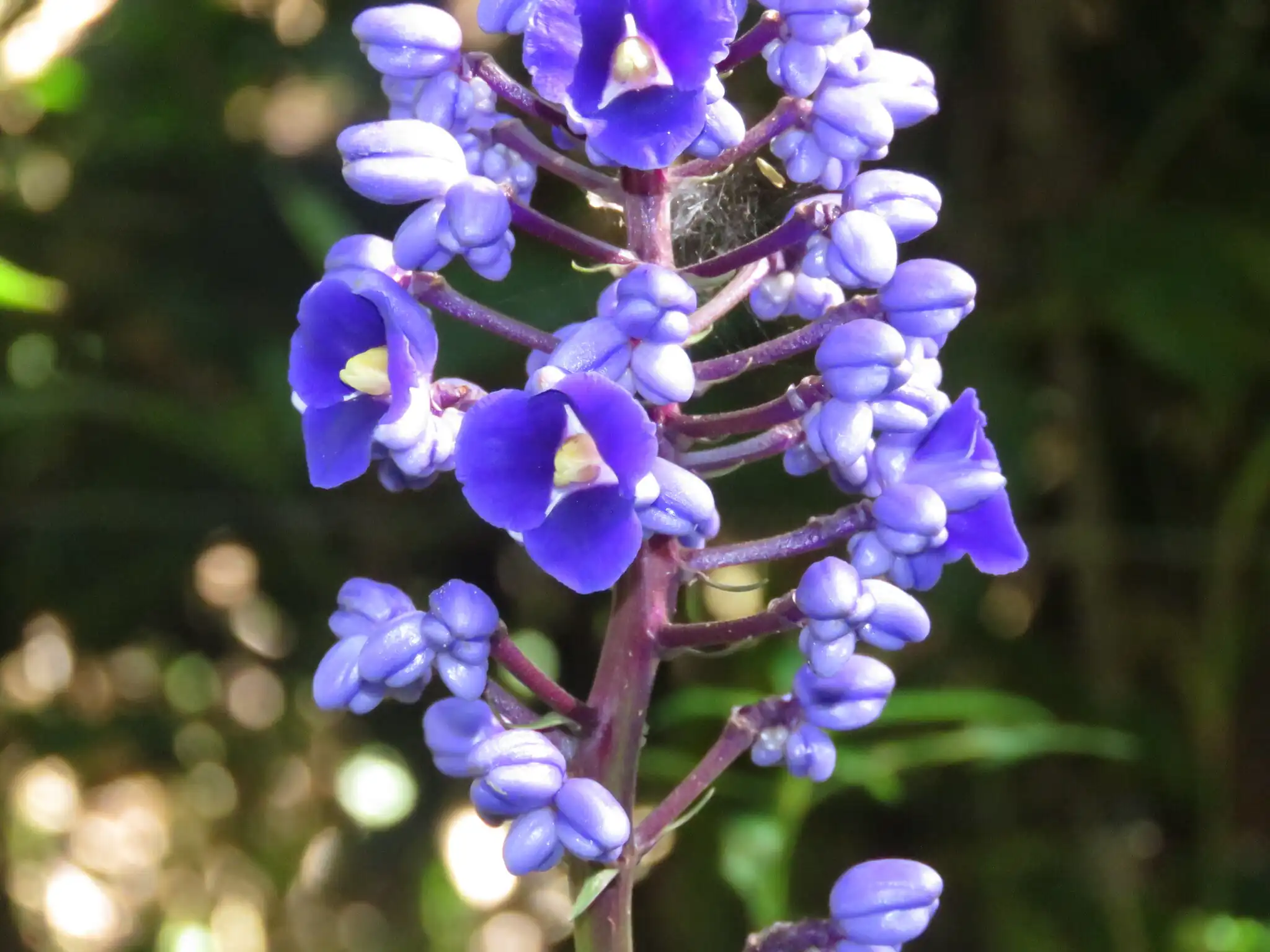
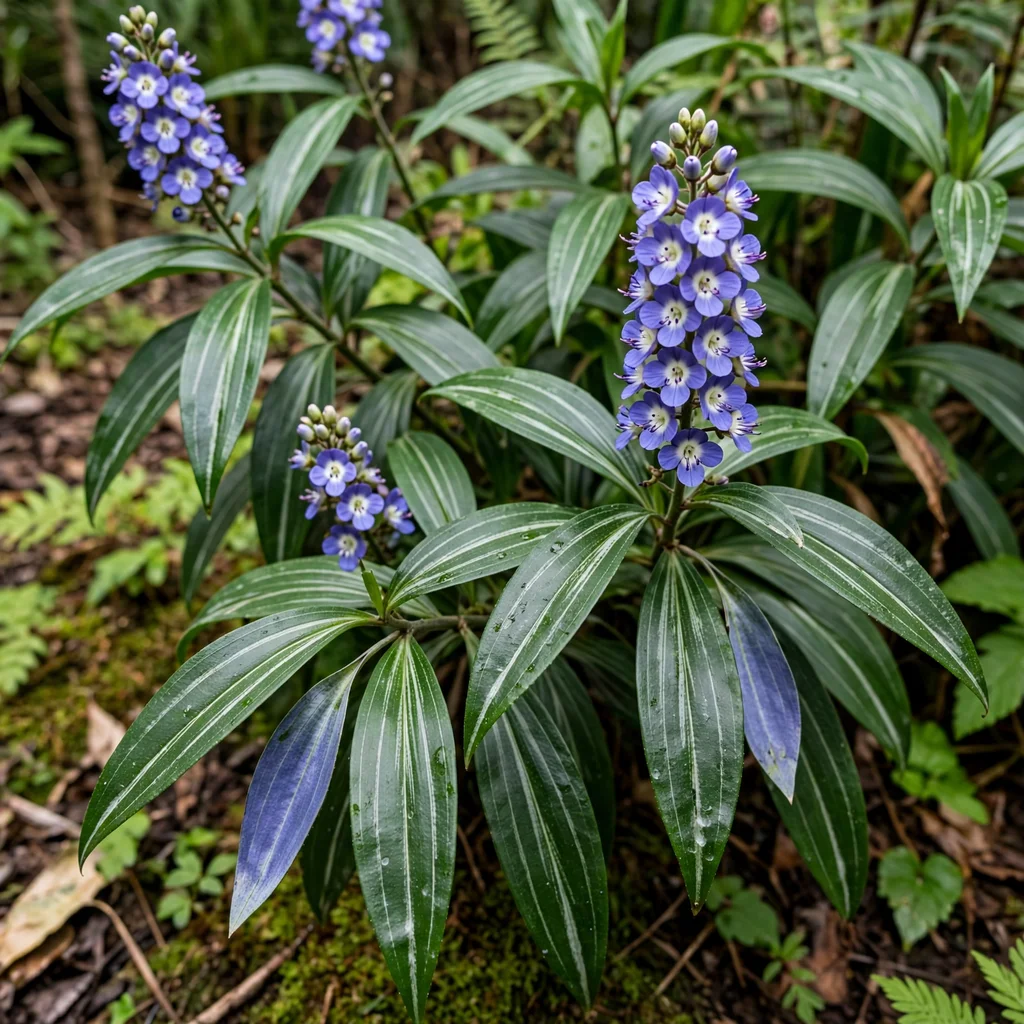
Dichorisandra thyrsiflora is an upright, clump-forming evergreen perennial from the Atlantic Forest of southeastern Brazil, producing fleshy cane-like stems from rhizomes to three to six feet tall. Leaves are alternate, spirally arranged and sheathing at the base, each glossy deep green lance to eight to twelve inches long by two inches wide.
Flowers are violet-blue, about three-quarters of an inch across, packed into a terminal thyrse to eight inches long of stalked cymes with four upright and two spreading anthers. Despite the common name blue ginger it is in the spiderwort family, not a true ginger, followed by capsules with red false arils.
Uses & Benefits:
Essentials
At a Glance
Plant Type
Tropical
Height
72"
Width
36"
Light
Partial Sun, Shade
Zones
10
Water
Medium
Humidity
High
Lifespan
Evergreen perennial
Native To
Southeastern Brazil
Toxicity
No toxicity reported
Bloom period
Summer – Fall
In flower about 6 months of the year
Planting
How to Grow
- Plant in a humus-rich, free-draining mix in a container with drainage holes; set the rhizome just below the surface.
- Place in bright indirect light or part shade outdoors in zones 10-12, shielded from hot afternoon sun and strong wind.
- Water to keep the mix evenly moist in active growth; let the top inch dry, then water thoroughly and empty the saucer.
- Keep above 60F, ideally 60-70F minimum, with high humidity; move indoors before the first fall chill.
- Cut flowered stems back after bloom fades to keep the clump tidy.
Pro Tip
Keep the mix moist in active growth and drier in winter; waterlogging, cold and exposed wind kill more plants than neglect.
Keep It Thriving
Care Guide
Do
- Keep the mix evenly moist during summer growth, then drier in winter rest
- Provide bright indirect light and shelter from hot sun and strong wind
- Bring containers indoors before cold nights and maintain high humidity
Don't
- Do not leave roots in standing water or soggy mix
- Do not expose to frost, cold drafts, or hot afternoon sun
- Do not divide or repot while in full bloom
Seasonal Care Calendar
| Task | Jan | Feb | Mar | Apr | May | Jun | Jul | Aug | Sep | Oct | Nov | Dec |
|---|---|---|---|---|---|---|---|---|---|---|---|---|
| Mulch | ||||||||||||
| Pest Check | ||||||||||||
| Propagate | ||||||||||||
| Prune | ||||||||||||
| Winter Prep |
Watch Out For
Pests & Diseases
Common Pests
Common Diseases
In the Garden
Landscape Uses & Companions
Landscape Uses
Companion Plants
Multiply
Propagation Methods
Good to Know
Common Questions
Blue Ginger questions
What zones can Blue Ginger grow in?
Blue Ginger is hardy in USDA Zone 10: in that range it survives winter in the ground. Colder than Zone 10, grow it in a container you can move to shelter for the winter, or as an annual.
When does Blue Ginger bloom?
Blue Ginger typically blooms from summer to fall. Exact timing shifts a week or two with your zone — Sow's bloom calendar maps it to your garden.
Does Blue Ginger need full sun?
Blue Ginger does best in part shade.
More Dichorisandra to compare
Keep exploring
Explore the genus
Hardy in your zone?
Grow Blue Ginger with confidence
See it in a design of your actual yard, get zone-matched care reminders, and track it season by season in your garden journal.