The Story
Plant Bio
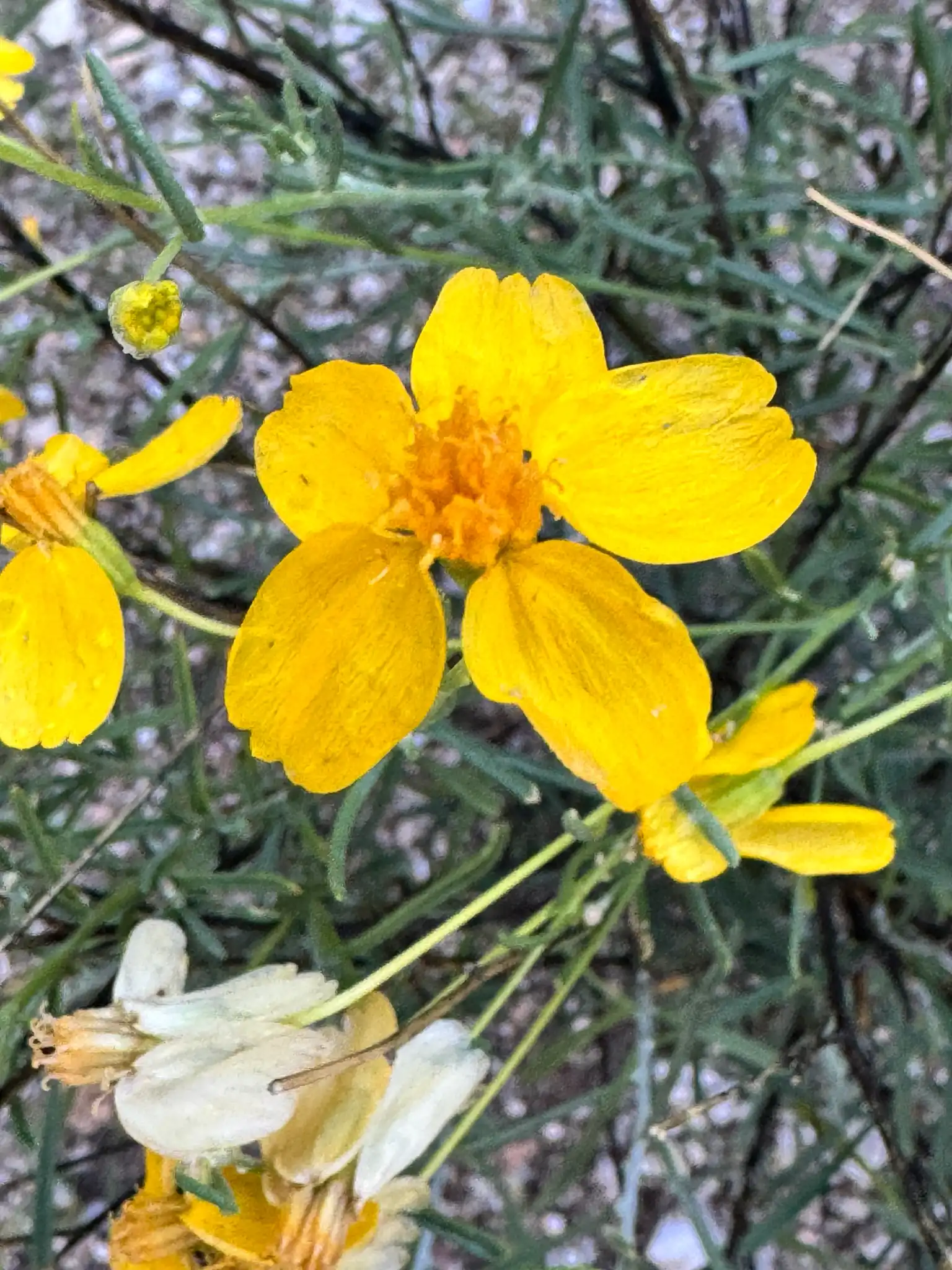
Psilostrophe cooperi is an evergreen subshrub from the Mojave and Sonoran Deserts, forming a rounded mound about two feet high and wide from a woody base. Narrow fuzzy gray-green leaves and white-felted stems shed in drought, leaving a silver framework that carries photosynthesis.
Single yellow daisies open on wiry stems from spring to fall and dry in place to papery white-yellow cups that hold for weeks. Plants are fast, short-lived, and highly aromatic, reseeding in sandy washes and rocky slopes to hold the colony.
Uses & Benefits:
Essentials
At a Glance
Plant Type
Perennial
Height
24"
Width
24"
Light
Full Sun
Zones
8, 9, 10
Water
Low
Humidity
Low
Lifespan
Short-lived perennial
Native To
Southwestern USA and NW Mexico
Toxicity
Toxic to livestock and pets
Bloom period
Spring – Fall
In flower about 9 months of the year
Planting
How to Grow
- Plant in full sun in rocky or sandy, fast-draining soil, spacing two feet apart.
- Water deeply at planting, then weekly until rooted, then only during prolonged drought.
- Top-dress with gravel, not bark, to keep the crown dry.
- Allow late heads to dry and drop seed for replacement plants.
Pro Tip
Plant lean and dry in full sun and leave it alone; supplemental water shortens its life, and allowing seed to drop keeps the planting going.
Keep It Thriving
Care Guide
Do
- Plant in full sun with sharp drainage.
- Water only until established, then infrequently.
- Allow reseeding to replace short-lived plants.
Don't
- Do not plant in heavy clay or low, wet spots.
- Do not overwater or enrich the soil.
- Do not expect one plant to live for many years.
Seasonal Care Calendar
| Task | Jan | Feb | Mar | Apr | May | Jun | Jul | Aug | Sep | Oct | Nov | Dec |
|---|---|---|---|---|---|---|---|---|---|---|---|---|
| Deadhead | ||||||||||||
| Pest Check | ||||||||||||
| Plant | ||||||||||||
| Propagate | ||||||||||||
| Prune |
Watch Out For
Pests & Diseases
Common Pests
Common Diseases
In the Garden
Landscape Uses & Companions
Landscape Uses
Multiply
Propagation Methods
Good to Know
Common Questions
Whitestem Paperflower questions
What zones can Whitestem Paperflower grow in?
Whitestem Paperflower is hardy in USDA Zones 8–10: in that range it survives winter in the ground. Colder than Zone 8, grow it in a container you can move to shelter for the winter, or as an annual.
When does Whitestem Paperflower bloom?
Whitestem Paperflower typically blooms from spring to fall. Exact timing shifts a week or two with your zone — Sow's bloom calendar maps it to your garden.
Does Whitestem Paperflower need full sun?
Whitestem Paperflower does best in full sun (6+ hours).
Is Whitestem Paperflower drought tolerant?
Yes — once established (usually after the first full season), Whitestem Paperflower handles dry spells with minimal watering. Water deeply its first year to build the root system that makes that possible.
More Psilostrophe to compare
Keep exploring
Explore the genus
Hardy in your zone?
Grow Whitestem Paperflower with confidence
See it in a design of your actual yard, get zone-matched care reminders, and track it season by season in your garden journal.