The Story
Plant Bio
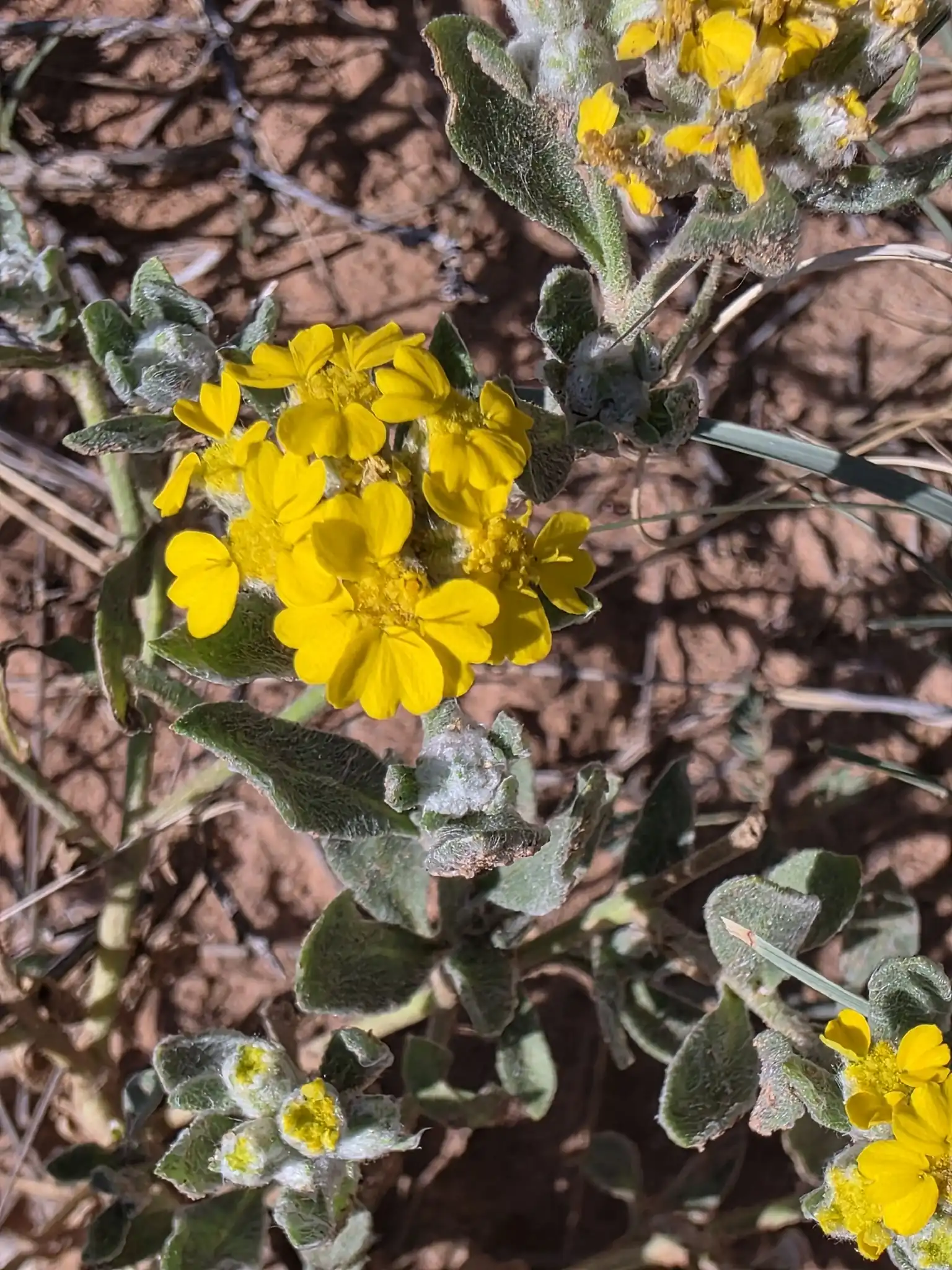
Psilostrophe tagetina, the woolly paperflower, is a biennial or short-lived perennial from desert scrub and open plains of the Southwest, forming a much-branched, shaggy-haired clump. Leaves are alternate and gray-green, and stems, leaves and buds are coated in matted woolly hairs that slow water loss and give the plant its ashen color.
Heads are radiate daisies about one-half to one inch wide, with yellow ray and disk flowers borne on short stalks. Each head dries in place to a brownish-white papery cup that holds for weeks, extending the show long after the yellow color fades.
Uses & Benefits:
Essentials
At a Glance
Plant Type
Perennial
Height
24"
Width
20"
Light
Full Sun, Partial Sun
Zones
5, 6, 7, 8, 9
Water
Very low
Humidity
Low - prefers dry air
Lifespan
Biennial or short-lived perennial
Native To
Southwestern USA to northern Mexico
Toxicity
Toxic to livestock
Bloom period
Spring – Fall
In flower about 9 months of the year
Planting
How to Grow
- Sow seed on the surface of gritty, fast-draining mix in spring and press in without covering, keeping just moist until germination.
- Transplant seedlings or plugs into lean sand, sandy loam, or gravelly soil in full sun with 6 or more hours of light.
- Water to settle in, then taper off; established plants need very low water and fail in wet or compacted clay.
- Leave late-season heads to ripen and self-sow to replace plants as older crowns decline.
Pro Tip
Give it lean, fast-draining sand or gravel and no extra summer water once rooted; let late heads ripen and self-sow to replace short-lived crowns.
Keep It Thriving
Care Guide
Do
- Plant high in fast-draining sand or gravel with the crown above wet soil.
- Provide full sun and reflected heat with open air movement.
- Allow self-sowing to maintain the planting, since plants are short-lived.
Don't
- Do not overwater or fertilize to push growth; excess water kills the crown.
- Do not plant in heavy clay or low spots that hold water.
- Do not graze or plant where sheep or cattle forage; the green growth is poisonous to livestock.
Seasonal Care Calendar
| Task | Jan | Feb | Mar | Apr | May | Jun | Jul | Aug | Sep | Oct | Nov | Dec |
|---|---|---|---|---|---|---|---|---|---|---|---|---|
| Deadhead | ||||||||||||
| Mulch | ||||||||||||
| Pest Check | ||||||||||||
| Plant | ||||||||||||
| Propagate |
Watch Out For
Pests & Diseases
Common Pests
Common Diseases
In the Garden
Landscape Uses & Companions
Landscape Uses
Companion Plants
Multiply
Propagation Methods
Good to Know
Common Questions
Woolly Paperflower questions
What zones can Woolly Paperflower grow in?
Woolly Paperflower is hardy in USDA Zones 5–9: in that range it survives winter in the ground. Colder than Zone 5, grow it in a container you can move to shelter for the winter, or as an annual. Warmer than Zone 9, winter isn't the problem: it prefers colder winters, and summer heat can shorten its life.
When does Woolly Paperflower bloom?
Woolly Paperflower typically blooms from spring to fall. Exact timing shifts a week or two with your zone — Sow's bloom calendar maps it to your garden.
Does Woolly Paperflower need full sun?
Woolly Paperflower does best in full sun to part shade. In hot climates, afternoon shade keeps blooms fresher longer.
Is Woolly Paperflower drought tolerant?
Yes — once established (usually after the first full season), Woolly Paperflower handles dry spells with minimal watering. Water deeply its first year to build the root system that makes that possible.
More Psilostrophe to compare
Keep exploring
Explore the genus
Hardy in your zone?
Grow Woolly Paperflower with confidence
See it in a design of your actual yard, get zone-matched care reminders, and track it season by season in your garden journal.