The Story
Plant Bio
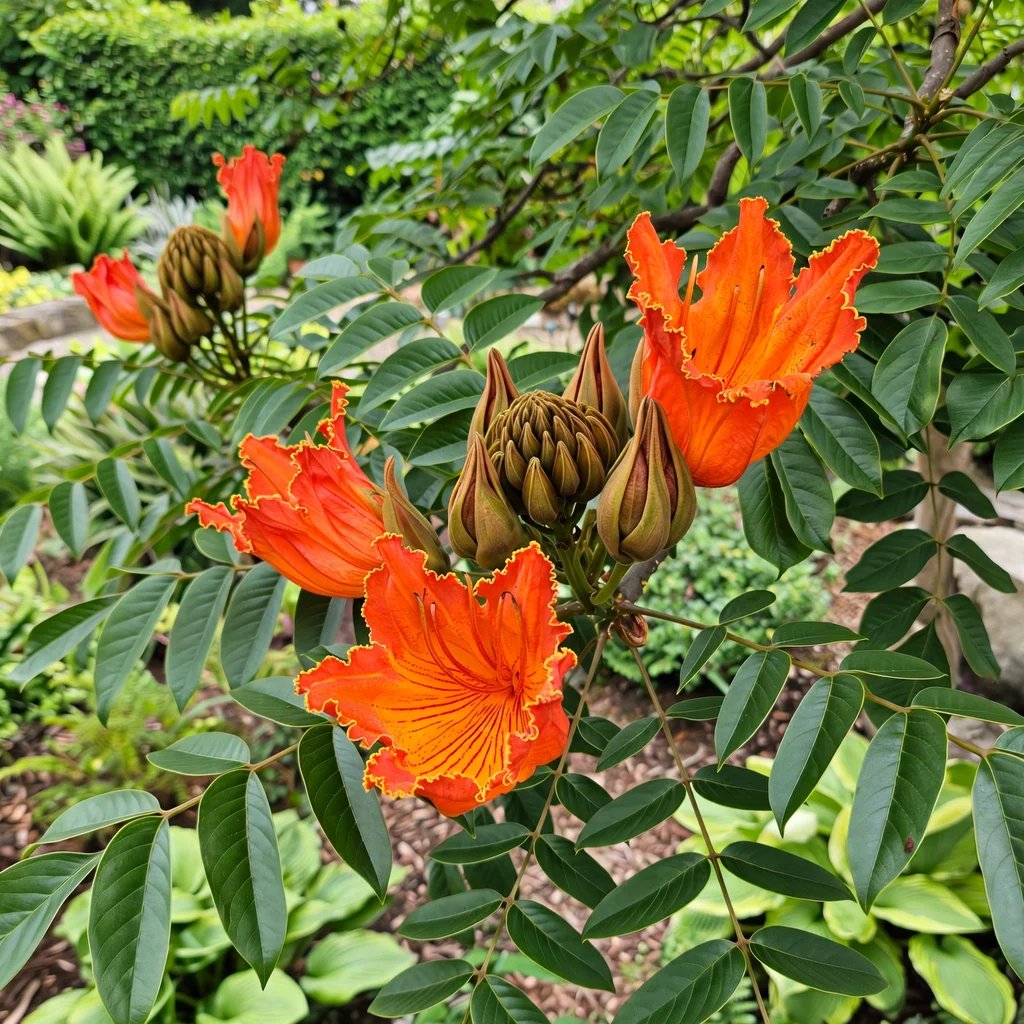
Spathodea campanulata, the African tulip tree, is an evergreen tropical tree from western and central Africa that reaches 25 to 80 feet with a spreading open umbrella crown of dark pinnate leaves. The display comes from upright clusters of large campanulate reddish-orange trumpets at the branch tips, opening from water-holding buds and holding bloom for months through summer.
It is the sole species in its genus, set apart by ampule-shaped buds that hold water and cupped flowers that hold rain after storms. The wild form flowers reddish-orange, with a yellow-flowered form in cultivation that is grown as a seedless alternative where self-sowing is a concern.
Uses & Benefits:
Essentials
At a Glance
Plant Type
Tree
Height
984"
Width
300"
Light
Full Sun
Zones
10
Water
Moderate
Humidity
High
Lifespan
Long-lived tree
Native To
Tropical Africa
Toxicity
Toxic if ingested
Bloom period
Summer – Fall
In flower about 6 months of the year
Planting
How to Grow
- Plant in full sun in rich moist well-drained soil with room for a 15 to 25 foot wide crown and airflow around the canopy.
- Dig the hole no deeper than the container and water deeply at planting to settle the soil.
- Mulch to conserve moisture while keeping mulch away from the trunk.
- Avoid overhead watering and crowding to keep the foliage dry.
Pro Tip
Do not plant the podded form in south Florida or Hawaii where wind-blown seed spreads aggressively; if you plant it at all, ask for the seedless yellow form.
Keep It Thriving
Care Guide
Do
- Give it full sun and consistently moist well-drained soil.
- Allow space for airflow around the wide crown.
- Collect mature brown pods before they split and air-dry them if saving seed.
Don't
- Do not plant where frost occurs, as foliage is killed near 30F.
- Do not plant the seeded form in south Florida or Hawaii.
- Do not overwater to the point of waterlogging.
Seasonal Care Calendar
| Task | Jan | Feb | Mar | Apr | May | Jun | Jul | Aug | Sep | Oct | Nov | Dec |
|---|---|---|---|---|---|---|---|---|---|---|---|---|
| Mulch | ||||||||||||
| Pest Check | ||||||||||||
| Plant | ||||||||||||
| Prune |
Watch Out For
Pests & Diseases
Common Pests
Common Diseases
In the Garden
Landscape Uses & Companions
Landscape Uses
Companion Plants
Multiply
Propagation Methods
Good to Know
Common Questions
African Tulip Tree questions
What zones can African Tulip Tree grow in?
African Tulip Tree is hardy in USDA Zone 10: in that range it survives winter in the ground. Colder than Zone 10, winters are too cold for it to survive outdoors.
When does African Tulip Tree bloom?
African Tulip Tree typically blooms from summer to fall. Exact timing shifts a week or two with your zone — Sow's bloom calendar maps it to your garden.
Does African Tulip Tree need full sun?
African Tulip Tree does best in full sun (6+ hours).
Keep exploring
Explore the genus
Hardy in your zone?
Grow African Tulip Tree with confidence
See it in a design of your actual yard, get zone-matched care reminders, and track it season by season in your garden journal.