The Story
Plant Bio
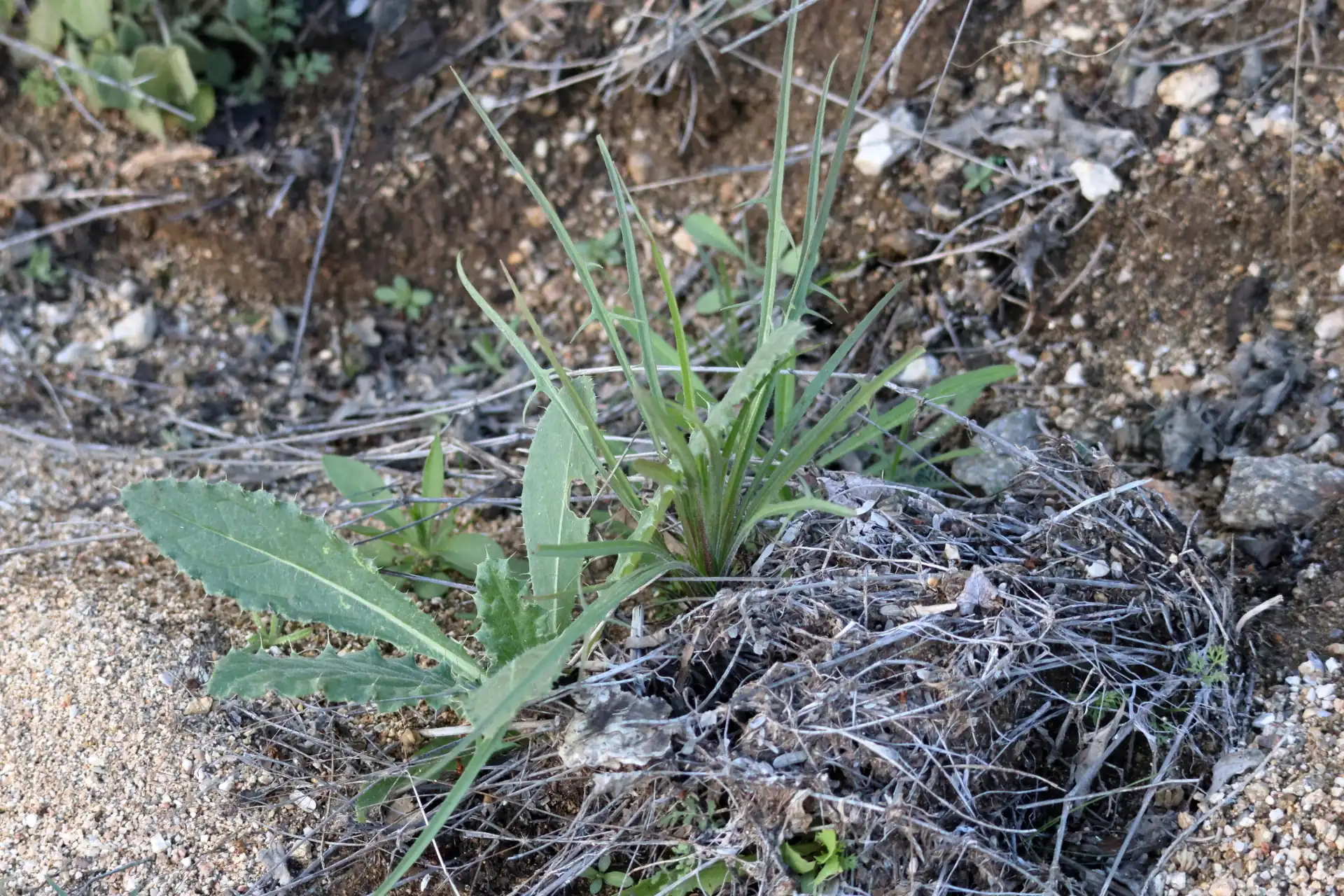
Uropappus lindleyi is a slender, upright spring annual native to dry grasslands, mesas, and rocky open slopes across western North America. The plant bleeds milky sap from simple stems rising out of a narrow basal rosette of long, linear, backward-lobed leaves.
Solitary flower heads carry bright yellow ray florets that yield prominent, globe-shaped seed heads composed of silvery, scale-like pappus structures. The species completes its entire life cycle during winter and spring moisture, dropping seed and drying out before summer heat sets in.
Uses & Benefits:
Essentials
At a Glance
Plant Type
Annual
Height
28"
Width
6"
Light
Full Sun, Partial Sun
Zones
7, 8, 9, 10
Water
Low
Humidity
Low to Moderate
Lifespan
Annual
Native To
Western North America
Toxicity
Non-toxic
Bloom period
Spring – Early summer
In flower about 4 months of the year
Planting
How to Grow
- Sow seed directly onto the soil surface in fall or early winter to receive natural winter chill.
- Select a planting site in full sun or light afternoon shade with sharply draining sandy or gravelly soil.
- Keep the soil lightly moist during seedling germination throughout late winter.
- Cease all watering after flowering to allow seed heads to mature and naturally shatter.
Pro Tip
Avoid summer irrigation and rich organic compost; excess moisture rots the taproot, so let plants dry out completely to drop seed.
Keep It Thriving
Care Guide
Do
- Sow seeds outdoors during fall or early winter.
- Provide lean, sharply draining sandy or gravelly soil.
- Allow mature seed heads to shatter naturally for future spring emergence.
Don't
- Do not irrigate the planting area during summer dormancy.
- Do not amend the soil with heavy compost or nitrogen-rich fertilizers.
- Do not attempt to dig up or transplant established seedlings.
Seasonal Care Calendar
| Task | Jan | Feb | Mar | Apr | May | Jun | Jul | Aug | Sep | Oct | Nov | Dec |
|---|---|---|---|---|---|---|---|---|---|---|---|---|
| Pest Check | ||||||||||||
| Plant | ||||||||||||
| Propagate | ||||||||||||
| Spring Cleanup |
Watch Out For
Pests & Diseases
Common Pests
Common Diseases
In the Garden
Landscape Uses & Companions
Landscape Uses
Multiply
Propagation Methods
Good to Know
Common Questions
Silver Puffs questions
What zones can Silver Puffs grow in?
Silver Puffs is an annual: it grows, flowers and sets seed in one season, so winter cold doesn't limit where it grows. Gardeners in any zone can grow it by planting at the right time, usually after the last spring frost.
Is Silver Puffs deer resistant?
Not reliably. Deer may browse Silver Puffs, especially tender spring growth — plan on repellents or fencing where pressure is high.
When does Silver Puffs bloom?
Silver Puffs typically blooms from early spring to early summer. Exact timing shifts a week or two with your zone — Sow's bloom calendar maps it to your garden.
Does Silver Puffs need full sun?
Silver Puffs does best in full sun to part shade. In hot climates, afternoon shade keeps blooms fresher longer.
Is Silver Puffs drought tolerant?
Yes — once established (usually after the first full season), Silver Puffs handles dry spells with minimal watering. Water deeply its first year to build the root system that makes that possible.
Keep exploring
Explore the genus
Hardy in your zone?
Grow Silver Puffs with confidence
See it in a design of your actual yard, get zone-matched care reminders, and track it season by season in your garden journal.