The Story
Plant Bio
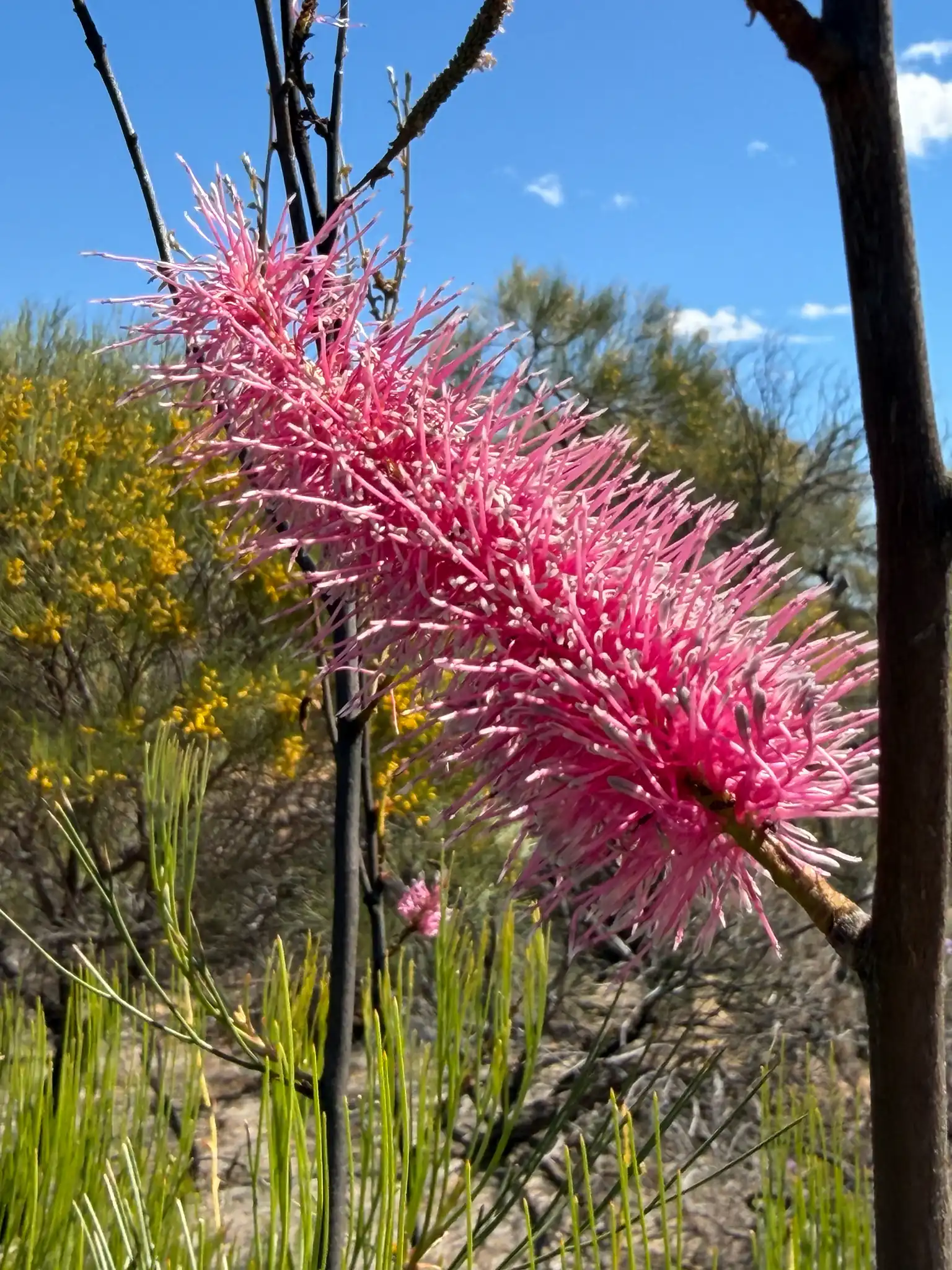
Grevillea petrophiloides is an erect, evergreen shrub native to Western Australia that grows between four and twelve feet tall with rigid, deeply divided foliage. The mid-to-deep pink bottlebrush flower racemes are produced on tall, bare stems held clear above the leafy canopy.
The distinct flowering habit features narrow, poker-like blooms raised high on wand-like stems, giving the plant a dramatic vertical structure. Its fine, needle-like leaf foliage closely resembles that of the genus Petrophile, inspiring its specific epithet.
Uses & Benefits:
Essentials
At a Glance
Plant Type
Shrub
Height
120"
Width
72"
Light
Full Sun
Zones
9, 10
Water
Low
Humidity
Low
Lifespan
Perennial
Native To
Western Australia
Toxicity
Skin Irritant
Bloom period
Winter – Spring
In flower about 6 months of the year
Planting
How to Grow
- Select a planting location in full sun with sharp sand, gravel, or rocky soil that drains rapidly.
- Dig a shallow planting hole no deeper than the root ball and wider to ensure native soil contact without amending with rich organic matter.
- Position the plant so the root collar sits slightly above the surrounding soil line to prevent crown rot.
- Water thoroughly at planting to settle the soil, then withhold routine summer irrigation once established.
Pro Tip
Plant in lean, gravelly sand or rocky soil with sharp drainage; summer irrigation or phosphorus fertilizer will rapidly kill established root systems.
Keep It Thriving
Care Guide
Do
- Plant in gravelly, sharply draining sand or rocky soil in full sun.
- Prune lightly directly behind spent flower spikes to encourage density.
- Use low-phosphorus native plant fertilizers only when necessary.
Don't
- Never apply standard garden fertilizers containing high phosphorus levels.
- Do not irrigate through warm summer months once the plant is established.
- Never cut back hard into old, leafless wood lacking active dormant buds.
Seasonal Care Calendar
| Task | Jan | Feb | Mar | Apr | May | Jun | Jul | Aug | Sep | Oct | Nov | Dec |
|---|---|---|---|---|---|---|---|---|---|---|---|---|
| Fertilize | ||||||||||||
| Pest Check | ||||||||||||
| Prune | ||||||||||||
| Winter Prep |
Watch Out For
Pests & Diseases
Common Pests
Common Diseases
In the Garden
Landscape Uses & Companions
Landscape Uses
Companion Plants
Multiply
Propagation Methods
Good to Know
Common Questions
Pink Pokers questions
What zones can Pink Pokers grow in?
Pink Pokers is hardy in USDA Zones 9–10: in that range it survives winter in the ground. Colder than Zone 9, grow it in a container you can move to shelter for the winter.
Is Pink Pokers deer resistant?
Not reliably. Deer may browse Pink Pokers, especially tender spring growth — plan on repellents or fencing where pressure is high.
When does Pink Pokers bloom?
Pink Pokers typically blooms from winter to spring. Exact timing shifts a week or two with your zone — Sow's bloom calendar maps it to your garden.
Does Pink Pokers need full sun?
Pink Pokers does best in full sun (6+ hours).
Is Pink Pokers drought tolerant?
Yes — once established (usually after the first full season), Pink Pokers handles dry spells with minimal watering. Water deeply its first year to build the root system that makes that possible.
More Grevillea to compare
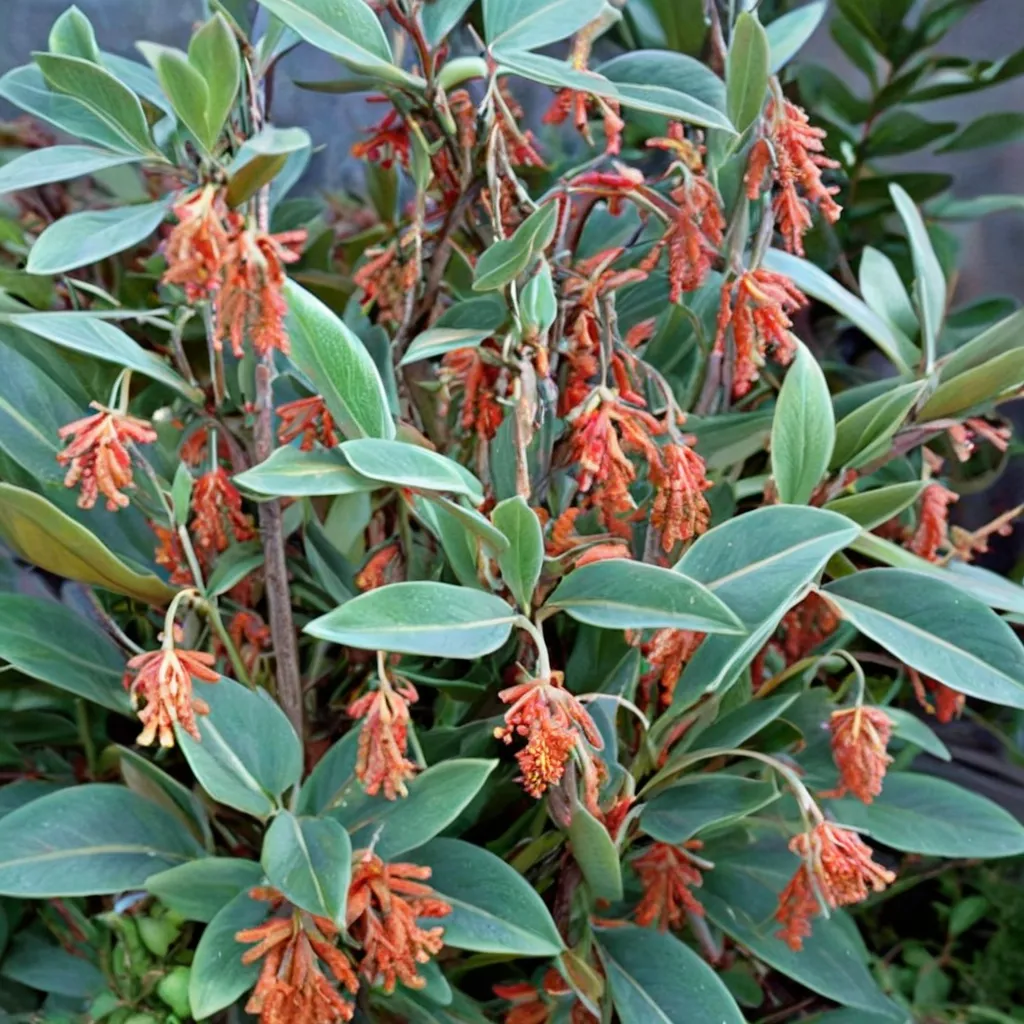
Murray Queen Grevillea
Grevillea victoriae 'Murray Queen'
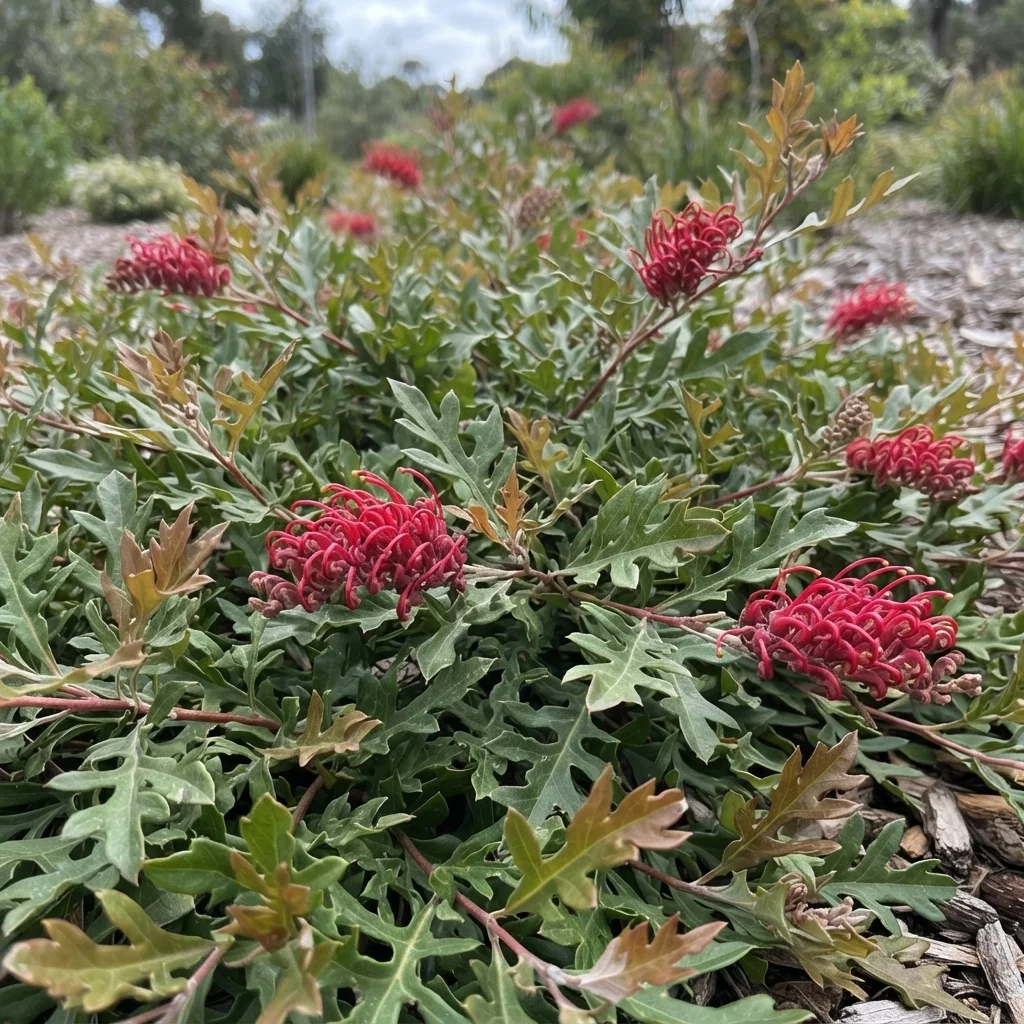
Prostrate Grevillea
Grevillea × gaudichaudii 'Gaudi Chaudi'
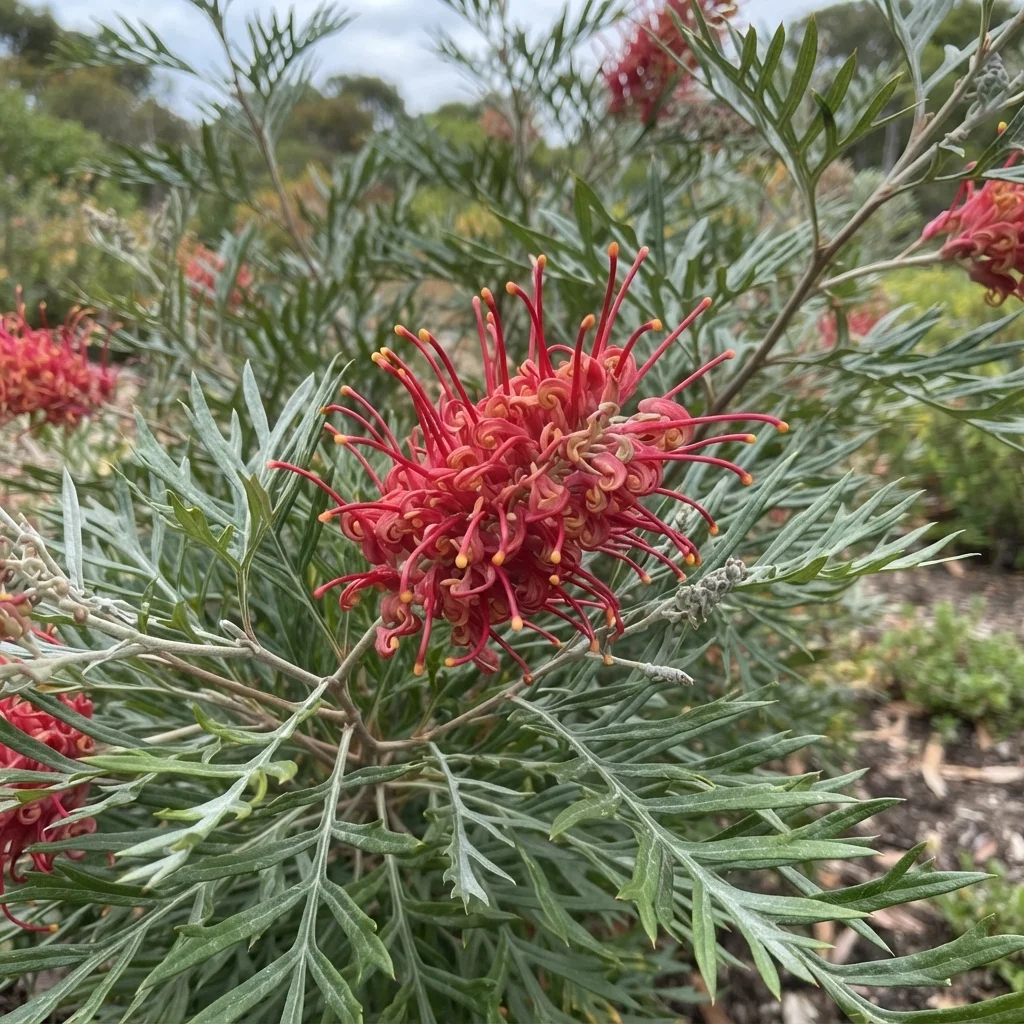
Superb Grevillea
Grevillea x hybrida 'Superb'
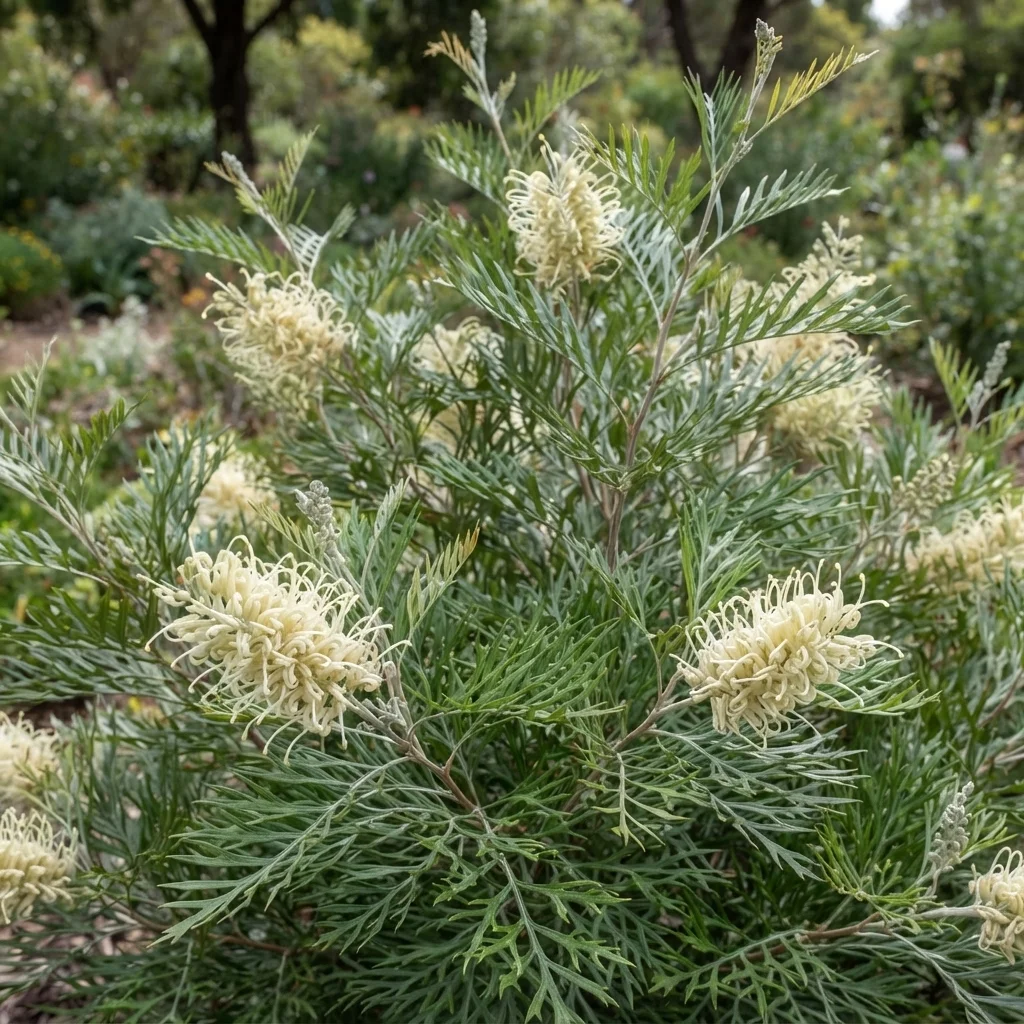
Moonlight Grevillea
Grevillea x hybrida 'Moonlight'
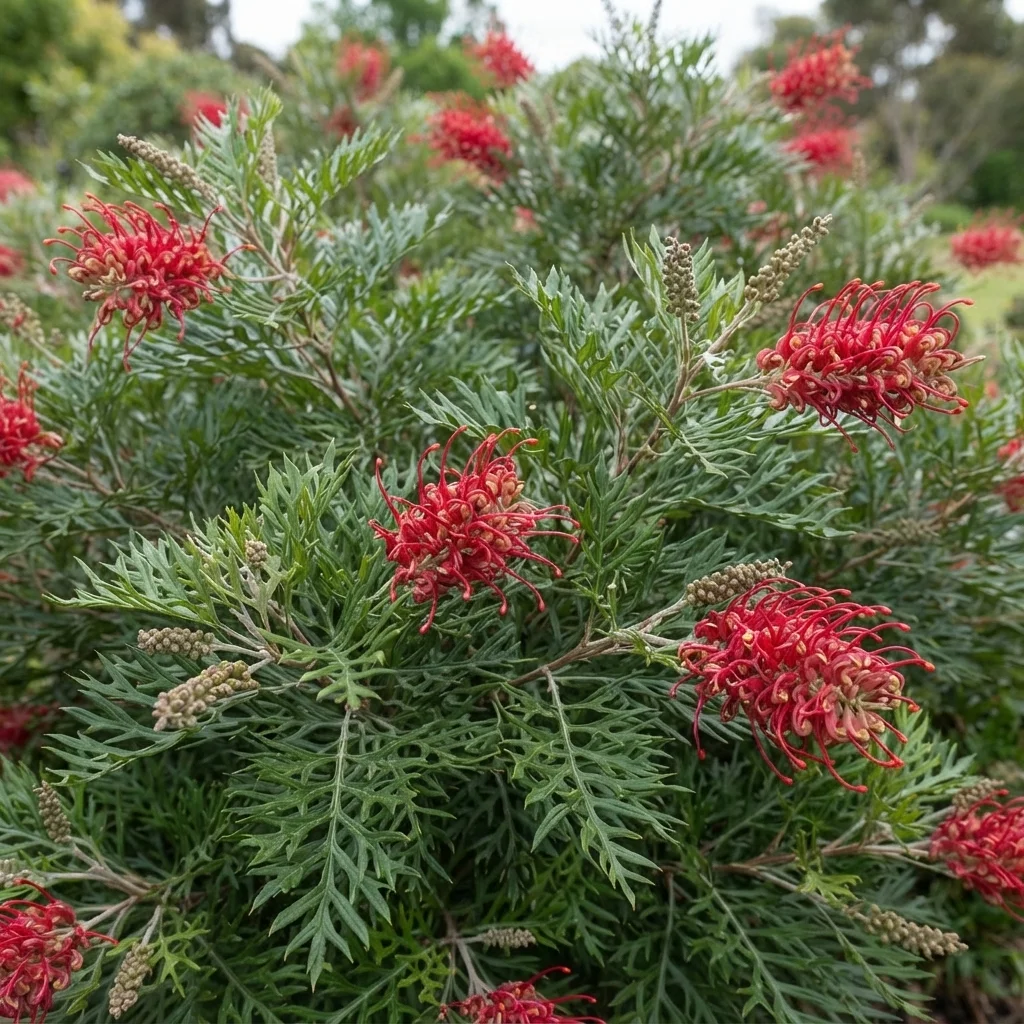
Robyn Gordon Grevillea
Grevillea x hybrida 'Robyn Gordon'
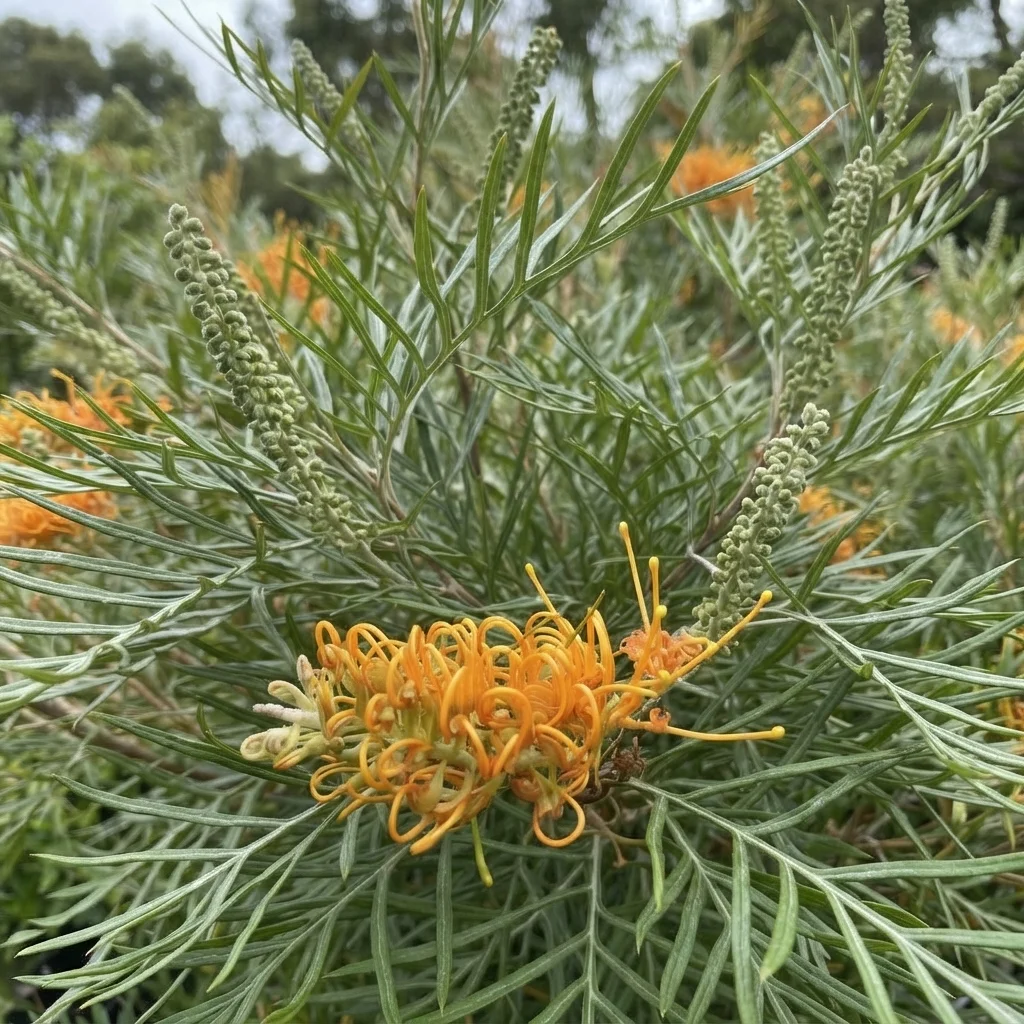
Honey Gem Grevillea
Grevillea x hybrida 'Honey Gem'
Keep exploring
Explore the genus
Hardy in your zone?
Grow Pink Pokers with confidence
See it in a design of your actual yard, get zone-matched care reminders, and track it season by season in your garden journal.