The Story
Plant Bio
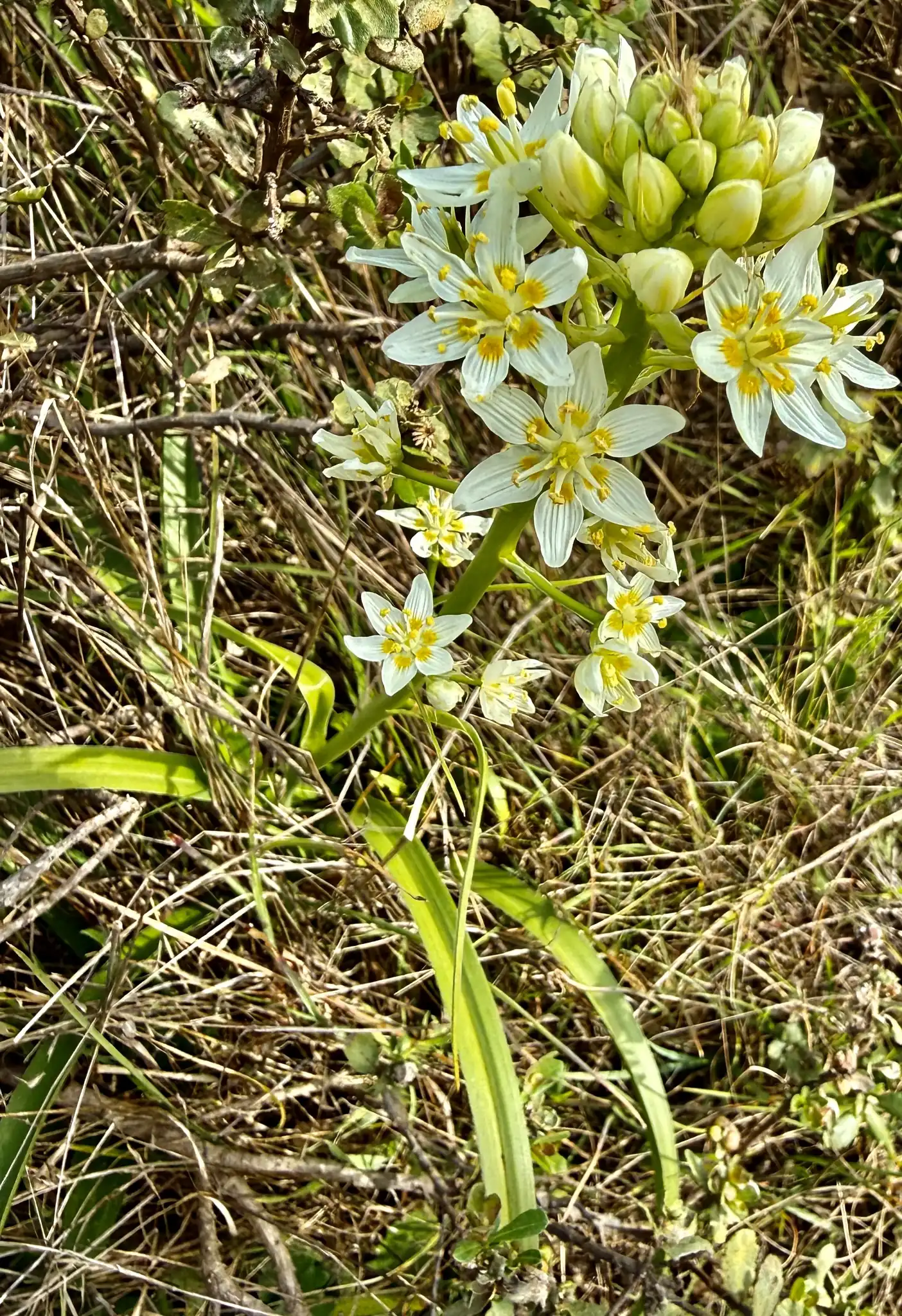
Toxicoscordion fremontii is a summer-deciduous bulbous perennial native to western North America, producing basal clumps of narrow, channelled leaves that emerge with winter rains. In spring, erect flowering scapes bear terminal clusters of star-shaped white-to-cream flowers, each featuring a distinct bright green nectary gland at the base of every petal.
Distinguished by its strict summer dormancy, the entire above-ground structure dies back completely as heat rises to protect the underground bulb from summer drought. Every part of the plant contains high concentrations of toxic steroidal alkaloids, making it completely unpalatable to browsing mammals.
Uses & Benefits:
Essentials
At a Glance
Plant Type
Bulb Corm Tuber
Height
24"
Width
12"
Light
Full Sun, Partial Sun
Zones
5, 6, 7, 8, 9, 10
Water
Low
Humidity
Low
Lifespan
Perennial
Native To
Western North America
Toxicity
High
Bloom period
Late winter – Late spring
In flower about 4 months of the year
Planting
How to Grow
- Plant bulbs 3 to 4 inches deep in fall in sharp-draining, gritty soil in full sun or light dappled shade.
- Allow natural winter rainfall to initiate leaf and root growth without applying added fertilizers.
- Maintain natural moisture levels during the spring bloom period, taking care to avoid standing water.
- Cease watering completely as flower stalks fade, allowing the leaves to wither naturally and the bulb to bake dry through summer.
Pro Tip
Withhold all summer irrigation once foliage begins to yellow in late spring; moisture during summer dormancy causes rapid bulb decay.
Keep It Thriving
Care Guide
Do
- Provide exceptional soil drainage using gravel or coarse sand mixtures.
- Allow foliage to dry and turn entirely brown before clearing spent leaf debris.
- Mark planting locations clearly to prevent accidental disturbance during summer dormancy.
Don't
- Do not apply summer irrigation while the underground bulb is dormant.
- Do not feed with heavy organic compost or high-nitrogen fertilizers.
- Do not plant where domestic pets, livestock, or foraging children might ingest foliage or bulbs.
Seasonal Care Calendar
| Task | Jan | Feb | Mar | Apr | May | Jun | Jul | Aug | Sep | Oct | Nov | Dec |
|---|---|---|---|---|---|---|---|---|---|---|---|---|
| Divide | ||||||||||||
| Pest Check | ||||||||||||
| Plant | ||||||||||||
| Spring Cleanup |
Watch Out For
Pests & Diseases
Common Pests
Common Diseases
In the Garden
Landscape Uses & Companions
Landscape Uses
Multiply
Propagation Methods
Good to Know
Common Questions
Fremont's Deathcamas questions
What zones can Fremont's Deathcamas grow in?
Fremont's Deathcamas is hardy in USDA Zones 5–10: in that range it survives winter in the ground. Colder than Zone 5, grow it in a container you can move to shelter for the winter, or as an annual.
Is Fremont's Deathcamas deer resistant?
Yes — Fremont's Deathcamas is rated deer-resistant. Deer typically pass it over, though extreme hunger can override any plant's defenses.
When does Fremont's Deathcamas bloom?
Fremont's Deathcamas typically blooms from late winter to late spring. Exact timing shifts a week or two with your zone — Sow's bloom calendar maps it to your garden.
Does Fremont's Deathcamas need full sun?
Fremont's Deathcamas does best in full sun to part shade. In hot climates, afternoon shade keeps blooms fresher longer.
Is Fremont's Deathcamas drought tolerant?
Yes — once established (usually after the first full season), Fremont's Deathcamas handles dry spells with minimal watering. Water deeply its first year to build the root system that makes that possible.
Keep exploring
Explore the genus
Grow Fremont's Deathcamas with confidence
See it in a design of your actual yard, get zone-matched care reminders, and track it season by season in your garden journal.