The Story
Plant Bio
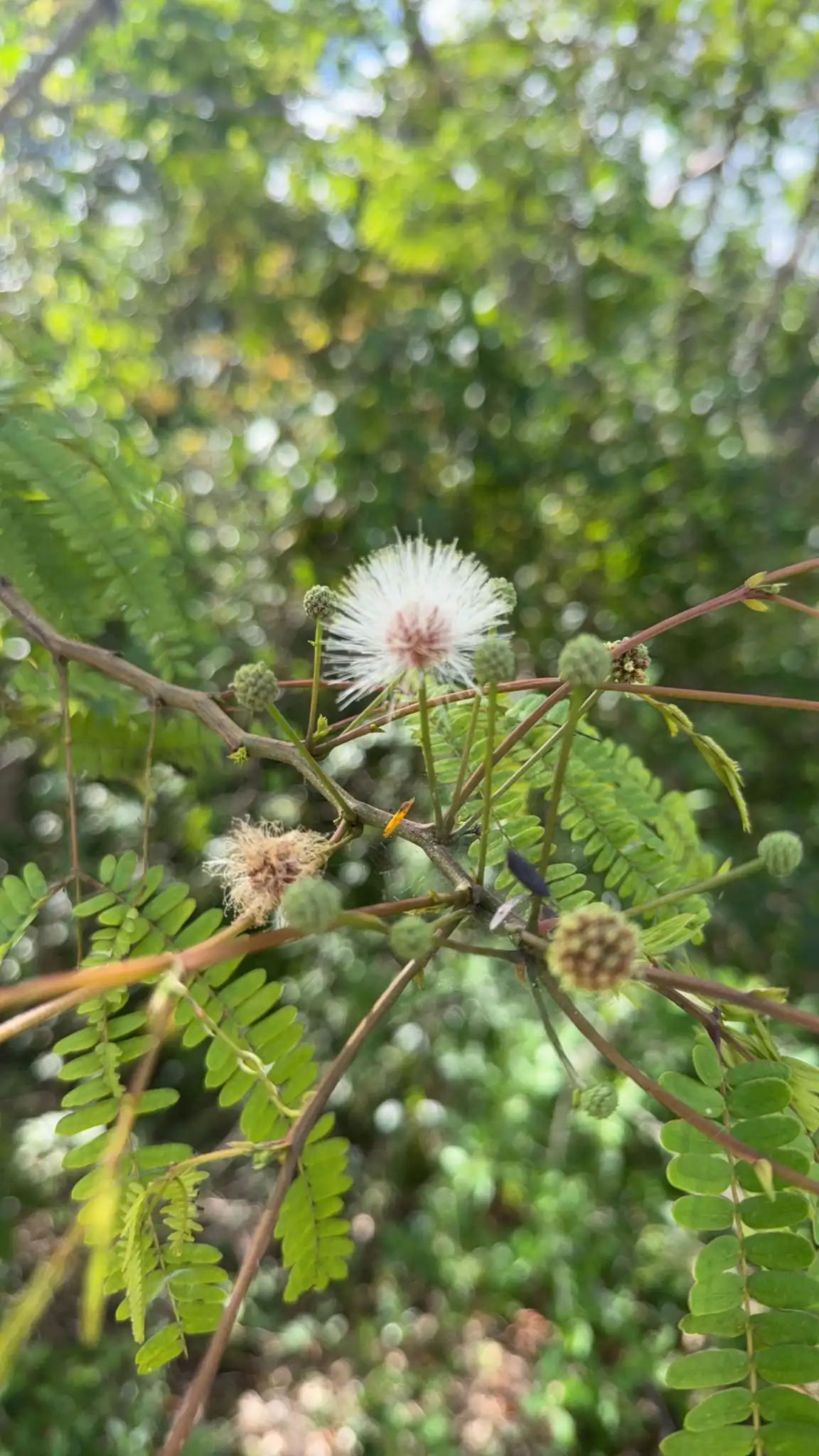
Lysiloma latisiliquum is a large evergreen tree in the pea family reaching 30 to 60 feet in gardens, with a short often multi-stemmed trunk and arching drooping branches that form an open vase-shaped crown. The leaves are alternate and twice-divided into fern-like fronds of many small obovate leaflets, dark green above and paler below with new growth emerging red.
It blooms from spring into summer in dense globular heads of white stamens on slender stalks in threes from the leaf axils, mildly fragrant but without showy petals. It combines high drought tolerance with high salt-spray tolerance for seaside shade, and its foliage hosts cassius blue, large orange sulphur and mimosa yellow caterpillars while the flowers feed bees and butterflies.
Uses & Benefits:
Essentials
At a Glance
Plant Type
Tree
Height
720"
Width
600"
Light
Full Sun, Partial Sun
Zones
10
Water
Low
Humidity
Unknown
Lifespan
Long-lived tree
Native To
South Florida, Caribbean, Yucatan and Central America
Toxicity
Unknown - no toxicity reported
Bloom period
Late spring – Summer
In flower about 4 months of the year
Planting
How to Grow
- Plant in full sun to partial shade in well-drained clay, sand or loam, acidic to alkaline.
- Dig the hole as deep as the container and twice as wide, set the root ball level with grade and backfill with native soil.
- Water deeply at planting and through establishment, then taper off as drought tolerance develops.
- Mulch 2 to 3 inches deep in a wide ring, keeping mulch off the trunk.
- Stake only if needed and train early to a single leader with the first permanent limb at 6 to 10 feet for clearance.
Pro Tip
Train a single clear trunk to five feet and keep laterals less than two-thirds the trunk diameter, removing codominant stems with included bark early.
Keep It Thriving
Care Guide
Do
- Plant where drainage is sharp and sun is full.
- Prune as needed to build one strong trunk and open crown.
- Monitor leaf undersides and young stems for scale and mealybugs in summer.
- Use fallen leaf litter as mulch to conserve moisture.
Don't
- Do not plant in soggy or compacted ground that stays wet.
- Do not shear annually or cut back into large limbs.
- Do not leave codominant trunks with narrow crotches and included bark.
- Do not confuse it with true tamarind or lead tree when sourcing seed.
Seasonal Care Calendar
| Task | Jan | Feb | Mar | Apr | May | Jun | Jul | Aug | Sep | Oct | Nov | Dec |
|---|---|---|---|---|---|---|---|---|---|---|---|---|
| Mulch | ||||||||||||
| Pest Check | ||||||||||||
| Plant | ||||||||||||
| Propagate | ||||||||||||
| Prune |
Watch Out For
Pests & Diseases
Common Pests
Common Diseases
In the Garden
Landscape Uses & Companions
Landscape Uses
Companion Plants
Multiply
Propagation Methods
Good to Know
Common Questions
False Tamarind questions
What zones can False Tamarind grow in?
False Tamarind is hardy in USDA Zone 10: in that range it survives winter in the ground. Colder than Zone 10, winters are too cold for it to survive outdoors.
When does False Tamarind bloom?
False Tamarind typically blooms from late spring to late summer. Exact timing shifts a week or two with your zone — Sow's bloom calendar maps it to your garden.
Does False Tamarind need full sun?
False Tamarind does best in full sun to part shade. In hot climates, afternoon shade keeps blooms fresher longer.
Is False Tamarind drought tolerant?
Yes — once established (usually after the first full season), False Tamarind handles dry spells with minimal watering. Water deeply its first year to build the root system that makes that possible.
Keep exploring
Explore the genus
Hardy in your zone?
Grow False Tamarind with confidence
See it in a design of your actual yard, get zone-matched care reminders, and track it season by season in your garden journal.