The Story
Plant Bio
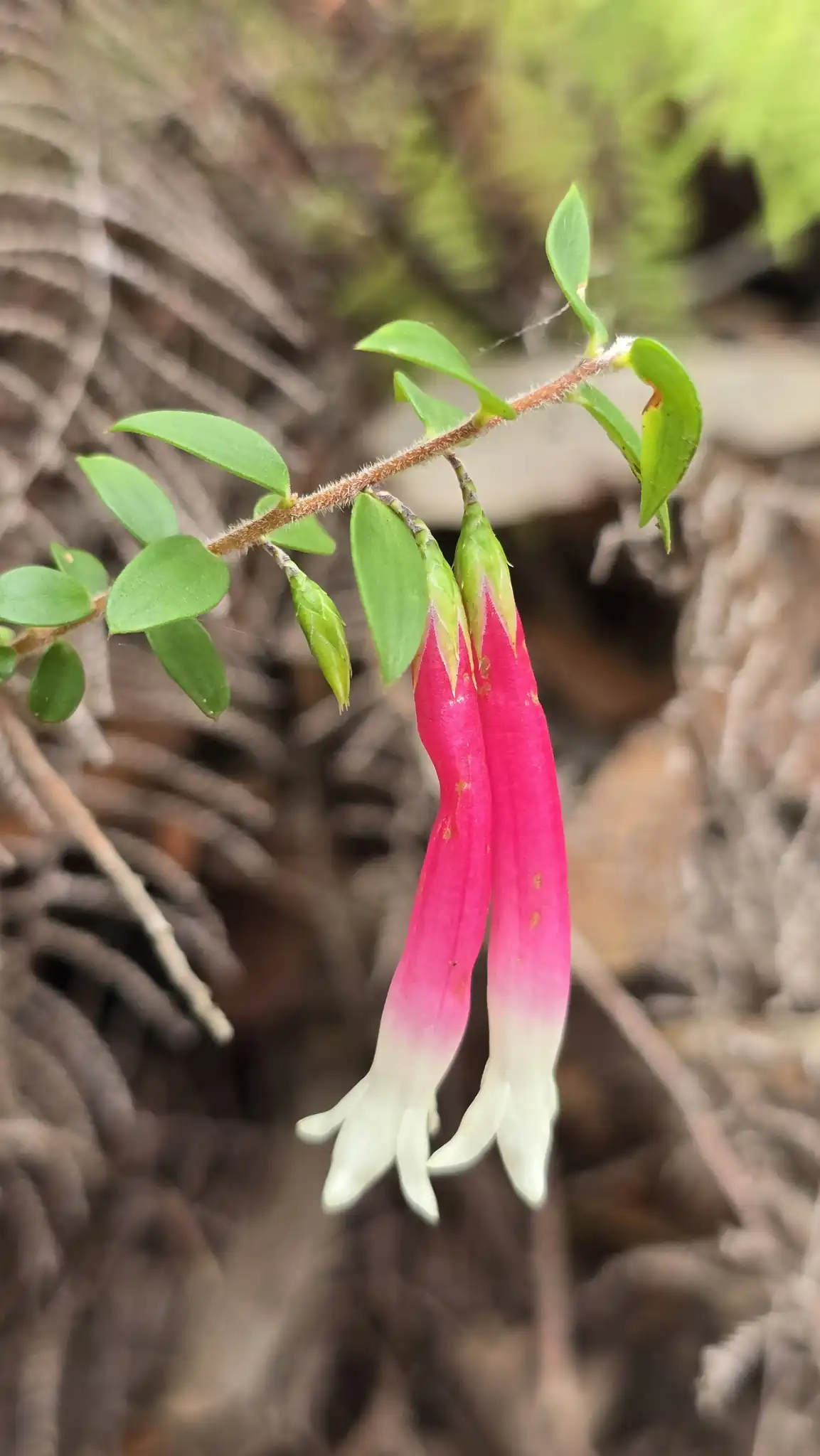
Epacris longiflora, commonly known as fuchsia heath, is an evergreen shrub reaching two to six feet in height with small, sharp-pointed leaves set along arching branches. The flowers are narrow, dangling tubes up to an inch long with bright red bases and flared white tips, blooming across multiple seasons.
The species features the longest flowers in its genus, structured to produce copious nectar along pendulous stems. In garden settings, its weeping growth habit makes it suited for trailing over stone walls or growing in elevated containers where the flowers are seen from below.
Uses & Benefits:
Essentials
At a Glance
Plant Type
Shrub
Height
79"
Width
79"
Light
Partial Sun
Zones
9, 10
Water
Moderate
Humidity
Moderate
Lifespan
Perennial
Native To
Australia (New South Wales, Queensland)
Toxicity
Non-toxic
Bloom period
Fall – Spring
In flower about 9 months of the year
Planting
How to Grow
- Select a site with partial shade or dappled light protected from harsh afternoon heat.
- Prepare an acidic, highly porous soil mix composed primarily of coarse sand and peat or fine bark.
- Plant the root ball level with the soil surface, ensuring the crown is not buried.
- Water regularly to maintain slight moisture in the root zone without letting water stagnate.
- Apply a light gravel mulch around the base, keeping it clear of the stem to prevent rot.
Pro Tip
Prune lightly into leafy green growth right after a flowering flush; cutting back into old, bare wood prevents new shoots from forming.
Keep It Thriving
Care Guide
Do
- Provide loose, sandy soil that drains rapidly.
- Use low-phosphorus fertilizer formulations designed for sensitive plants.
- Keep root zones cool and evenly moist.
Don't
- Never apply high-phosphorus standard garden fertilizers.
- Do not prune hard into old, leafless brown wood.
- Never allow organic mulch to press directly against the main stem base.
Seasonal Care Calendar
| Task | Jan | Feb | Mar | Apr | May | Jun | Jul | Aug | Sep | Oct | Nov | Dec |
|---|---|---|---|---|---|---|---|---|---|---|---|---|
| Fertilize | ||||||||||||
| Mulch | ||||||||||||
| Pest Check | ||||||||||||
| Prune |
Watch Out For
Pests & Diseases
Common Pests
Common Diseases
In the Garden
Landscape Uses & Companions
Landscape Uses
Companion Plants
Multiply
Propagation Methods
Good to Know
Common Questions
Fuchsia Heath questions
What zones can Fuchsia Heath grow in?
Fuchsia Heath is hardy in USDA Zones 9–10: in that range it survives winter in the ground. Colder than Zone 9, grow it in a container you can move to shelter for the winter.
When does Fuchsia Heath bloom?
Fuchsia Heath typically blooms from fall to spring. Exact timing shifts a week or two with your zone — Sow's bloom calendar maps it to your garden.
Does Fuchsia Heath need full sun?
Fuchsia Heath does best in part shade.
More Epacris to compare
Keep exploring
Explore the genus
Hardy in your zone?
Grow Fuchsia Heath with confidence
See it in a design of your actual yard, get zone-matched care reminders, and track it season by season in your garden journal.