The Story
Plant Bio
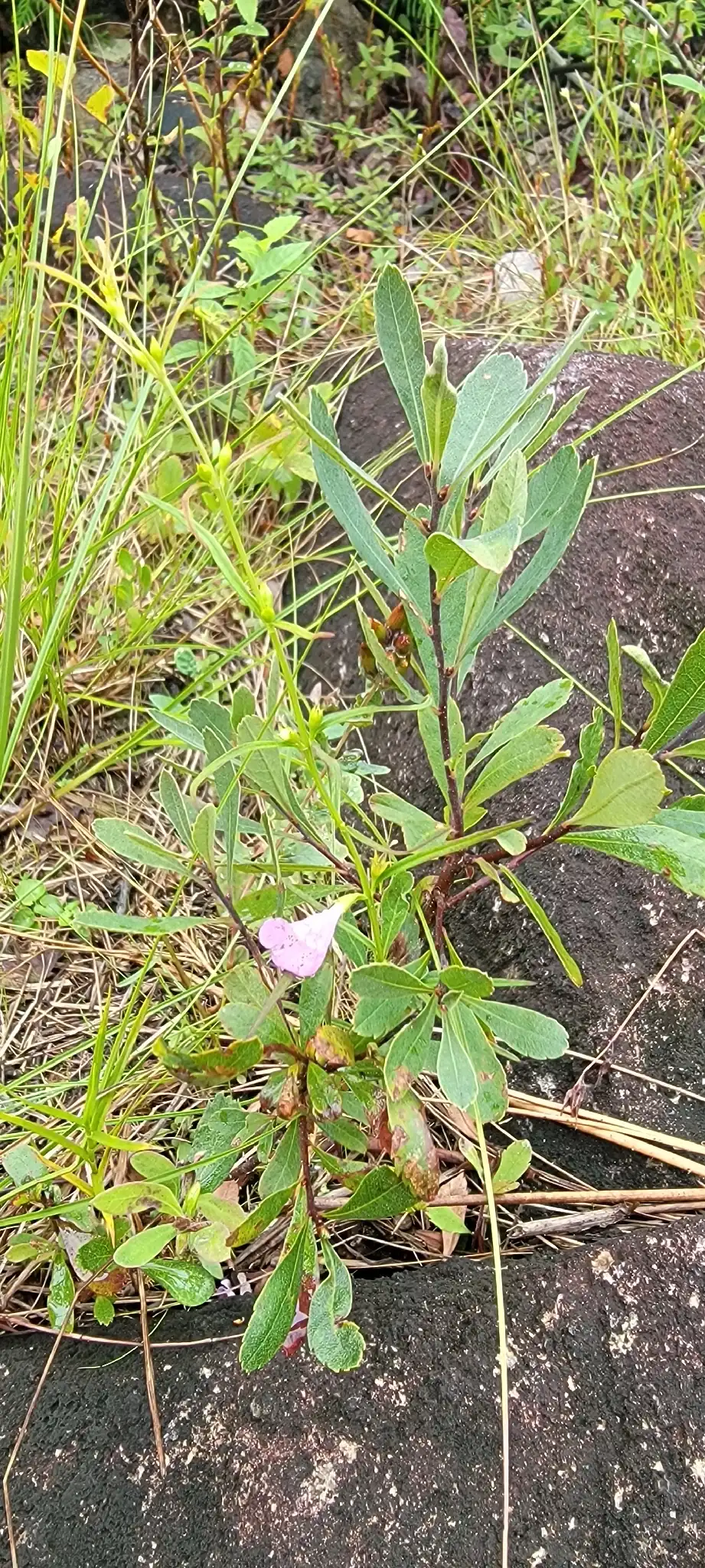
Agalinis purpurea, purple false foxglove, is an annual North American forb reaching one to four feet in a single season, with opposite narrow linear leaves on slender wiry stems. The roots form haustorial connections to neighboring grasses and herbs, drawing water and nutrients while the top growth photosynthesizes.
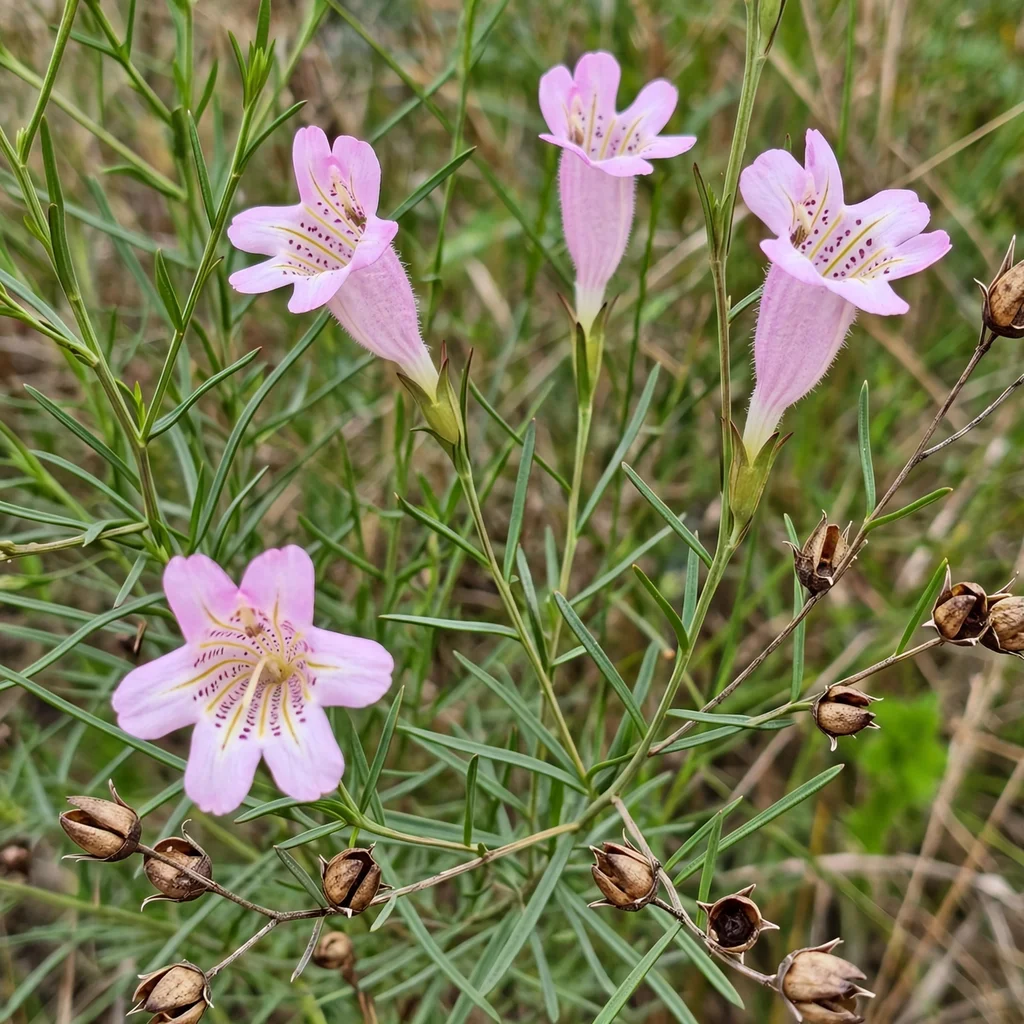
Plants produce solitary bell-shaped flowers about one inch across in the upper leaf axils, each with a five-lobed pink to rose-purple corolla opening from a narrow tube to a spotted whitish throat. Foliage is opposite, linear and rough to the touch, two to three inches long and less than a tenth of an inch wide, dark green sometimes tinged purple.
Uses & Benefits:
Essentials
At a Glance
Plant Type
Annual
Height
30"
Width
13"
Light
Full Sun, Partial Sun
Water
Medium to wet
Humidity
Average to high
Lifespan
Annual
Native To
Eastern North America
Toxicity
Unknown - no data found
Bloom period
Summer – Fall
In flower about 6 months of the year
Planting
How to Grow
- Sow seed in place in spring in full sun to light shade in acidic sandy or loamy soil that stays moist.
- Sow or set plugs among fine-rooted grasses and forbs so seedlings can form root connections soon after germination.
- Water to keep soil evenly moist through summer; do not let the bed dry out during bud set.
- Leave spent stems standing through fall to drop seed for next year; do not cut or till until seed has shed.
- Thin or move seedlings only when very small; established plants do not transplant.
Pro Tip
Sow it with grasses to attach to and leave it standing through fall to reseed; it dies with frost and never returns from roots like a perennial.
Keep It Thriving
Care Guide
Do
- Do plant in groups in moist acid sand where grasses are present to serve as hosts.
- Do allow self-sown seedlings to remain undisturbed through spring.
- Do water during dry spells in summer to keep soil moist.
Don't
- Don't fertilize heavily or lime the soil; rich alkaline conditions discourage establishment.
- Don't cut plants back in early fall before seed has ripened and shed.
- Don't try to overwinter plants indoors or divide crowns; annual roots die with frost.
Seasonal Care Calendar
| Task | Jan | Feb | Mar | Apr | May | Jun | Jul | Aug | Sep | Oct | Nov | Dec |
|---|---|---|---|---|---|---|---|---|---|---|---|---|
| Pest Check | ||||||||||||
| Plant | ||||||||||||
| Propagate | ||||||||||||
| Spring Cleanup | ||||||||||||
| Winter Prep |
Watch Out For
Pests & Diseases
Common Pests
Common Diseases
In the Garden
Landscape Uses & Companions
Landscape Uses
Multiply
Propagation Methods
Good to Know
Common Questions
Purple False Foxglove questions
What zones can Purple False Foxglove grow in?
Purple False Foxglove is an annual: it grows, flowers and sets seed in one season, so winter cold doesn't limit where it grows. Gardeners in any zone can grow it by planting at the right time, usually after the last spring frost.
When does Purple False Foxglove bloom?
Purple False Foxglove typically blooms from summer to fall. Exact timing shifts a week or two with your zone — Sow's bloom calendar maps it to your garden.
Does Purple False Foxglove need full sun?
Purple False Foxglove does best in full sun to part shade. In hot climates, afternoon shade keeps blooms fresher longer.
More Agalinis to compare
Keep exploring
Explore the genus
Grow Purple False Foxglove with confidence
See it in a design of your actual yard, get zone-matched care reminders, and track it season by season in your garden journal.