The Story
Plant Bio
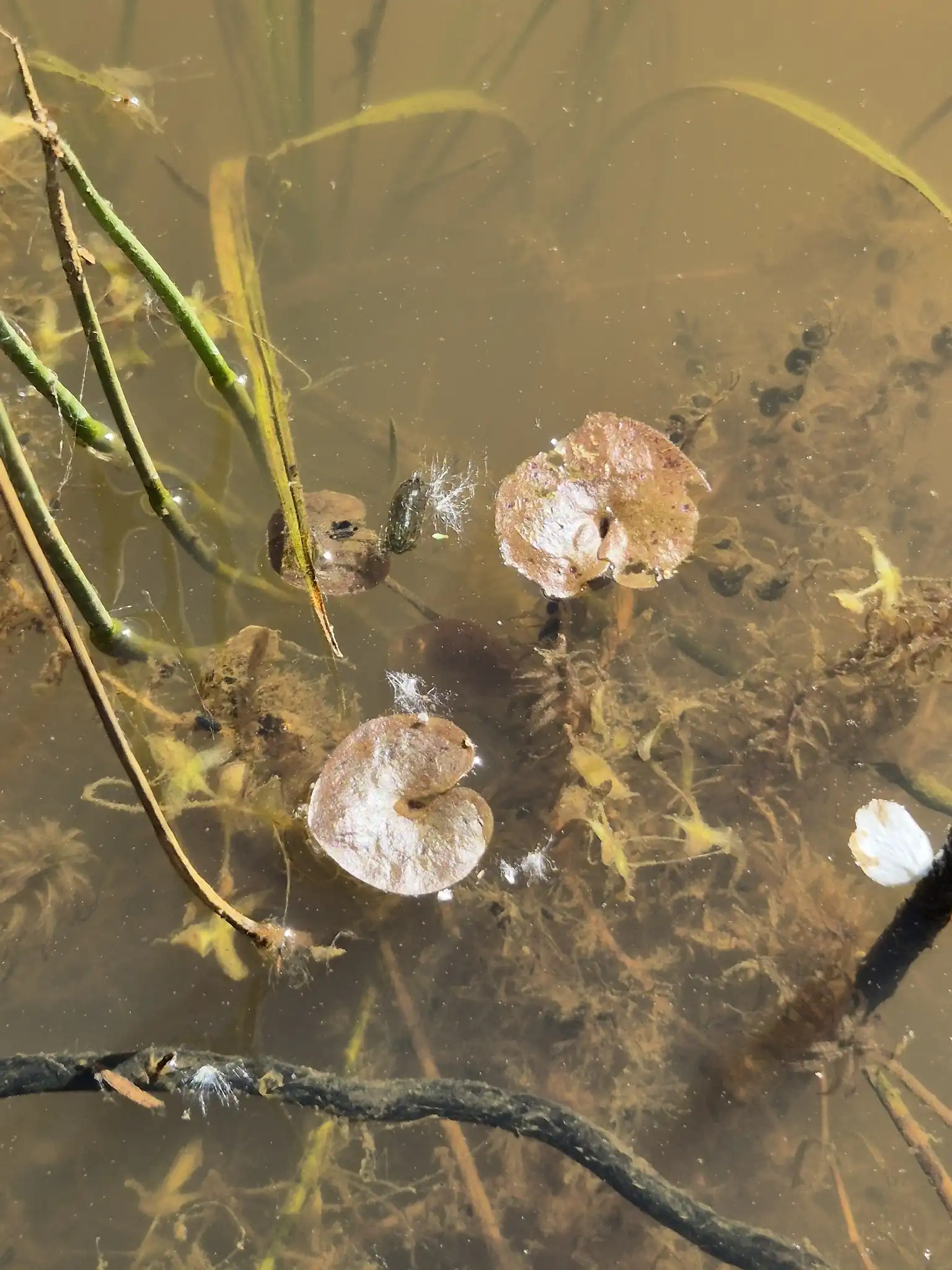
Hydrocharis morsus-ranae is a free-floating aquatic perennial that forms sprawling mats of small rosettes across quiet, slow-moving water bodies. Its small, heart-shaped green leaves float on the surface while unbranched roots dangle beneath to pull nutrients directly from the water.
In summer, the plant produces small three-petaled white flowers with distinct yellow centers that rise slightly above the foliage. During fall, it produces dense over-wintering buds called turions that sink to the sediment, allowing it to survive freezing conditions before re-emerging in spring.
Uses & Benefits:
Essentials
At a Glance
Plant Type
Aquatic
Height
2"
Width
59"
Light
Full Sun, Partial Sun
Zones
4, 5, 6, 7, 8, 9
Water
High / Standing water
Humidity
High
Lifespan
Perennial
Native To
Europe, Asia, North Africa
Toxicity
Non-toxic
Bloom period
Summer
In flower about 3 months of the year
Planting
How to Grow
- Place floating rosettes directly onto the surface of quiet, still pond water in full sun to partial shade.
- Allow unanchored roots to dangle freely into the water column where they absorb dissolved nutrients.
- Thin out floating mats periodically using a net or pool skimmer to keep surface coverage manageable.
- Collect surplus plant material in late summer and dispose of it in secure garbage containers away from natural waterways.
Pro Tip
Keep this species strictly contained within closed outdoor water features lacking drainage outlets to prevent off-site escape via stolons or turions.
Keep It Thriving
Care Guide
Do
- Grow only in isolated, artificial ponds without natural surface runoff or overflow channels.
- Skim excess growth regularly to prevent shading out aquatic life underneath.
Don't
- Do not introduce this plant into natural lakes, rivers, streams, or connected wetlands.
- Do not dump surplus pond plants into storm drains or public waterways.
Seasonal Care Calendar
| Task | Jan | Feb | Mar | Apr | May | Jun | Jul | Aug | Sep | Oct | Nov | Dec |
|---|---|---|---|---|---|---|---|---|---|---|---|---|
| Pest Check | ||||||||||||
| Propagate | ||||||||||||
| Prune | ||||||||||||
| Winter Prep |
Watch Out For
Pests & Diseases
Common Pests
Common Diseases
In the Garden
Landscape Uses & Companions
Landscape Uses
Companion Plants
Multiply
Propagation Methods
Good to Know
Common Questions
European Frogbit questions
What zones can European Frogbit grow in?
European Frogbit is hardy in USDA Zones 4–9: in that range it survives winter in the ground. Warmer than Zone 9, winter isn't the problem: it prefers colder winters, and summer heat can shorten its life.
When does European Frogbit bloom?
European Frogbit typically blooms in summer. Exact timing shifts a week or two with your zone — Sow's bloom calendar maps it to your garden.
Does European Frogbit need full sun?
European Frogbit does best in full sun to part shade. In hot climates, afternoon shade keeps blooms fresher longer.
Keep exploring
Explore the genus
Grow European Frogbit with confidence
See it in a design of your actual yard, get zone-matched care reminders, and track it season by season in your garden journal.