The Story
Plant Bio
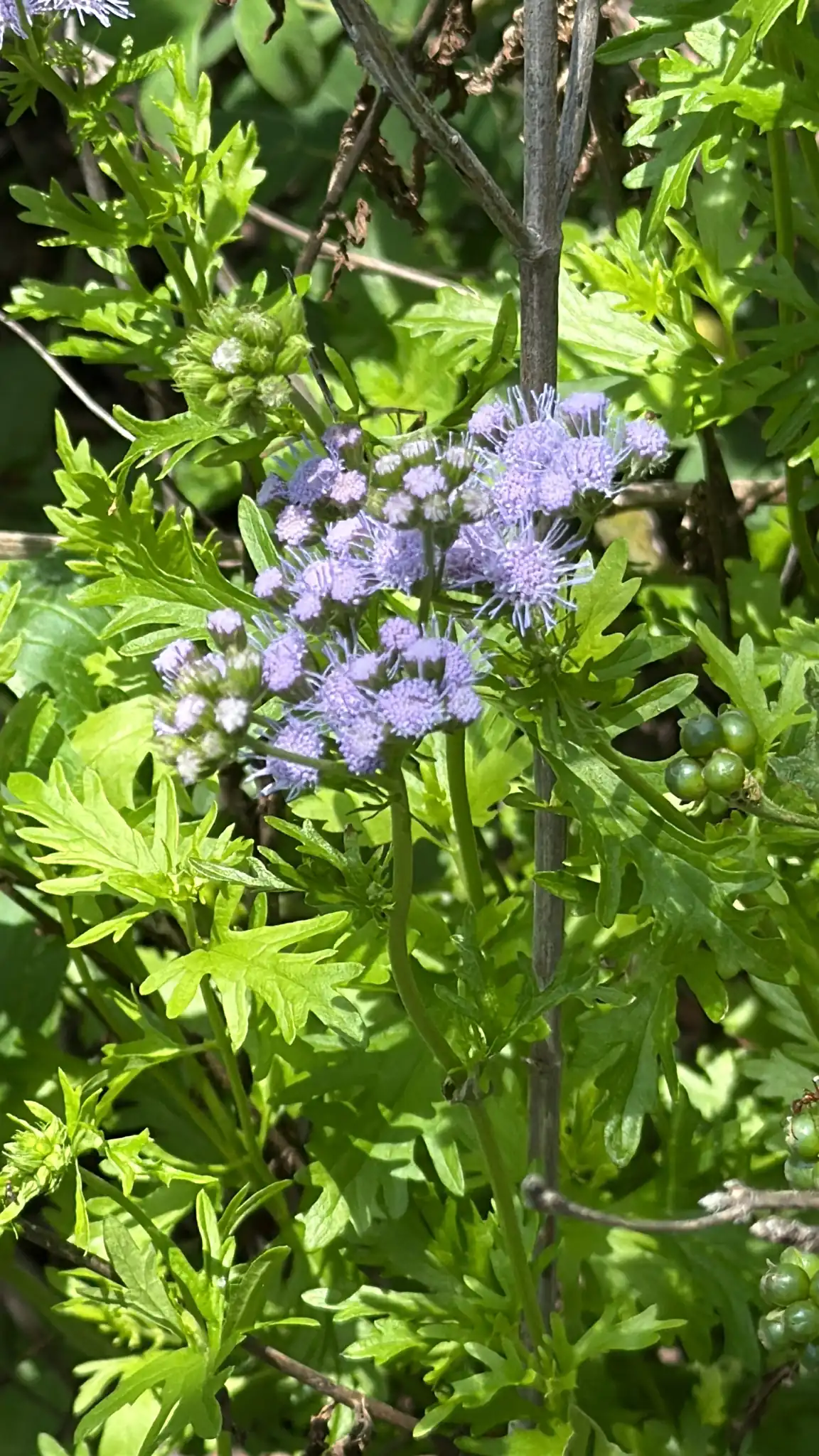
Conoclinium dissectum is a rhizomatous herbaceous perennial from the southwestern United States and northern Mexico, growing erect to sprawling on weak stems to 36 inches and forming spreading colonies. The leaves are opposite, petiolate and deltate-ovate in outline, palmately three-lobed and deeply dissected with a minutely hairy, gland-dotted surface.
It is separated from other mistflowers by that palm-like foliage, cut almost to the midrib where Conoclinium coelestinum carries broad toothed leaves. The flowers have no rays; thread-like purplish-blue disc florets pack into puffy 2-inch cushions massed in flat-topped corymbs from spring into fall with the heaviest show in fall.
Uses & Benefits:
Essentials
At a Glance
Plant Type
Perennial
Height
36"
Width
36"
Light
Full Sun, Partial Sun
Zones
5, 6, 7, 8, 9
Water
Medium
Humidity
Low to average
Lifespan
Perennial
Native To
Texas, New Mexico, Arizona and northern Mexico
Toxicity
Toxic if ingested, skin irritant
Bloom period
Spring – Fall
In flower about 9 months of the year
Planting
How to Grow
- Plant in full sun to part shade in gravelly, sandy or enriched loam with sharp drainage.
- Set the crown level with the soil and space 24 to 36 inches to allow rhizome spread.
- Water in well, then water deeply but infrequently and let the soil dry between soakings.
- Cut back dead tops in late winter before new shoots emerge.
Pro Tip
Give it room to run and hold back water and fertilizer once established; more sun brings more flowers but calls for deeper, infrequent watering.
Keep It Thriving
Care Guide
Do
- Plant in full sun for heaviest bloom
- Water deeply but infrequently once established
- Divide rhizome clumps in early spring to contain spread
Don't
- Do not plant in soggy soil that stays wet
- Do not overwater or overfertilize to force growth
- Do not shear annually like a shrub
Seasonal Care Calendar
| Task | Jan | Feb | Mar | Apr | May | Jun | Jul | Aug | Sep | Oct | Nov | Dec |
|---|---|---|---|---|---|---|---|---|---|---|---|---|
| Divide | ||||||||||||
| Mulch | ||||||||||||
| Pest Check | ||||||||||||
| Plant | ||||||||||||
| Prune |
Watch Out For
Pests & Diseases
Common Pests
Common Diseases
In the Garden
Landscape Uses & Companions
Landscape Uses
Multiply
Propagation Methods
Good to Know
Common Questions
Palm-Leaf Mistflower questions
What zones can Palm-Leaf Mistflower grow in?
Palm-Leaf Mistflower is hardy in USDA Zones 5–9: in that range it survives winter in the ground. Colder than Zone 5, grow it in a container you can move to shelter for the winter, or as an annual. Warmer than Zone 9, winter isn't the problem: it prefers colder winters, and summer heat can shorten its life.
Is Palm-Leaf Mistflower deer resistant?
Not reliably. Deer may browse Palm-Leaf Mistflower, especially tender spring growth — plan on repellents or fencing where pressure is high.
When does Palm-Leaf Mistflower bloom?
Palm-Leaf Mistflower typically blooms from spring to fall. Exact timing shifts a week or two with your zone — Sow's bloom calendar maps it to your garden.
Does Palm-Leaf Mistflower need full sun?
Palm-Leaf Mistflower does best in full sun to part shade. In hot climates, afternoon shade keeps blooms fresher longer.
Is Palm-Leaf Mistflower drought tolerant?
Yes — once established (usually after the first full season), Palm-Leaf Mistflower handles dry spells with minimal watering. Water deeply its first year to build the root system that makes that possible.
More Conoclinium to compare
Keep exploring
Explore the genus
Hardy in your zone?
Grow Palm-Leaf Mistflower with confidence
See it in a design of your actual yard, get zone-matched care reminders, and track it season by season in your garden journal.