The Story
Plant Bio
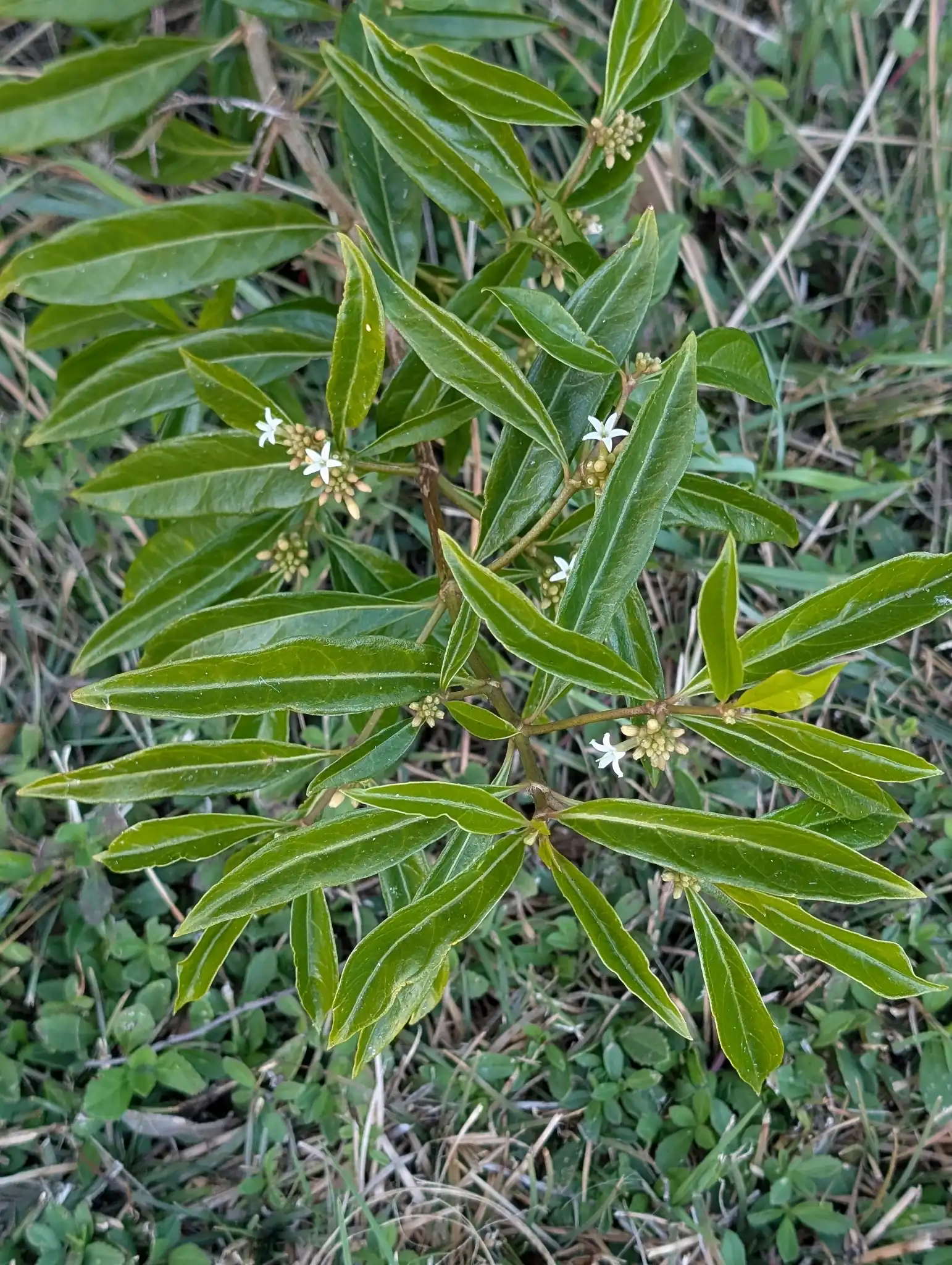
Morinda royoc is an evergreen scandent shrub of the coffee family, sprawling or clambering to ten feet on square stems with opposite glossy linear to lanceolate leaves to four inches. White tubular flowers with five fused petals form in tight heads in the leaf axils, maturing into yellow fleshy compound fruits to just over an inch with a pineapple scent.
True Morinda royoc is a low American sprawler and climber with small yellow mulberry-like syncarps, not the upright Asian noni tree it is often mislabeled as. It persists in coastal sand, limestone and dunes on drought and salt spray, flowering through the year where frost does not occur.
Uses & Benefits:
Essentials
At a Glance
Plant Type
Vine
Height
120"
Width
120"
Light
Full Sun, Partial Sun
Zones
9, 10
Water
Low
Humidity
High
Lifespan
Perennial
Native To
Florida, Mexico, Caribbean, Central and northern South America
Toxicity
Unknown - ornamental only
Bloom period
Year round
In flower about 12 months of the year
Planting
How to Grow
- Plant in full sun to light shade in loose well-drained sand or sandy loam with pH 6.0 to 7.5.
- Space to allow stems to sprawl and root along the ground or train onto a low trellis.
- Water deeply at planting, then water sparingly once established and let the surface dry between waterings.
- Protect from frost; cover or move containers inside when temperatures near freezing.
- Top with a thin mulch layer, keeping stems and crown clear to prevent rot.
Pro Tip
Verify square stems and a sprawling habit at purchase; upright single-trunk stock sold under this name is the Asian Morinda citrifolia.
Keep It Thriving
Care Guide
Do
- Plant in draining coastal sand in full sun to light shade
- Allow soil surface to dry between waterings once established
- Train sprawling stems onto support or let root as groundcover
Don't
- Do not overwater or plant in heavy clay that stays wet
- Do not expose to hard frost without protection
- Do not eat the fruit; edibility and garden toxicity are unconfirmed
Seasonal Care Calendar
| Task | Jan | Feb | Mar | Apr | May | Jun | Jul | Aug | Sep | Oct | Nov | Dec |
|---|---|---|---|---|---|---|---|---|---|---|---|---|
| Mulch | ||||||||||||
| Pest Check | ||||||||||||
| Plant | ||||||||||||
| Propagate | ||||||||||||
| Prune |
Watch Out For
Pests & Diseases
Common Pests
Common Diseases
In the Garden
Landscape Uses & Companions
Landscape Uses
Multiply
Propagation Methods
Good to Know
Common Questions
Mouse's Pineapple questions
What zones can Mouse's Pineapple grow in?
Mouse's Pineapple is hardy in USDA Zones 9–10: in that range it survives winter in the ground. Colder than Zone 9, grow it in a container you can move to shelter for the winter, or as an annual.
When does Mouse's Pineapple bloom?
Mouse's Pineapple typically blooms year-round. Exact timing shifts a week or two with your zone — Sow's bloom calendar maps it to your garden.
Does Mouse's Pineapple need full sun?
Mouse's Pineapple does best in full sun to part shade. In hot climates, afternoon shade keeps blooms fresher longer.
Is Mouse's Pineapple drought tolerant?
Yes — once established (usually after the first full season), Mouse's Pineapple handles dry spells with minimal watering. Water deeply its first year to build the root system that makes that possible.
More Morinda to compare
Keep exploring
Explore the genus
Hardy in your zone?
Grow Mouse's Pineapple with confidence
See it in a design of your actual yard, get zone-matched care reminders, and track it season by season in your garden journal.