The Story
Plant Bio
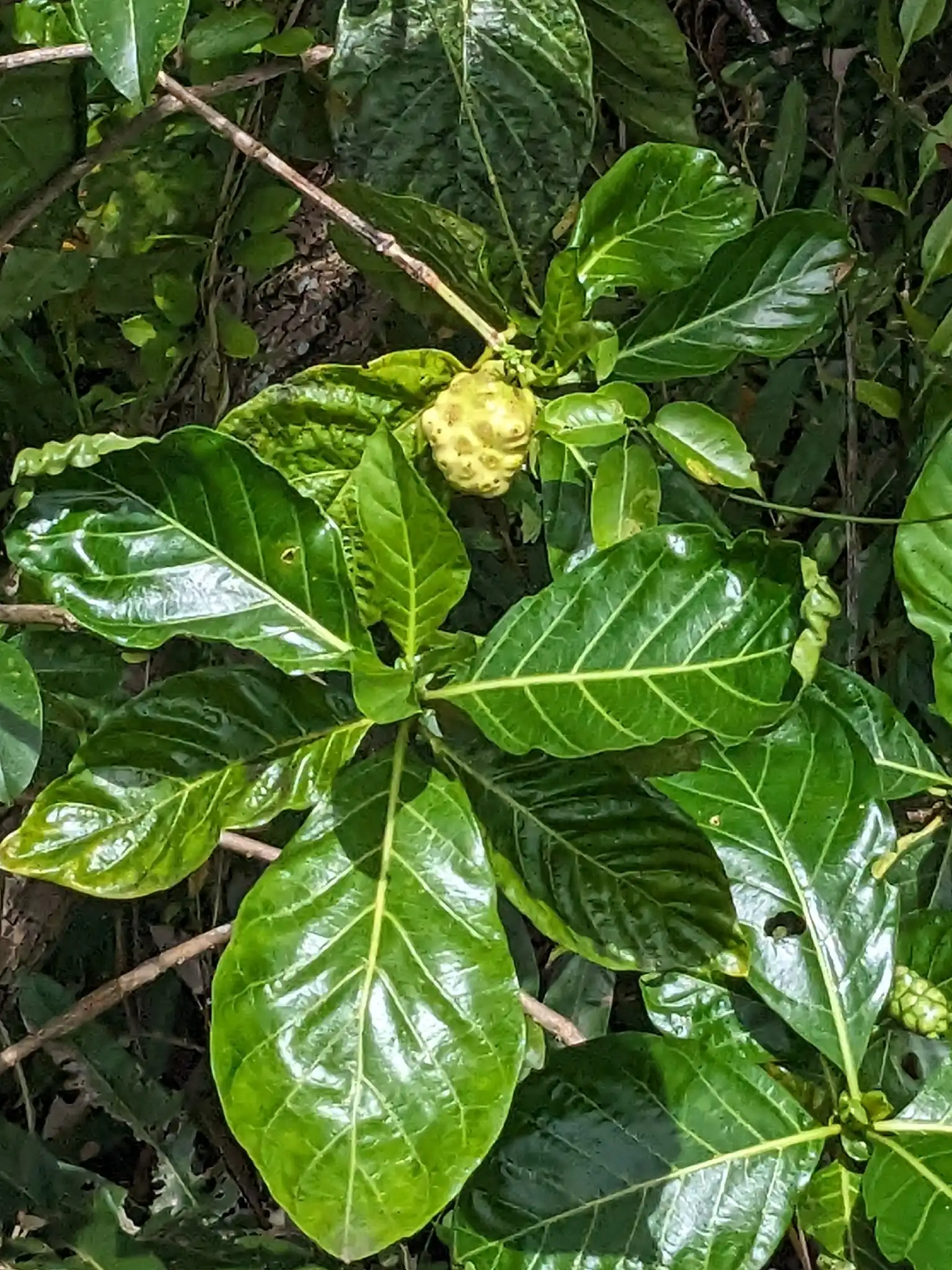
Morinda citrifolia is an evergreen shrub to small crooked tree reaching ten to eighteen feet in gardens, with large glossy dark green elliptic leaves to twelve inches long and a deep taproot. Small fragrant white tubular flowers form in ovoid heads in the leaf axils and swell into ovoid syncarps one to four inches long that ripen from green to yellow to off-white.
It carries flowers and pungent cheese-scented ripe fruit together through the year in frost-free climates, the odor strengthening as the fruit softens. It withstands wind, salt spray and brief flooding for coastal planting but is killed below thirty-five to forty degrees, so outside zones 11 to 12 it persists only as a container plant wintered indoors.
Uses & Benefits:
Essentials
At a Glance
Plant Type
Tropical
Height
216"
Width
120"
Light
Full Sun, Partial Sun
Zones
10
Water
Moderate
Humidity
High
Lifespan
Long-lived evergreen tree
Native To
SE Asia to Pacific
Toxicity
Fruit/juice hepatotoxic in quantity
Bloom period
Year round
In flower about 12 months of the year
Planting
How to Grow
- Site in full sun to part shade with shelter from cold wind and room for a 10 to 18 foot conical crown.
- Plant in rich, moist but well-drained sandy or loamy soil with the taproot undisturbed.
- Water moderately to keep soil evenly moist; do not let containers dry out completely.
- Move pots indoors to a bright humid room before temperatures approach 40 degrees.
- Remove soft fallen fruit from soil and containers to reduce odor and fruit-fly breeding.
Pro Tip
Bring containers under cover well before nights drop toward 40 degrees and pick up fallen ripe fruit promptly to limit odor and fruit flies.
Keep It Thriving
Care Guide
Do
- Do provide full sun, warmth, and humidity for steady growth and fruiting.
- Do ensure sharp drainage while keeping moisture consistent.
- Do check regularly for scale and discard overripe fruit.
Don't
- Do not plant outdoors where frost occurs without a container and indoor winter plan.
- Do not confuse it with Morinda tinctoria when buying seed.
- Do not drink homemade noni juice freely; it has been linked to rare acute liver injury.
Seasonal Care Calendar
| Task | Jan | Feb | Mar | Apr | May | Jun | Jul | Aug | Sep | Oct | Nov | Dec |
|---|---|---|---|---|---|---|---|---|---|---|---|---|
| Harvest | ||||||||||||
| Pest Check | ||||||||||||
| Plant | ||||||||||||
| Winter Prep |
Watch Out For
Pests & Diseases
Common Pests
Common Diseases
In the Garden
Landscape Uses & Companions
Landscape Uses
Companion Plants
Multiply
Propagation Methods
Good to Know
Common Questions
Noni questions
What zones can Noni grow in?
Noni is hardy in USDA Zone 10: in that range it survives winter in the ground. Colder than Zone 10, grow it in a container you can move to shelter for the winter, or as an annual.
When does Noni bloom?
Noni typically blooms year-round. Exact timing shifts a week or two with your zone — Sow's bloom calendar maps it to your garden.
Does Noni need full sun?
Noni does best in full sun to part shade. In hot climates, afternoon shade keeps blooms fresher longer.
More Morinda to compare
Keep exploring
Explore the genus
Hardy in your zone?
Grow Noni with confidence
See it in a design of your actual yard, get zone-matched care reminders, and track it season by season in your garden journal.