The Story
Plant Bio
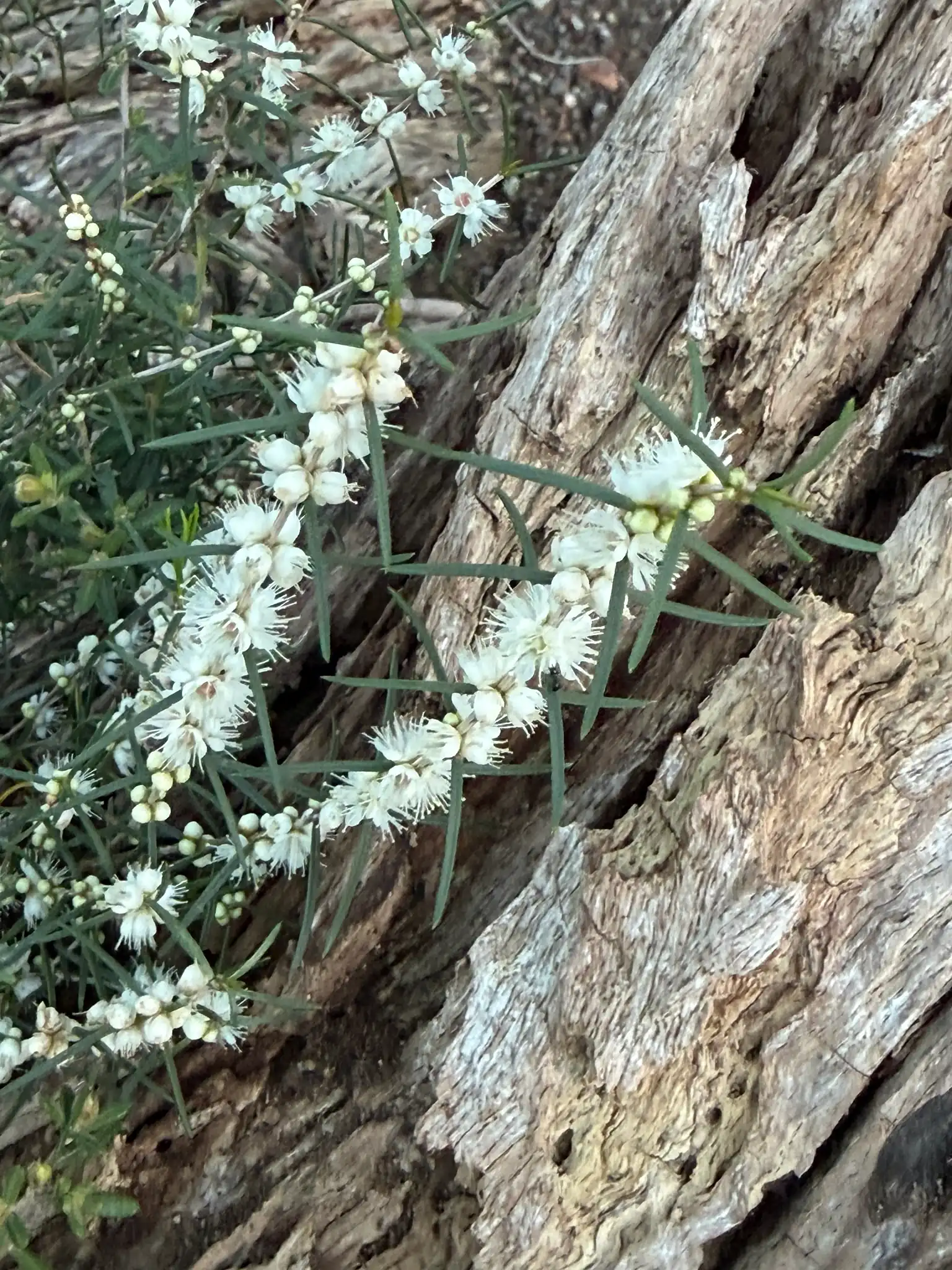
Hypocalymma angustifolium is an evergreen multi-stemmed shrub reaching up to five feet tall and wide, native to the southwest region of Western Australia. It features flexible, weeping branches lined with narrow linear leaves that release a spicy fragrance when bruised.
From late winter into spring, cup-shaped flowers with prominent fringed stamens bloom directly in the leaf axils along arching stems. The blossoms emerge from pink buds as soft pink or white, darkening to rich carmine as they age.
Uses & Benefits:
Essentials
At a Glance
Plant Type
Shrub
Height
59"
Width
59"
Light
Full Sun, Partial Sun
Zones
9, 10
Water
Low to moderate
Humidity
Tolerates moderate humidity
Lifespan
Perennial
Native To
Western Australia
Toxicity
Non-toxic
Bloom period
Late winter – Spring
In flower about 4 months of the year
Planting
How to Grow
- Select a planting location receiving full sun to light dappled shade that is sheltered from severe winds.
- Ensure soil is light, sandy, or peaty with excellent drainage; amend heavy soils with coarse sand or construct raised beds.
- Dig a hole twice as wide as the root ball and install the plant at its original container depth.
- Backfill gently and water thoroughly to settle the soil around the roots.
- Apply a light mulch layer keeping it clear of the central stems, and water during dry periods until established.
Pro Tip
Prune lightly immediately after flowering finishes in late spring; never cut into old, leafless brown wood because bare stems lack latent buds and will fail to resprout.
Keep It Thriving
Care Guide
Do
- Plant in fast-draining sandy or peaty soils.
- Provide protection from harsh, dry winds.
- Prune lightly every year after spring blooming ends.
- Water occasionally during prolonged summer droughts.
Don't
- Do not plant in heavy, poorly drained clay soil.
- Do not prune hard into old, bare interior wood.
- Do not overwater established plants during hot humid spells.
- Do not heavy-feed with high-phosphorus fertilizers.
Seasonal Care Calendar
| Task | Jan | Feb | Mar | Apr | May | Jun | Jul | Aug | Sep | Oct | Nov | Dec |
|---|---|---|---|---|---|---|---|---|---|---|---|---|
| Fertilize | ||||||||||||
| Pest Check | ||||||||||||
| Prune | ||||||||||||
| Winter Prep |
Watch Out For
Pests & Diseases
Common Pests
Common Diseases
In the Garden
Landscape Uses & Companions
Landscape Uses
Multiply
Propagation Methods
Good to Know
Common Questions
White Myrtle questions
What zones can White Myrtle grow in?
White Myrtle is hardy in USDA Zones 9–10: in that range it survives winter in the ground. Colder than Zone 9, grow it in a container you can move to shelter for the winter.
Is White Myrtle deer resistant?
Not reliably. Deer may browse White Myrtle, especially tender spring growth — plan on repellents or fencing where pressure is high.
When does White Myrtle bloom?
White Myrtle typically blooms from late winter to late spring. Exact timing shifts a week or two with your zone — Sow's bloom calendar maps it to your garden.
Does White Myrtle need full sun?
White Myrtle does best in full sun to part shade. In hot climates, afternoon shade keeps blooms fresher longer.
Is White Myrtle drought tolerant?
Yes — once established (usually after the first full season), White Myrtle handles dry spells with minimal watering. Water deeply its first year to build the root system that makes that possible.
Keep exploring
Explore the genus
Hardy in your zone?
Grow White Myrtle with confidence
See it in a design of your actual yard, get zone-matched care reminders, and track it season by season in your garden journal.