The Story
Plant Bio
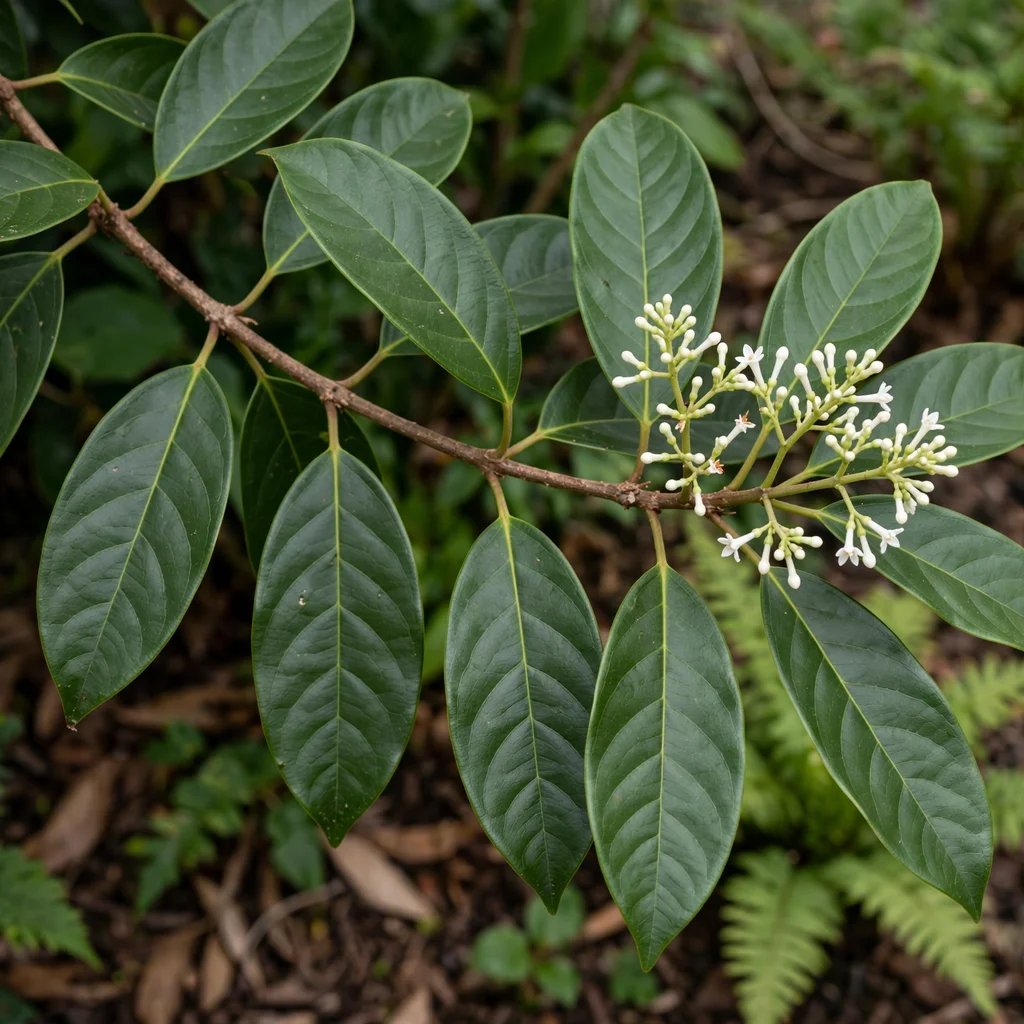
Faradaya splendida is an evergreen woody twining vine from Queensland and Malesian rainforest that climbs by wrapping its stems around support to 100 feet in the wild. It carries opposite glossy ovate leaves 5 to 9 inches long on 1 to 3 inch petioles and holds its foliage year-round where frost free.
It flowers in heavy repeat flushes from spring through fall, each white tubular bloom 2 to 3 inches long opening fragrant for a single day in terminal clusters. The blooms are followed by white egg-shaped fleshy fruit, and the bark contains saponins that poison fish.
Uses & Benefits:
Essentials
At a Glance
Plant Type
Vine
Height
96"
Width
72"
Light
Full Sun, Partial Sun
Zones
9, 10
Water
Evenly moist, high
Humidity
High
Lifespan
Long-lived evergreen vine
Native To
Northeast Queensland to New Guinea and Solomon Islands
Toxicity
Bark toxic to fish, fruit edibility unknown
Bloom period
Spring – Fall
In flower about 9 months of the year
Planting
How to Grow
- Pot in fertile free-draining mix in a large container with a stout trellis for the twining stems to wrap.
- Place in full sun to bright dappled shade with high humidity and protection from wind.
- Water to keep the root zone evenly moist but never soggy, increasing water in summer heat.
- Feed with balanced fertilizer regularly through spring and summer active growth.
- Move indoors before first frost and hold above 40F in bright light through winter.
Pro Tip
Train young stems onto a stout trellis early and keep the root zone evenly moist; a cool dry check stops flowering until warmth and water return.
Keep It Thriving
Care Guide
Do
- Give it room and a strong support to climb from the start
- Keep soil evenly moist with plenty of water in warmth
- Feed regularly with balanced fertilizer in growth
- Inspect leaf undersides regularly for mites and scale
Don't
- Do not expose to frost below 30F even briefly except mature wood
- Do not let the root zone dry out or sit waterlogged
- Do not remove a whole cluster because single-day flowers drop; the panicle reblooms
- Do not expect hummingbird visits from the white short-lived flowers
Seasonal Care Calendar
| Task | Jan | Feb | Mar | Apr | May | Jun | Jul | Aug | Sep | Oct | Nov | Dec |
|---|---|---|---|---|---|---|---|---|---|---|---|---|
| Fertilize | ||||||||||||
| Pest Check | ||||||||||||
| Plant | ||||||||||||
| Prune | ||||||||||||
| Winter Prep |
Watch Out For
Pests & Diseases
Common Pests
Common Diseases
In the Garden
Landscape Uses & Companions
Landscape Uses
Companion Plants
Multiply
Propagation Methods
Good to Know
Common Questions
Glory Vine questions
What zones can Glory Vine grow in?
Glory Vine is hardy in USDA Zones 9–10: in that range it survives winter in the ground. Colder than Zone 9, grow it in a container you can move to shelter for the winter, or as an annual.
When does Glory Vine bloom?
Glory Vine typically blooms from spring to fall. Exact timing shifts a week or two with your zone — Sow's bloom calendar maps it to your garden.
Does Glory Vine need full sun?
Glory Vine does best in full sun to part shade. In hot climates, afternoon shade keeps blooms fresher longer.
Keep exploring
Explore the genus
Hardy in your zone?
Grow Glory Vine with confidence
See it in a design of your actual yard, get zone-matched care reminders, and track it season by season in your garden journal.