The Story
Plant Bio
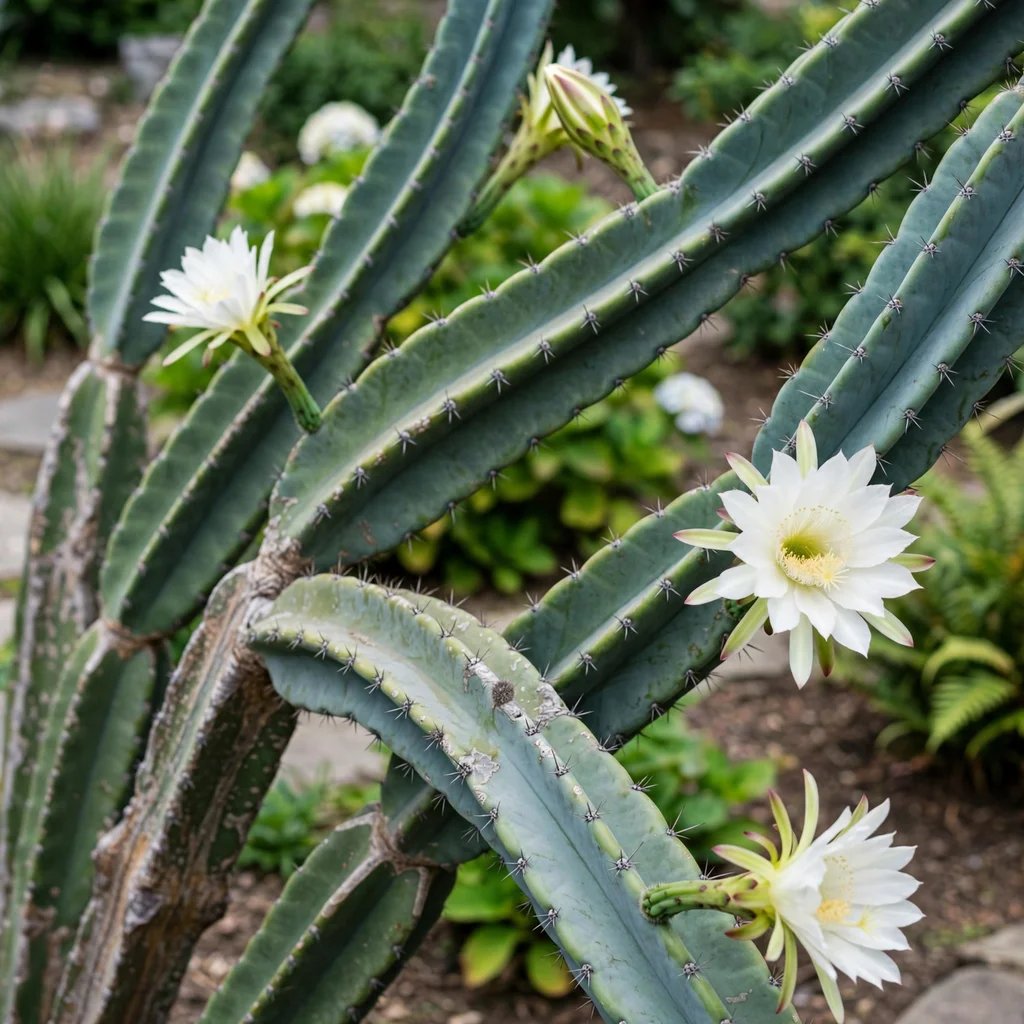
Cereus repandus is a tree-like columnar cactus that branches from the base into stout blue-green columns. The grayish-green to bluish stems are 4 to 8 inches thick with five to seven ribs and store water for long hot dry periods.
Mature stems carry sparse gray spines to 2 inches long along the ribs, though old columns can be nearly spineless. It opens fragrant white trumpets to 6 inches wide with reddish tips for a single night from spring to fall, followed by round red-skinned apple-like fruit.
Uses & Benefits:
Essentials
At a Glance
Plant Type
Cactus Succulent
Height
480"
Width
180"
Light
Full Sun
Zones
9, 10
Water
Low
Humidity
Low
Lifespan
Perennial
Native To
Caribbean and northern South America
Toxicity
Non-toxic
Bloom period
Late spring – Early fall
In flower about 5 months of the year
Planting
How to Grow
- Plant in spring after last frost in full sun with 10 to 15 feet of clearance for branching columns.
- Dig a hole as deep as the root ball and twice as wide in sharply drained sandy or gravelly soil.
- Set the plant at the same depth it grew in the pot and backfill, firming to remove air pockets.
- Water deeply once to settle, then wait until the soil dries completely before watering again.
- Stake tall columns for the first season and cover tips if temperatures approach 20F.
Pro Tip
Site it where the one-night flowers can be seen after dark and keep winter water off; cold wet soil rots the base faster than drought harms the top.
Keep It Thriving
Care Guide
Do
- Water deeply only when the soil is completely dry
- Give tip protection in Zone 9 when frost threatens
- Wear heavy gloves and eye protection when handling spiny columns
Don't
- Do not plant in clay or low spots that hold water
- Do not cut healthy columns for shaping
- Do not keep soil constantly moist or water in cold winter weather
Seasonal Care Calendar
| Task | Jan | Feb | Mar | Apr | May | Jun | Jul | Aug | Sep | Oct | Nov | Dec |
|---|---|---|---|---|---|---|---|---|---|---|---|---|
| Harvest | ||||||||||||
| Pest Check | ||||||||||||
| Plant | ||||||||||||
| Prune | ||||||||||||
| Winter Prep |
Watch Out For
Pests & Diseases
Common Pests
Common Diseases
In the Garden
Landscape Uses & Companions
Landscape Uses
Companion Plants
Multiply
Propagation Methods
Good to Know
Common Questions
Peruvian Apple Cactus questions
What zones can Peruvian Apple Cactus grow in?
Peruvian Apple Cactus is hardy in USDA Zones 9–10: in that range it survives winter in the ground. Colder than Zone 9, grow it in a container you can move to shelter for the winter, or as an annual.
When does Peruvian Apple Cactus bloom?
Peruvian Apple Cactus typically blooms from late spring to early fall. Exact timing shifts a week or two with your zone — Sow's bloom calendar maps it to your garden.
Does Peruvian Apple Cactus need full sun?
Peruvian Apple Cactus does best in full sun (6+ hours).
Is Peruvian Apple Cactus drought tolerant?
Yes — once established (usually after the first full season), Peruvian Apple Cactus handles dry spells with minimal watering. Water deeply its first year to build the root system that makes that possible.
Keep exploring
Explore the genus
Hardy in your zone?
Grow Peruvian Apple Cactus with confidence
See it in a design of your actual yard, get zone-matched care reminders, and track it season by season in your garden journal.