The Story
Plant Bio
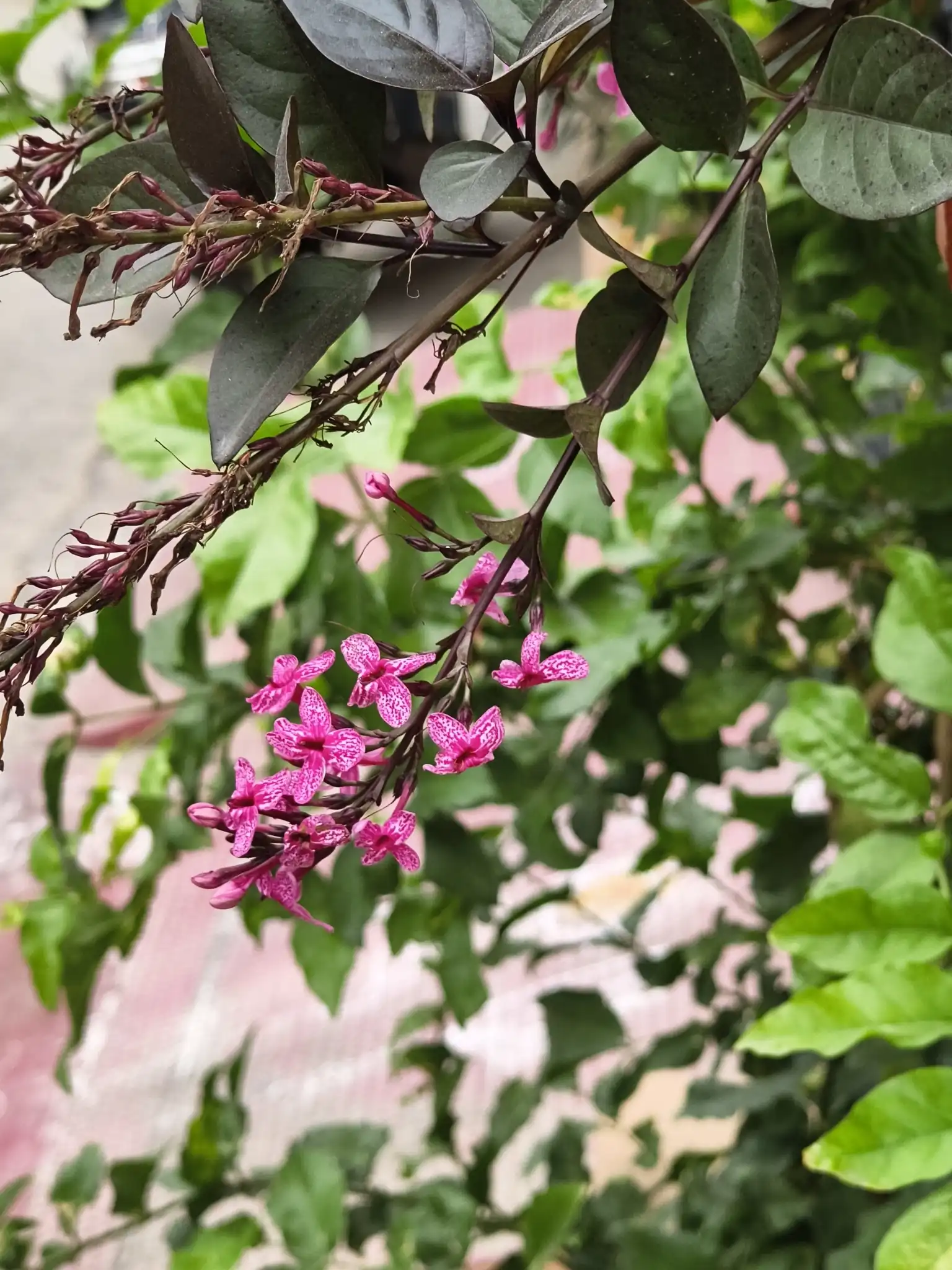
Pseuderanthemum carruthersii is an erect, multi-branched evergreen shrub in the acanthus family, reaching about five feet tall and wide in gardens. It carries opposite ovate waxy leaves four to five inches long and loose branched spikes of small flat-faced five-lobed flowers held above the branch tips.
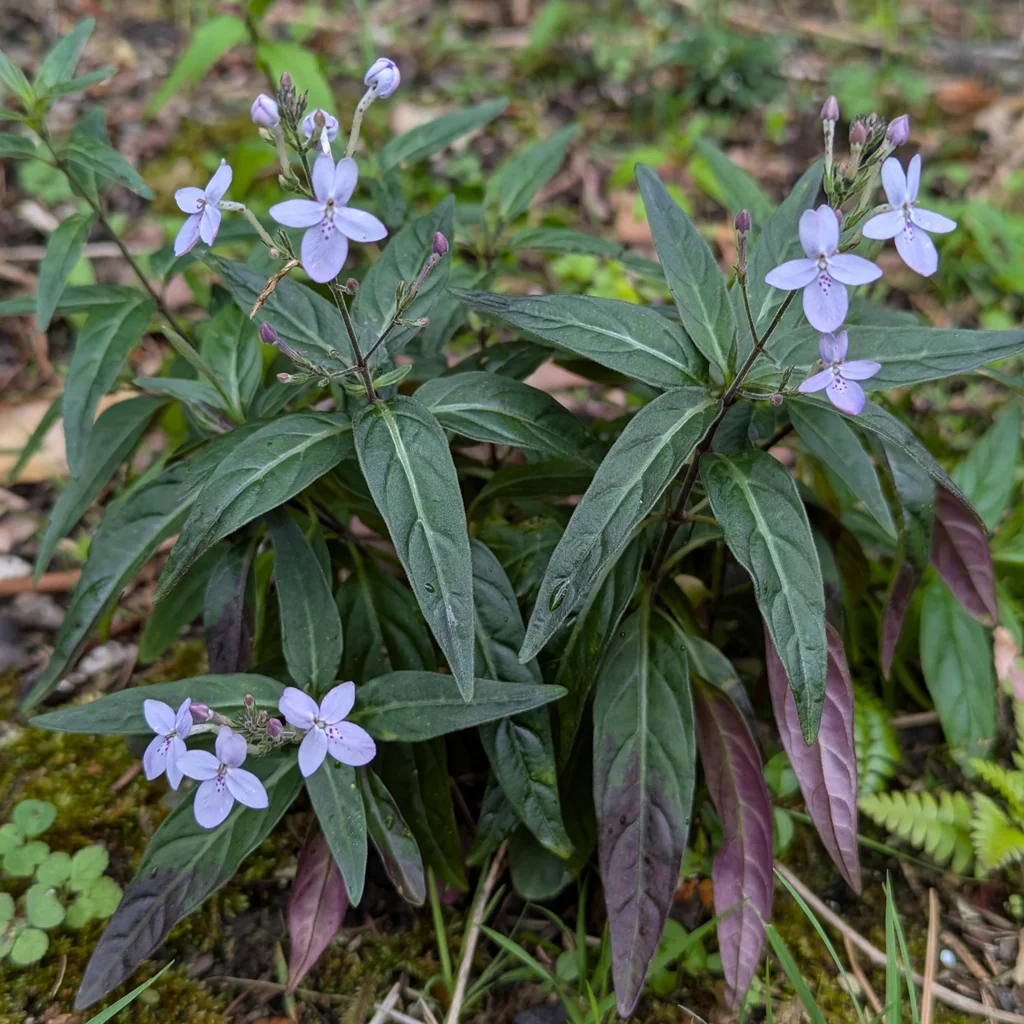
The foliage is the display: green leaves netted with yellow along the veins on the yellow-veined form, and dark purple-green to silver-marked leaves on the purple form, with brightly colored new growth. Flowers are small and white spotted with bluish-purple to magenta-purple, opening through the warm months and nearly year-round where frost never occurs.
Uses & Benefits:
Essentials
At a Glance
Plant Type
Shrub
Height
59"
Width
59"
Light
Full Sun, Partial Sun, Shade
Zones
9, 10
Water
Medium
Humidity
High
Lifespan
Long-lived evergreen shrub
Native To
Solomon Islands to Vanuatu
Toxicity
Non-toxic
Bloom period
Spring – Fall
In flower about 9 months of the year
Planting
How to Grow
- Plant in a container or frost-free bed in moist, well-drained loam enriched with organic matter.
- Place in full sun to bright indirect light, with afternoon shade in hot climates to prevent leaf scorch.
- Water to keep soil evenly moist, never soggy, and raise humidity for indoor plants.
- Feed lightly during the growing season and prune after flowering to keep plants dense.
Pro Tip
Pinch young shoots to force branching and cut leggy stems back to a leafy node after flowering; indoor plants hold color best in bright indirect light with regular misting.
Keep It Thriving
Care Guide
Do
- Prune regularly to keep plants compact and remove dead stems
- Pinch young growth to induce branching and fresh colored foliage
- Move pots indoors before cold weather and give bright indirect light
- Keep soil evenly moist with good drainage and air circulation
Don't
- Do not expose to frost or prolonged cold below 60 degrees
- Do not place in harsh midday sun without acclimation
- Do not keep in humid, still air with wet foliage
- Do not let containers sit waterlogged
Seasonal Care Calendar
| Task | Jan | Feb | Mar | Apr | May | Jun | Jul | Aug | Sep | Oct | Nov | Dec |
|---|---|---|---|---|---|---|---|---|---|---|---|---|
| Fertilize | ||||||||||||
| Pest Check | ||||||||||||
| Propagate | ||||||||||||
| Prune | ||||||||||||
| Winter Prep |
Watch Out For
Pests & Diseases
Common Pests
Common Diseases
In the Garden
Landscape Uses & Companions
Landscape Uses
Multiply
Propagation Methods
Good to Know
Common Questions
Purple False Eranthemum questions
What zones can Purple False Eranthemum grow in?
Purple False Eranthemum is hardy in USDA Zones 9–10: in that range it survives winter in the ground. Colder than Zone 9, grow it in a container you can move to shelter for the winter.
When does Purple False Eranthemum bloom?
Purple False Eranthemum typically blooms from spring to fall. Exact timing shifts a week or two with your zone — Sow's bloom calendar maps it to your garden.
Does Purple False Eranthemum need full sun?
Purple False Eranthemum does best in full sun to part shade. In hot climates, afternoon shade keeps blooms fresher longer.
More Pseuderanthemum to compare
Keep exploring
Explore the genus
Hardy in your zone?
Grow Purple False Eranthemum with confidence
See it in a design of your actual yard, get zone-matched care reminders, and track it season by season in your garden journal.