The Story
Plant Bio
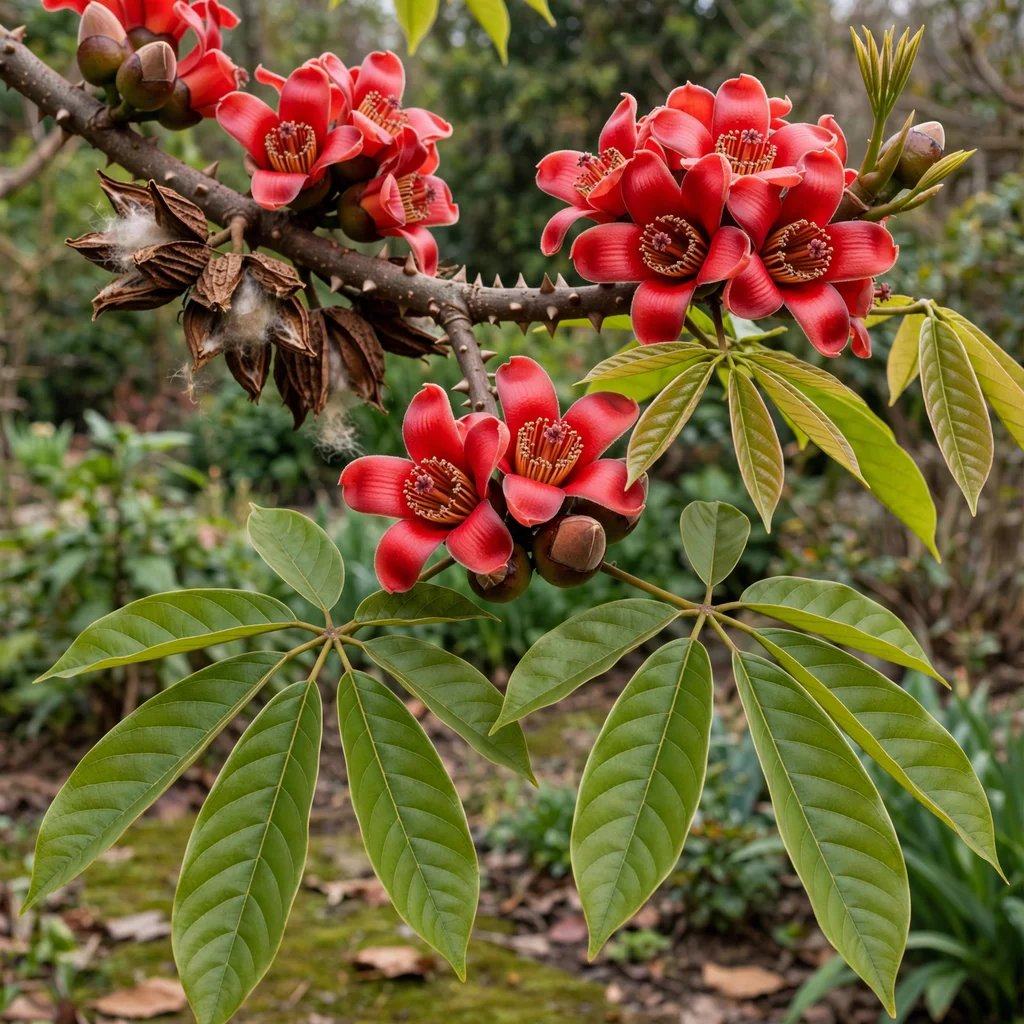
Bombax ceiba is a fast-growing, deciduous tropical tree that develops a stout, straight trunk with horizontal branch tiers and heavily buttressed bark at maturity. Young trunks and branches are armed with sharp conical prickles, while bare winter boughs bear dense clusters of cup-shaped crimson flowers before foliage emerges.
Large digitately compound leaves with five to seven smooth leaflets unfold once the late-winter bloom finishes, creating a wide canopy up to forty feet across. The fleshy blossoms reach up to seven inches wide and yield abundant nectar that attracts hummingbirds and insect pollinators.
Uses & Benefits:
Essentials
At a Glance
Plant Type
Tree
Height
709"
Width
472"
Light
Full Sun
Zones
10
Water
Low to moderate
Humidity
High
Lifespan
Long-lived
Native To
Tropical Asia to Northern Australia
Toxicity
Non-toxic (spines present)
Bloom period
Late winter – Early spring
In flower about 2 months of the year
Planting
How to Grow
- Select a site in full sun with deep, light to heavy soil that drains rapidly.
- Plant young container-grown specimens in frost-free locations, protecting young bark from browsing animals.
- Water regularly during the active summer growing season until the root system establishes.
- Cease watering as leaves drop in late fall to allow dry winter dormancy prior to flowering.
Pro Tip
Withhold irrigation during the winter leafless period, as overwatering dormant roots in cool or heavy soil triggers fatal Phytophthora root rot.
Keep It Thriving
Care Guide
Do
- Plant in a location receiving full sun throughout the entire day.
- Ensure soil drains thoroughly to prevent moisture retention around root crowns.
- Provide physical tree guards for young specimens to prevent animal bark stripping.
Don't
- Do not water the tree while it is leafless during its winter dormant phase.
- Do not prune heavily into thick, old bare wood lacking active vegetative buds.
- Do not plant in shaded locations or sites subject to hard freezing temperatures.
Seasonal Care Calendar
| Task | Jan | Feb | Mar | Apr | May | Jun | Jul | Aug | Sep | Oct | Nov | Dec |
|---|---|---|---|---|---|---|---|---|---|---|---|---|
| Fertilize | ||||||||||||
| Pest Check | ||||||||||||
| Prune | ||||||||||||
| Winter Prep |
Watch Out For
Pests & Diseases
Common Pests
Common Diseases
In the Garden
Landscape Uses & Companions
Landscape Uses
Multiply
Propagation Methods
Good to Know
Common Questions
Red Silk-Cotton Tree questions
What zones can Red Silk-Cotton Tree grow in?
Red Silk-Cotton Tree is hardy in USDA Zone 10: in that range it survives winter in the ground. Colder than Zone 10, winters are too cold for it to survive outdoors.
Is Red Silk-Cotton Tree deer resistant?
Not reliably. Deer may browse Red Silk-Cotton Tree, especially tender spring growth — plan on repellents or fencing where pressure is high.
When does Red Silk-Cotton Tree bloom?
Red Silk-Cotton Tree typically blooms from late winter to early spring. Exact timing shifts a week or two with your zone — Sow's bloom calendar maps it to your garden.
Does Red Silk-Cotton Tree need full sun?
Red Silk-Cotton Tree does best in full sun (6+ hours).
Is Red Silk-Cotton Tree drought tolerant?
Yes — once established (usually after the first full season), Red Silk-Cotton Tree handles dry spells with minimal watering. Water deeply its first year to build the root system that makes that possible.
Keep exploring
Explore the genus
Hardy in your zone?
Grow Red Silk-Cotton Tree with confidence
See it in a design of your actual yard, get zone-matched care reminders, and track it season by season in your garden journal.