The Story
Plant Bio
A clump-forming, semi-evergreen perennial native to North America. Valued for its ornamental foliage, adaptability, and greater tolerance to heat and drought compared to other Heuchera species.
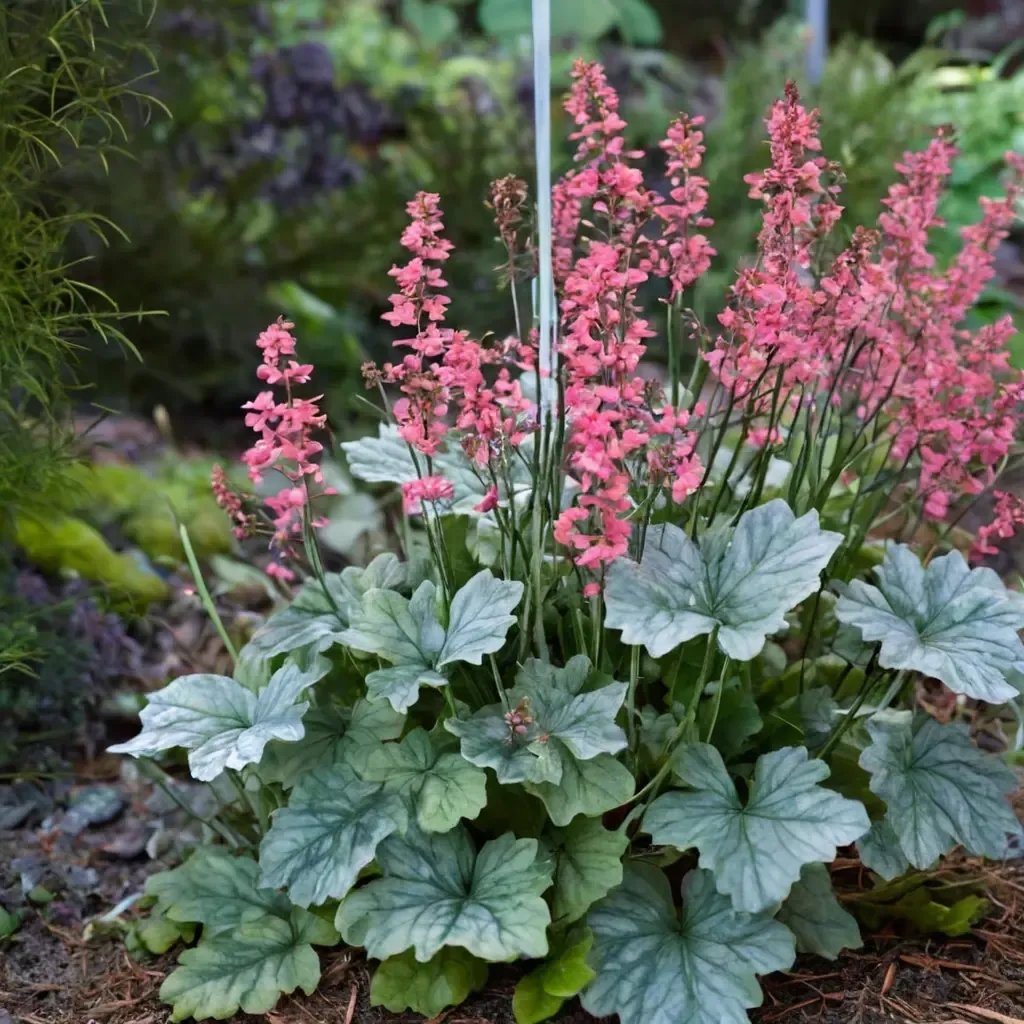
Features a compact mound of silvery-green leaves with prominent dark green veining. New foliage emerges with a rosy blush in spring. Produces spikes of light pink, bell-shaped flowers on dark stems.
Uses & Benefits:
Essentials
At a Glance
Plant Type
Perennial
Height
12"
Width
18"
Light
Partial Sun, Shade
Zones
4, 5, 6, 7, 8, 9
Water
Moderate
Humidity
Prefers moderate humidity
Lifespan
Perennial
Native To
North America
Toxicity
Non-toxic to humans and pets
Bloom period
Late spring – Early summer
In flower about 2 months of the year
Planting
How to Grow
- Tuck seeds lightly into moist soil in early spring.
- Mist cuttings regularly to maintain humidity.
- Transplant seedlings when they are strong enough, typically after 6 weeks.
- Fertilize with a balanced liquid feed monthly during growing season.
- Mulch around plants to retain moisture and suppress weeds.
- Divide clumps every 2-3 years to maintain vigor.
Pro Tip
Ensure well-drained soil and partial shade for optimal growth.
Keep It Thriving
Care Guide
Do
- Water regularly to keep soil moist but not waterlogged 🌱
- Prune dead or damaged leaves to promote healthy foliage
- Apply a balanced fertilizer in spring and mid-summer
- Mulch to conserve moisture and regulate soil temperature
Don't
- Avoid overwatering to prevent root rot ❌
- Do not expose to full, harsh sunlight which can scorch leaves
- Refrain from fertilizing late in the season to prevent weak growth
- Do not ignore pest signs or disease symptoms
Seasonal Care Calendar
| Task | Jan | Feb | Mar | Apr | May | Jun | Jul | Aug | Sep | Oct | Nov | Dec |
|---|---|---|---|---|---|---|---|---|---|---|---|---|
| Deadhead | ||||||||||||
| Divide | ||||||||||||
| Fertilize | ||||||||||||
| Mulch | ||||||||||||
| Plant | ||||||||||||
| Spring Cleanup |
Watch Out For
Pests & Diseases
Common Pests
Common Diseases
In the Garden
Landscape Uses & Companions
Landscape Uses
Companion Plants
Multiply
Propagation Methods
Good to Know